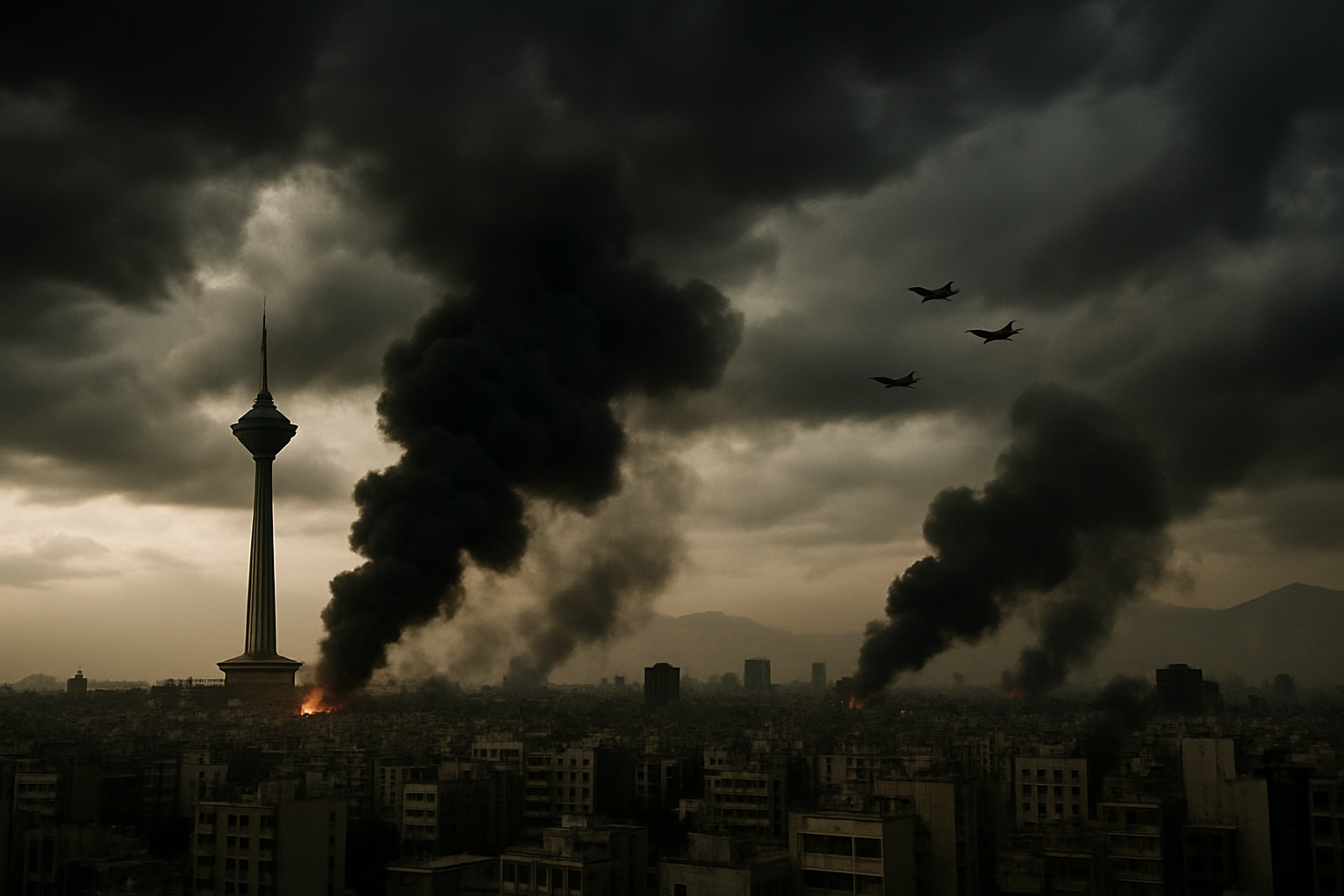
Israel launched a preemptive military strike against Iran on Saturday morning, according to Israeli Defense Minister Israel Katz, with explosions reported across Tehran as diplomatic efforts to resolve the nuclear crisis appear to have collapsed.
Speaking to Israeli media, Defense Minister Katz announced that "the State of Israel launched a preemptive strike against Iran to eliminate threats against the State of Israel." The strike comes after weeks of escalating tensions and the apparent breakdown of nuclear negotiations that had been taking place in Geneva with Swiss and Omani mediation.
Explosions Rock Tehran
Multiple international sources confirmed explosions across the Iranian capital, with Iranian state media IRNA reporting "explosions and heavy smoke rising over the city." Norwegian broadcaster NRK reported that air raid sirens were activated across Israel as a precautionary measure, with schools closed and the population instructed to remain indoors in preparation for potential Iranian retaliation.
The Israeli military issued a statement saying they had "protectively activated air raid alerts in areas across the country to prepare the population for the possibility that missiles could be launched toward Israel." This marks the most significant military escalation between the two nations since the devastating 12-day conflict in June 2025.
Context of Nuclear Crisis
The strike comes amid a prolonged nuclear standoff that has dominated international diplomacy for months. Iran has been enriching uranium to 60% purity - approaching the 90% threshold needed for weapons-grade material - and possesses what experts describe as sufficient enriched uranium for multiple nuclear weapons if weaponized.
"Iran will never abandon uranium enrichment even if war is imposed"
— Abbas Araghchi, Iranian Foreign Minister
Despite achieving what Iranian Foreign Minister Abbas Araghchi described as "broad agreement on guiding principles" in Geneva talks - the most significant diplomatic progress since the JCPOA collapse in 2018 - fundamental disagreements persisted over the scope of any potential agreement.
Diplomatic Breakdown
The diplomatic impasse centered on Iran's insistence that ballistic missiles and regional proxy activities remain "red lines" excluded from nuclear-only negotiations, while the United States, under Secretary Marco Rubio's direction, demanded comprehensive agreements addressing missiles, armed groups, and human rights.
President Trump had recently expressed dissatisfaction with Iran's negotiating approach, stating he was "not exactly happy" with their stance while maintaining that no final military decision had been made. This contrasted with earlier optimism when he had called the talks "very good."
Unprecedented Military Buildup
The strike follows weeks of unprecedented military escalation, with the United States deploying dual-carrier strike groups - USS Gerald R. Ford and USS Abraham Lincoln - creating the largest American naval presence in the Middle East since the 2003 Iraq invasion. The deployment represented approximately one-third of the active US Navy fleet positioned 800 kilometers from Iran's coast.
Recent military incidents had heightened tensions, including a US F-35C fighter shooting down an Iranian Shahed-139 drone near the USS Abraham Lincoln and ongoing harassment of US tankers by Iranian Revolutionary Guard Corps vessels in the Strait of Hormuz, which handles 40% of global oil transit.
Regional and International Reactions
An unprecedented regional coalition including Saudi Arabia, UAE, Qatar, and Egypt had been backing the diplomatic process, representing extraordinary Middle Eastern consensus in preventing military confrontation. The breakdown of negotiations and Israel's military action threatens to destabilize this carefully constructed diplomatic framework.
Multiple countries had issued urgent travel advisories in recent days, with the UK, France, Germany, and Poland warning against travel to Israel. The US had authorized the evacuation of non-essential embassy personnel, with Ambassador Mike Huckabee telling staff to leave "today."
Nuclear Governance Crisis
The escalation occurs against the backdrop of a broader nuclear governance crisis. The New START treaty between the US and Russia expired on February 5, marking the first time in over 50 years without nuclear constraints between the superpowers. China's nuclear expansion and UN Secretary-General Guterres' warnings that nuclear risks are at their "highest in decades" underscore the global implications.
Former IAEA inspector Dr. Yusri Abu Shadi had recently confirmed that Iran possesses over 400 kilograms of uranium enriched to 60%, making nuclear weapons capability "easily achievable." The IAEA has been unable to verify Iranian activities after being denied access to facilities since November 2025.
Domestic Pressures
The military action comes as Iran faces severe domestic pressures, with over 42,000 arrests since 2022 protests and Nobel Peace Prize laureate Narges Mohammadi sentenced to additional prison time during the nuclear talks. The regime has consistently prioritized nuclear capabilities over sanctions relief despite the economic survival crisis.
Economic and Strategic Implications
Oil prices immediately rose following reports of the strike, reflecting concerns about potential disruption to energy markets. The Strait of Hormuz's role in global oil transit makes any military escalation in the region a matter of worldwide economic concern.
The breakdown of negotiations and resort to military action represents a template-setting moment for 21st-century conflict resolution, with implications extending far beyond the immediate regional context to global governance mechanisms and international law credibility.
What Happens Next
Israel has declared a state of emergency in anticipation of Iranian retaliation, with Defense Minister Katz noting that a retaliatory strike is expected "in the coming time." The international community now faces the prospect of a regional war that could destabilize global energy markets and undermine nuclear non-proliferation efforts worldwide.
The collapse of diplomatic efforts after months of intensive negotiations raises fundamental questions about the viability of diplomatic solutions to nuclear crises in the current international system. The precedent set by this escalation could influence how future territorial and nuclear disputes are resolved, potentially accelerating military solutions over diplomatic engagement.
As the situation develops, the focus shifts from preventing conflict to managing its scope and preventing broader regional destabilization that could have implications extending far beyond the Middle East.