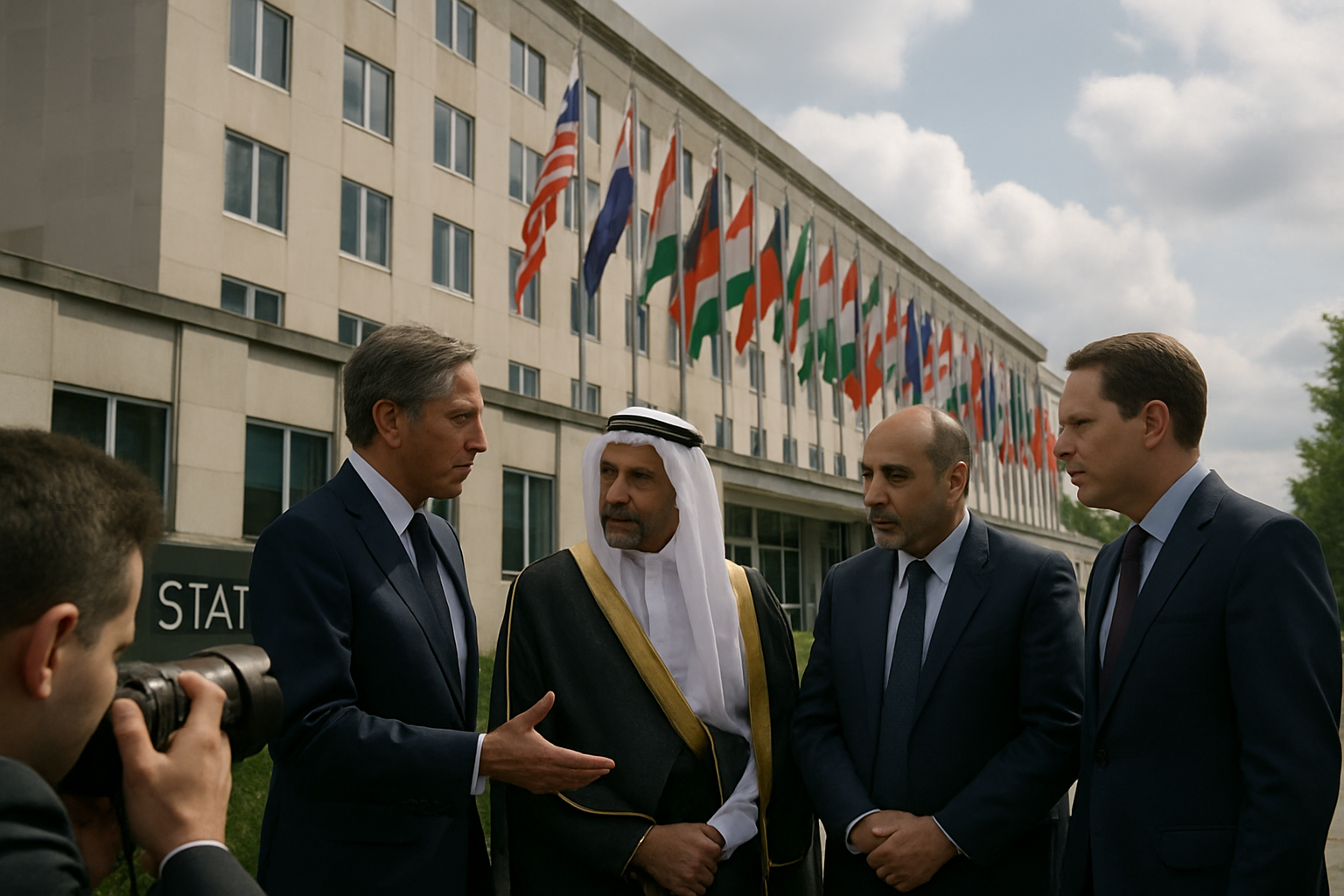
Lebanon will formally request a one-month extension of its fragile ceasefire with Israel during critical Washington talks on Thursday, as immediate violations threaten the 10-day truce that took effect less than a week ago. The negotiations between Israeli and Lebanese representatives mark the most significant diplomatic engagement since the complete collapse of the November 2024 ceasefire framework.
A Lebanese official confirmed to AFP that Beirut will seek the extension during meetings at the US State Department, representing the second round of direct talks since President Trump announced the breakthrough following "excellent conversations" with Israeli Prime Minister Netanyahu and Lebanese President Joseph Aoun. However, the ceasefire has already experienced immediate violations, with Lebanese military forces documenting Israeli "acts of aggression" including artillery shelling of southern villages within hours of the truce taking effect.
Immediate Violations Raise Concerns
The current 10-day ceasefire, which began at 5 PM EST on Thursday, has shown concerning signs of fragility from its inception. Israeli forces have reportedly warned Lebanese civilians against moving south of the Litani River despite ceasefire terms, while the Israel Defense Forces confirmed killing two Hezbollah members who allegedly crossed ceasefire lines. Simultaneously, Hezbollah has launched drone attacks targeting Israeli troops, indicating both sides remain on high alert.
According to Le Monde, the truce has been in effect since April 17, following the first round of talks that began earlier this week. The agreement affirms that Israel and Lebanon are "not at war," with Beirut committing to curbing attacks on Israeli targets and engaging in border demarcation discussions with Jerusalem.
Humanitarian Crisis of Unprecedented Scale
The current diplomatic initiative takes place against the backdrop of one of Lebanon's worst humanitarian catastrophes since its civil war. Over 1.2 million Lebanese—representing 25% of the country's population—have been displaced since the March 2026 escalation, with emergency shelters overwhelmed and thousands forced to sleep on Beirut's streets.

The humanitarian toll has been severe, with more than 2,400 people killed and systematic targeting of medical personnel raising serious international law concerns. According to multiple sources, 26 paramedics have been killed and 51 wounded since March 2, with the deadliest incident occurring at the Burj Qalaouiyah healthcare center, where 12 medical workers were killed in what observers describe as potential Geneva Conventions violations.
"The systematic targeting of medical infrastructure represents a fundamental violation of international humanitarian law."
— World Health Organization Representative
The November 2024 Ceasefire Collapse
The current crisis stems from the complete breakdown of a US-French brokered Israel-Hezbollah agreement that had held for over a year until March 2026. According to German sources, many Lebanese people desire peace with Israel but view the direct negotiations critically, trusting Hezbollah more than the state—a dynamic that fuels concerns about potential civil war.
The ceasefire collapsed when Hezbollah faced what officials described as an "impossible choice" between maintaining the truce and responding to Iranian pressure following the death of Supreme Leader Ali Khamenei on March 1. The organization ultimately chose "Iranian solidarity over Lebanese sovereignty," declaring that "resistance was the only option" and pulling Lebanon into the broader Iran-Israel confrontation.
Military Escalation Context
Since the ceasefire's collapse, Hezbollah's estimated 20,000 fighters have conducted more than 40 operations targeting northern Israeli positions, reaching as far as Haifa. The organization has declared "direct confrontations" with Israeli forces in southern Lebanon, marking a significant operational escalation from its previous restraint strategy.
Israeli operations have expanded beyond the November 2024 positions, with forces now controlling an estimated 10% of Lebanese territory between the border and the Litani River. The IDF has destroyed critical infrastructure, including the Qasmiyeh Bridge, and issued civilian home demolition orders, while Chief of Staff Eyal Zamir has described current operations as "just beginning," with several weeks of continued ground operations planned.
The Critical Lebanon Loophole
A significant complication in the current diplomatic framework stems from what analysts term the "Lebanon loophole." Netanyahu explicitly excluded Lebanon from the Pakistan-mediated "Islamabad Accord" that established a broader US-Iran ceasefire, creating a dangerous gap in regional peace architecture.
US Vice President JD Vance has acknowledged Iran's "legitimate misunderstanding" about Lebanon's inclusion in the broader ceasefire framework, but maintains that the United States never agreed to include Israeli-Hezbollah operations in the Pakistan-mediated agreement. Iran has threatened to withdraw from regional talks unless comprehensive enforcement is implemented across all fronts, creating a potential domino effect that could unravel broader Middle East peace efforts.
International Response and Support
The international community has responded with unprecedented unified condemnation of the violence while supporting diplomatic initiatives. The United Kingdom has expressed being "deeply troubled," France has called the civilian targeting "unacceptable," and Italy has condemned the "bombings of civilian population." French President Emmanuel Macron has offered to host talks in Paris—the first such diplomatic initiative since the ceasefire collapse.
The World Health Organization has issued a $30.3 million emergency appeal to support healthcare systems across five Middle Eastern countries, describing the medical infrastructure as being "under severe strain." UN Secretary-General António Guterres has characterized the crisis as "the greatest test of multilateral cooperation in the modern era."
Global Economic Impact
The conflict has generated global economic repercussions reminiscent of the COVID-19 pandemic's early days. More than 18,000 flights have been cancelled worldwide, oil prices have surged above $100 per barrel for the first time since 2014, and threats to the Strait of Hormuz—which handles 40% of global oil transit—have prompted the International Energy Agency to authorize its largest strategic reserve release in its 50-year history, deploying 400 million barrels.
Peacekeeping Forces Under Attack
The deteriorating security situation has directly impacted international peacekeeping efforts. A UNIFIL base near Mais al-Jabal was struck, wounding one peacekeeper in what represents the first major breach of peacekeeping arrangements since the ceasefire's implementation. Separately, an Indonesian peacekeeper was killed at Adchit al-Qusayr in a projectile explosion, with three others wounded.
UNIFIL spokeswoman Kandice Ardiel described the situation as "precarious and volatile," affecting both peacekeeping operations and civilian evacuation efforts in southern Lebanon.
Template-Setting Implications
Thursday's talks represent what diplomatic observers describe as a "template-setting moment" for 21st-century conflict resolution. The success or failure of converting the temporary pause into a lasting framework will determine precedents for regional war prevention, energy security, nuclear governance credibility, and international law enforcement with implications extending decades beyond current events.
The crisis has already demonstrated the fragility of negotiated agreements when underlying political tensions remain unresolved. Early violations of the current ceasefire highlight the critical challenge of creating enforcement mechanisms that can prevent external pressure from undermining diplomatic achievements while addressing the fundamental security concerns of all parties.
"This represents the most serious Middle East crisis since the end of the Cold War, with global governance credibility at stake."
— UN Secretary-General António Guterres
Looking Ahead: Diplomatic Framework Requirements
For Thursday's extension talks to succeed, diplomatic sources indicate that negotiations must address several critical elements: immediate ceasefire establishment and maintenance, force withdrawal and buffer zone creation, Lebanese army and UN peacekeeping deployment, and long-term security guarantees for both sides.
The most significant challenge remains creating mechanisms to prevent external pressure from undermining agreements while addressing the underlying political dynamics that led to the November 2024 collapse. President Trump has announced plans to invite both Netanyahu and Lebanese President Aoun to White House meetings for "first meaningful direct negotiations" between the leaders, though Lebanese President Aoun has notably refused direct communication with Netanyahu despite Trump administration pressure.
As the Thursday talks approach, the stakes extend far beyond bilateral Israeli-Lebanese relations. The outcome will influence international approaches to territorial sovereignty disputes, energy architecture evolution, nuclear proliferation prevention mechanisms, and the broader question of whether diplomatic innovation can prevent catastrophic regional warfare in an increasingly multipolar world.
The eyes of the international community remain focused on Washington, where a one-month extension request represents not just a tactical pause, but potentially the last immediate opportunity for diplomatic intervention before a return to the most dangerous international crisis since the Cold War's end.