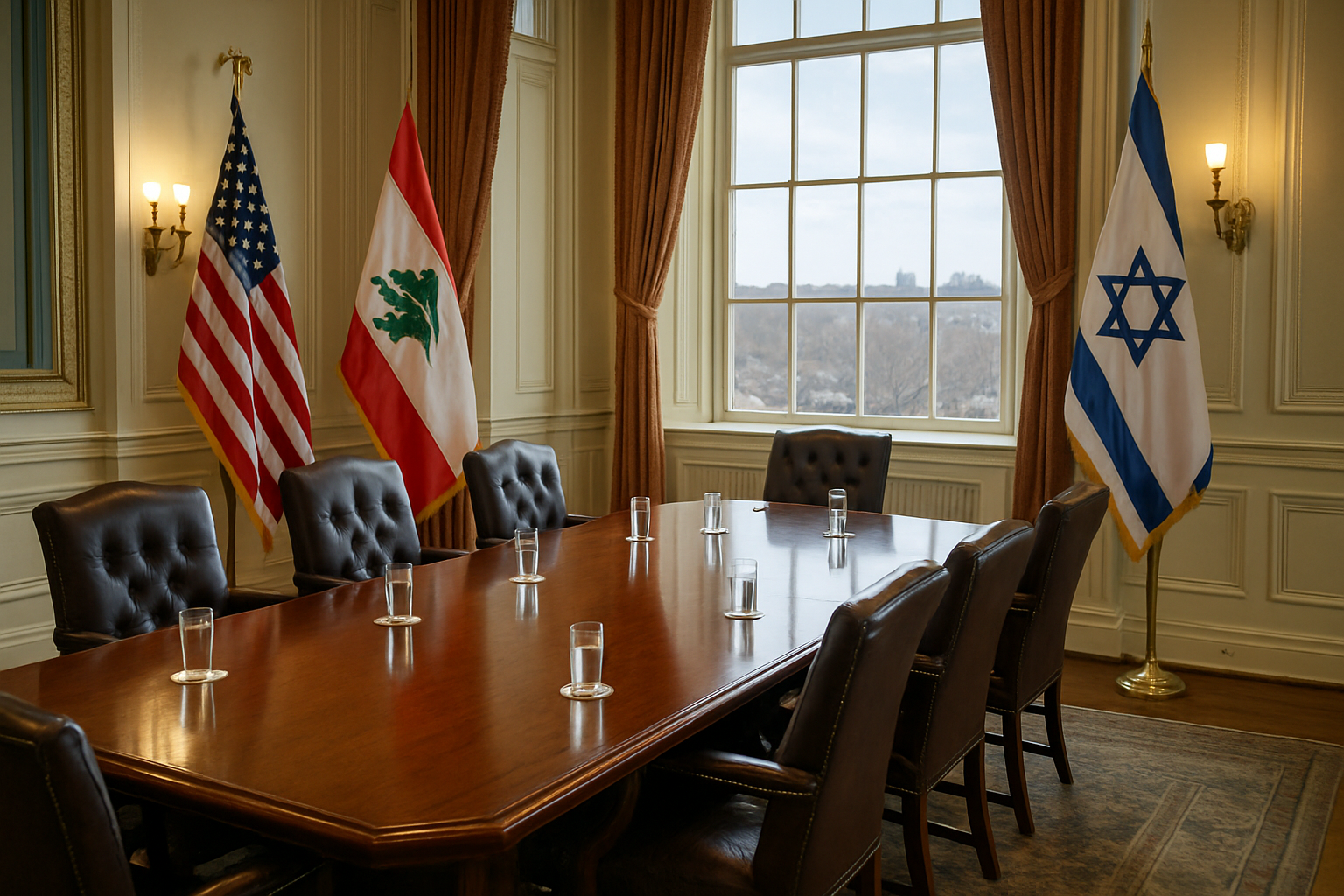
Israeli and Lebanese ambassadors to the United States are scheduled to hold direct peace negotiations on Tuesday, April 15, 2026, at the US State Department in Washington, marking the most significant diplomatic initiative since the complete breakdown of the November 2024 ceasefire agreement.
The announcement comes as the region faces an unprecedented humanitarian crisis, with over 1.2 million Lebanese displaced and systematic targeting of medical personnel threatening to escalate into broader regional warfare. The talks represent a critical attempt at diplomatic intervention amid the most dangerous Middle Eastern crisis since the Cold War.
Breakthrough Diplomatic Initiative
Lebanese President's office confirmed that the Lebanese and Israeli ambassadors in Washington conducted their first direct telephone communication on Friday, with participation from the US Ambassador to Lebanon. This initial contact paved the way for Tuesday's face-to-face negotiations at the State Department building.
The announcement follows weeks of intense international pressure, with French President Emmanuel Macron offering to host talks in Paris and UN Secretary-General António Guterres calling the crisis "the greatest test of multilateral cooperation in the modern era." However, the US emerged as the preferred mediating venue, reflecting America's central role in regional diplomacy.
According to sources familiar with the arrangement, the talks will focus on establishing a lasting ceasefire framework and addressing the fundamental security concerns that led to the breakdown of the previous agreement. The timing is particularly significant as it occurs within the broader context of Pakistan's successful mediation of the historic US-Iran "Islamabad Accord" ceasefire.
Collapse of Previous Ceasefire
The current crisis stems from the complete collapse of the November 2024 US-French brokered ceasefire between Israel and Hezbollah, which had held for over a year. The agreement unraveled in March 2026 when Hezbollah faced what officials described as an "impossible choice" between maintaining the ceasefire and responding to Iranian pressure following the death of Supreme Leader Ali Khamenei on March 1, 2026.
Hezbollah ultimately chose what Lebanese sources termed "Iranian solidarity over Lebanese sovereignty," declaring that "resistance was the only option" and pulling Lebanon into the broader Iran-Israel confrontation. This decision effectively ended the buffer zone arrangement that had required Israeli forces and Hezbollah to withdraw from southern Lebanon, with the Lebanese army and UN peacekeepers maintaining stability.
"The Lebanese people have paid a devastating price for this geopolitical confrontation. We cannot allow this humanitarian catastrophe to continue while diplomatic solutions remain available."
— Senior Lebanese Official, speaking on condition of anonymity
Humanitarian Crisis Reaches Breaking Point
The renewed conflict has created an unprecedented humanitarian catastrophe, with Lebanese authorities reporting over 1,200 civilian deaths and 1.2 million people displaced—representing 25% of Lebanon's entire population. Emergency shelters have been overwhelmed, forcing thousands of families to sleep on the streets of Beirut.
Particularly alarming has been the systematic targeting of medical personnel, with 26 paramedics killed and 51 wounded since the conflict resumed in March. The deadliest single incident occurred at the Burj Qalaouiyah healthcare center in the Bint Jbeil district, where 12 medical workers—including doctors, nurses, and paramedics—were killed in what international observers have characterized as potential Geneva Conventions violations.
The World Health Organization has launched a $30.3 million emergency appeal to support health systems across five Middle Eastern countries, warning that healthcare infrastructure is "under severe strain" from the ongoing violence. Dr. Tedros Adhanom Ghebreyesus emphasized that attacks on healthcare constitute "attacks on humanity itself."
Regional and International Response
The crisis has drawn unified international condemnation, with the United Kingdom expressing being "deeply troubled," France calling the situation "unacceptable," and Italy condemning the targeting of civilian populations. The European Union has characterized the escalation as dangerous to regional stability, while Turkey has warned against what it terms "genocide under the pretext of fighting Hezbollah."
Regional powers including Saudi Arabia, the UAE, Qatar, and Egypt have maintained diplomatic support for negotiated solutions despite severe strain on their coalition from Iranian attacks on their territories during the broader regional crisis. Egypt's President Abdel Fattah el-Sisi had warned against "comprehensive chaos" spreading throughout the region, making the pursuit of diplomatic solutions even more urgent.
UN peacekeepers have also come under attack, with a UNIFIL base near Mais al-Jabal being struck and one peacekeeper wounded. UNIFIL spokeswoman Kandice Ardiel described the situation as "precarious and volatile," marking the first major breach of peacekeeping arrangements since the November 2024 ceasefire implementation.
Strategic Implications and Military Dynamics
Hezbollah, estimated to command approximately 20,000 fighters, has conducted over 40 operations targeting northern Israeli military sites, with some reaching as far as Haifa. The organization has declared "direct confrontations" with Israeli forces in southern Lebanon, representing a significant operational escalation from their previous restraint strategy.
Israeli Defense Forces have expanded operations beyond the five positions held since November 2024 to "new locations" targeting Hezbollah strongholds. The destruction of the strategic Qasmiyeh Bridge over the Litani River and the issuance of demolition orders for border homes represent a shift toward infrastructure warfare affecting civilian populations.
Israeli military officials have indicated that operations could continue for "several weeks," with Defense Minister Israel Katz warning that Lebanon could face territorial losses and infrastructure damage unless Hezbollah is disarmed. This has raised concerns about potential de facto annexation of Lebanese territory, similar to patterns seen in other occupied territories.
The Critical Lebanon Loophole
A significant complication affecting the diplomatic landscape is what officials have termed the "Lebanon loophole" in the broader regional ceasefire framework. Israeli Prime Minister Benjamin Netanyahu has explicitly stated that Lebanon is not covered by the Pakistan-mediated US-Iran ceasefire, creating a dangerous gap in the peace framework.
This exclusion has drawn criticism from international mediators, with French President Macron and Spanish Prime Minister Pedro Sanchez insisting that Lebanon must be included for any "credible and durable" ceasefire. Iranian officials have threatened withdrawal from broader regional peace talks unless comprehensive enforcement is applied to all fronts, including Lebanon.
The loophole has contributed to the deadliest single day of bombardment since March, with Israeli strikes killing over 254 people in coordinated attacks across Beirut, the Bekaa Valley, and southern Lebanon. This escalation has prompted renewed calls for immediate diplomatic intervention.
Framework for Negotiations
Tuesday's talks are expected to address several critical issues, including the immediate establishment of a ceasefire, the withdrawal of forces from buffer zones, the deployment of Lebanese army and UN peacekeeping forces, and long-term security guarantees for both sides. The framework will likely build upon the successful elements of the November 2024 agreement while addressing the enforcement gaps that led to its collapse.
US officials have indicated that the talks will focus on creating mechanisms to prevent the type of external pressure that forced Hezbollah to abandon the previous ceasefire. This may include provisions for addressing Iranian influence in Lebanese affairs and establishing clear protocols for maintaining Lebanese sovereignty while ensuring Israeli security concerns.
The success of Pakistan's mediation in achieving the US-Iran ceasefire has created a template for innovative diplomatic solutions in seemingly intractable conflicts. The "Islamabad Accord" demonstrated that middle powers can effectively bridge major adversaries when traditional diplomatic mechanisms fail.
Challenges and Prospects
The negotiations face significant challenges, including the fundamental question of Hezbollah's role in Lebanese governance and security. The organization maintains substantial military capabilities and political influence, making any agreement dependent on its cooperation. Previous attempts to disarm Hezbollah or limit its activities have proven unsuccessful, requiring innovative approaches to security arrangements.
The broader regional context also complicates the negotiations. The ongoing Iran crisis and the recent success of Pakistani mediation in achieving a US-Iran ceasefire create both opportunities and pressures for the Lebanon talks. Success could contribute to broader regional stability, while failure might undermine the fragile peace framework elsewhere.
International observers note that the talks represent a template-setting moment for 21st-century conflict resolution. The success or failure of diplomatic intervention will establish precedents for addressing similar crises and may influence approaches to regional war prevention, energy security, and nuclear governance credibility for decades to come.
"These talks represent perhaps our last opportunity to prevent a broader regional war that could affect millions more civilians. The international community must support every effort at diplomatic resolution."
— UN Secretary-General António Guterres
Looking Ahead
The Tuesday negotiations at the US State Department represent a critical juncture in Middle Eastern diplomacy. Coming after weeks of escalating violence and humanitarian catastrophe, the talks offer a potential pathway to stability in a region that has experienced the most dangerous crisis since the end of the Cold War.
The success of these negotiations will depend not only on the willingness of the direct parties to compromise but also on the ability of regional and international actors to provide the security guarantees and enforcement mechanisms necessary to prevent future breakdowns. The template established by Pakistan's successful mediation of the US-Iran crisis provides hope that innovative diplomatic solutions remain possible even in the most challenging circumstances.
As Lebanese civilians continue to bear the devastating cost of this conflict, with over a million displaced and critical infrastructure under attack, the urgency of achieving a lasting diplomatic solution has never been greater. Tuesday's talks represent not just an opportunity for peace between Israel and Lebanon, but a test of the international community's commitment to diplomatic solutions over military confrontation in the 21st century.
The outcomes of these negotiations will reverberate far beyond the immediate region, potentially influencing conflict resolution approaches, international law enforcement, and the credibility of multilateral cooperation for decades to come. In an interconnected world facing multiple simultaneous crises, the success or failure of diplomatic intervention in Lebanon may well determine whether future conflicts are resolved through negotiation or force.