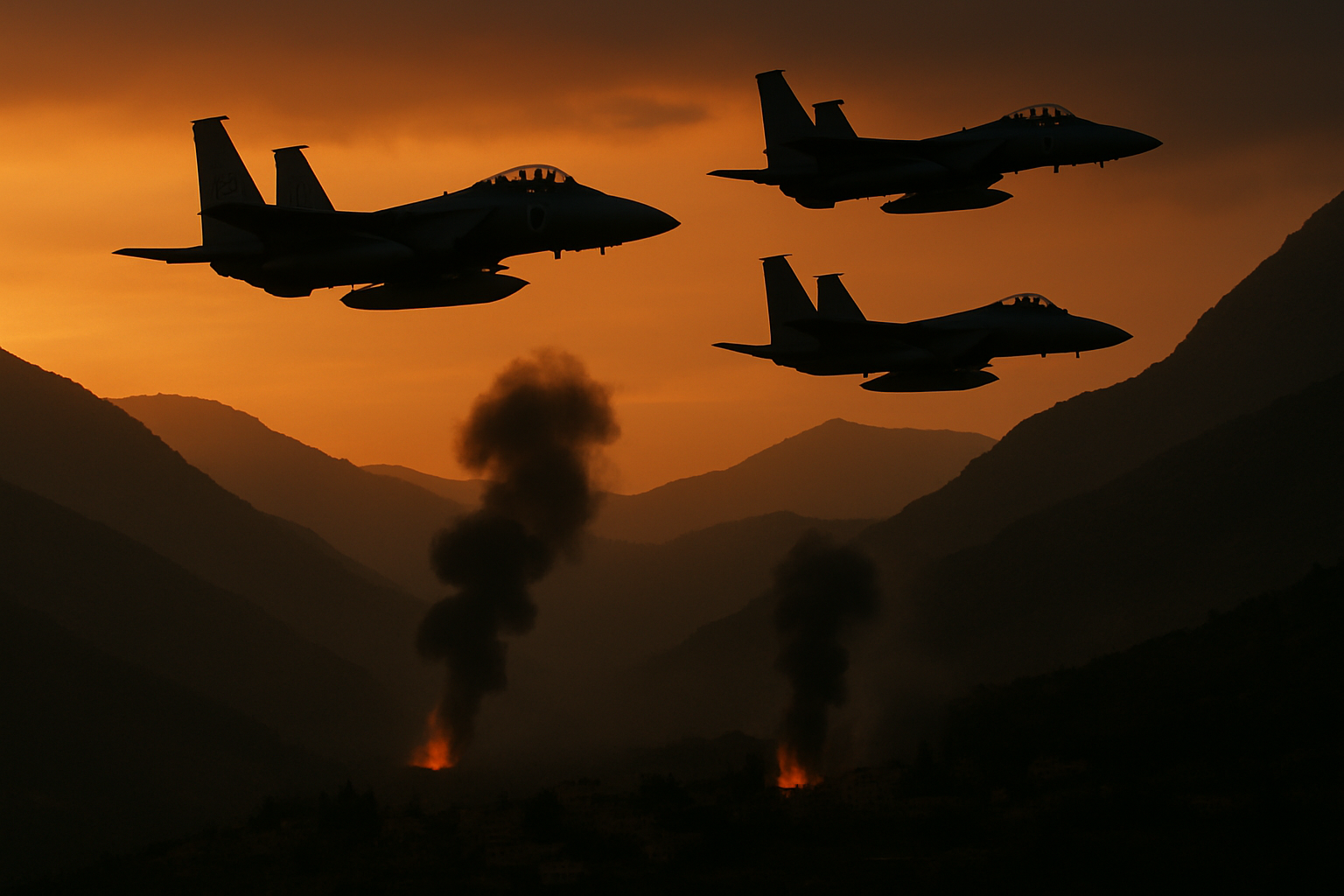
Israeli strikes on Lebanon have killed over 250 people in the deadliest single day of bombardment since the conflict began, threatening the fragile Pakistan-mediated ceasefire between the US and Iran while Prime Minister Benjamin Netanyahu announces Israel's readiness for direct negotiations with Lebanon.
The massive Israeli bombardment on Wednesday targeted over 100 Hezbollah sites across Beirut, the Bekaa Valley, and southern Lebanon, killing 254 people and wounding more than 1,100 according to the Lebanese Health Ministry. The strikes represent the largest coordinated attack since the conflict erupted in March 2026, occurring just days after Pakistan successfully mediated a historic ceasefire between the United States and Iran.
Critical Ceasefire Loophole Emerges
The escalation has exposed a critical gap in the "Islamabad Accord" - Netanyahu explicitly stated that Lebanon is not covered by the ceasefire arrangement, creating what Iran calls a "legitimate misunderstanding." US Vice President JD Vance acknowledged Iran's concerns but confirmed the United States never agreed to include Israeli-Hezbollah operations under the ceasefire framework.
"For any durable ceasefire to be credible, Lebanon must be included,"
— Emmanuel Macron, French President
Iran has threatened to withdraw from the Friday talks in Islamabad unless a comprehensive ceasefire is enforced across all fronts. Mohammad Bagher Qalibaf warned that negotiations would be "unreasonable" without the cessation of ceasefire violations, particularly regarding Lebanon.
Unprecedented Humanitarian Crisis
The ongoing conflict has created Lebanon's worst humanitarian catastrophe in decades. Over 1.2 million Lebanese - nearly 25% of the population - have been displaced, with emergency shelters overwhelmed and thousands sleeping on the streets of Beirut. The systematic targeting of medical infrastructure has been particularly devastating, with 26 paramedics killed and 51 wounded since the conflict began in March.
The deadliest attack on healthcare workers occurred at the Burj Qalaouiyah primary healthcare center in the Bint Jbeil district, where 12 medical personnel including doctors, nurses, and paramedics were killed. Israeli military spokesman Avichai Adraee has threatened strikes against ambulances and medical facilities, claiming Hezbollah uses them for military purposes - allegations categorically denied by the militant group.
These actions raise serious concerns about potential Geneva Conventions violations, as medical personnel and facilities are protected under international humanitarian law. The deliberate targeting of protected humanitarian assets constitutes potential war crimes requiring international investigation.
November 2024 Ceasefire Completely Collapsed
The current crisis stems from the complete breakdown of the November 2024 US-French brokered ceasefire between Israel and Hezbollah, which had held for over a year. The agreement, which required the withdrawal of Israeli forces and Hezbollah from southern Lebanon with a buffer zone maintained by the Lebanese army and UN peacekeepers, began unraveling in March 2026.
Following the death of Iran's Supreme Leader Ali Khamenei on March 1, 2026, Hezbollah faced what analysts describe as an "impossible choice" between maintaining the ceasefire or responding to Iranian pressure for retaliation. The organization ultimately chose what it termed "Iranian solidarity over Lebanese sovereignty," declaring "resistance as the only option."
Netanyahu Announces Direct Negotiations
Despite the ongoing bombardment, Netanyahu declared Israel's readiness to begin direct peace negotiations with Lebanon "as soon as possible," focusing on Hezbollah's disarmament. The announcement comes as France's Emmanuel Macron and Spain's Pedro Sanchez have insisted that Lebanon must be included in any comprehensive ceasefire arrangement.
The Israeli Prime Minister's call for talks represents a significant diplomatic development, marking the first such direct negotiation offer since the November 2024 ceasefire collapsed. However, the timing - coinciding with the deadliest day of strikes - has raised questions about Israel's commitment to immediate de-escalation.
International Diplomatic Pressure Mounts
The international community has responded with unified condemnation of the escalation. The United Kingdom expressed being "deeply troubled" by the civilian casualties, while France termed the bombing "unacceptable." Italy specifically condemned the "bombings of the civilian population," representing a rare unified European stance on Israeli military actions.
Australia's Foreign Minister Penny Wong has urged Israel to halt its attacks on Lebanon, warning that the conflict threatens the "fragile" ceasefire. The coordinated international response reflects growing concern that the Lebanon crisis could derail the broader US-Iran peace framework achieved through Pakistan's mediation.
Global Economic Implications
The renewed violence has sent shockwaves through global markets, threatening the economic relief that followed the initial US-Iran ceasefire. Oil prices, which had crashed 20% from their peak of $119.50 per barrel following the ceasefire announcement, are now facing renewed supply disruption concerns.
Iran has temporarily suspended oil tanker traffic through the Strait of Hormuz - a critical chokepoint handling 40% of global seaborne oil transit - in retaliation for the continued Israeli operations. This move threatens to reverse the positive economic momentum generated by the ceasefire agreement.
Regional Coalition Under Strain
The escalation has severely tested the regional coalition of Saudi Arabia, the UAE, Qatar, and Egypt that supported the diplomatic breakthrough. These nations, which had weathered Iranian attacks during the height of the crisis while maintaining their consensus for diplomacy, now face renewed pressure as the conflict threatens to spiral out of control.
Egyptian President Abdel Fattah el-Sisi's earlier warnings about "comprehensive chaos" spreading through the region appear increasingly prescient as the Lebanon crisis demonstrates the fragility of negotiated agreements when underlying political tensions remain unresolved.
Template-Setting Moment for 21st Century Diplomacy
UN Secretary-General António Guterres has described the current situation as the "greatest test of multilateral cooperation in the modern era." The ability to maintain the Pakistan-mediated ceasefire while addressing the Lebanon crisis will set crucial precedents for conflict resolution in an increasingly multipolar world.
Pakistan's successful mediation between the US and Iran - achieved just 88 minutes before President Trump's "whole civilization" deadline - represents a historic achievement in middle power diplomacy. However, the Lebanon loophole demonstrates the challenges of comprehensive peace-making when regional proxy conflicts intersect with great power rivalries.
"This fragile ceasefire could collapse entirely if we cannot find a solution that addresses all fronts of this conflict."
— Penny Wong, Australian Foreign Minister
The coming days will prove decisive in determining whether innovative diplomatic frameworks can prevent a return to the most dangerous international crisis since the Cold War ended. The stakes extend far beyond the Middle East, affecting global energy security, nuclear governance, and the credibility of international law enforcement mechanisms for decades to come.
As Israel prepares for direct talks with Lebanon while continuing military operations, the international community faces a critical test of its ability to bridge the gap between military pressure and diplomatic solutions in an era where regional conflicts increasingly threaten global stability.