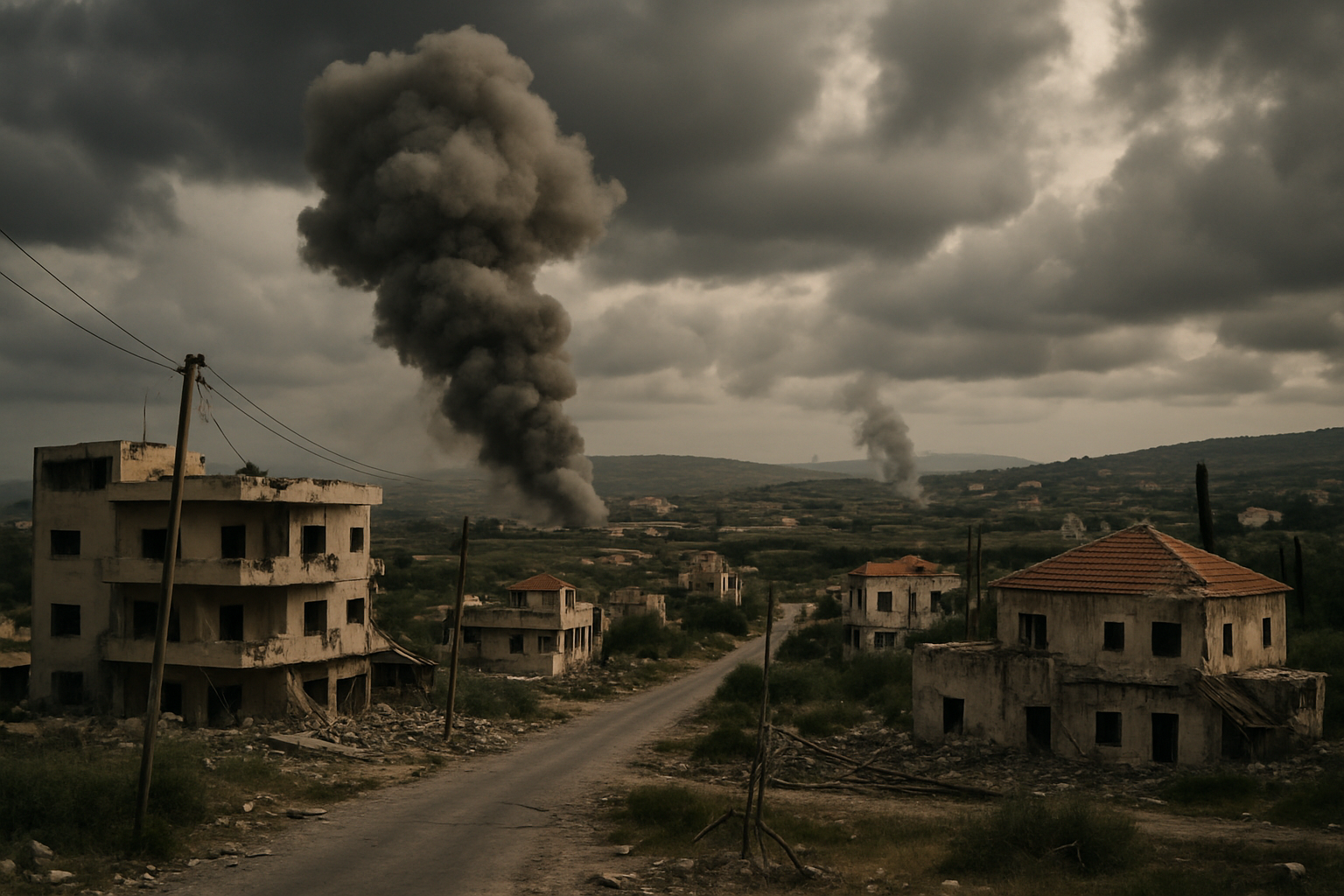
Israeli strikes killed 14 people in southern Lebanon on Sunday, marking the deadliest day since a fragile ceasefire agreement came into effect, as both Israel and Hezbollah continue to trade accusations of violations despite multiple diplomatic efforts to halt the escalating conflict.
The deaths occurred as Israeli military operations targeted what they described as Hezbollah positions in southern Lebanon, with Lebanese health ministry sources confirming the casualties included civilians. The strikes represent a significant escalation just days after President Trump announced a three-week ceasefire extension following talks with Israeli Prime Minister Benjamin Netanyahu and Lebanese President Joseph Aoun.
Pattern of Systematic Violations
The latest bloodshed underscores the systematic breakdown of ceasefire agreements that have plagued the region since the November 2024 US-French brokered Israel-Hezbollah accord completely collapsed in March 2026. According to multiple diplomatic sources, the current crisis stems from what Hezbollah faced as an "impossible choice" between maintaining the ceasefire versus responding to Iranian pressure following Supreme Leader Ali Khamenei's death on March 1.
Lebanese military officials have documented numerous Israeli "acts of aggression," including artillery shelling of southern villages within hours of ceasefire announcements. These violations follow a clear pattern: immediate breaches of announced truces, expansion of military operations beyond established buffer zones, and targeting of both military and civilian infrastructure.
The systematic nature of these violations is exemplified by Israel's establishment of a "yellow line" demarcation system in southern Lebanon, similar to tactics used in Gaza, effectively creating de facto territorial control beyond internationally recognized borders. Israeli forces have warned Lebanese civilians against approaching areas near the Litani River, despite ceasefire terms that theoretically allow civilian movement.
Humanitarian Crisis Reaches Breaking Point
The conflict has created an unprecedented humanitarian catastrophe, with 1.2 million Lebanese displaced—representing 25% of the country's population. Emergency shelters have been overwhelmed, forcing thousands to sleep on the streets of Beirut as the displacement crisis reaches levels not seen since Lebanon's civil war.
Of particular concern has been the systematic targeting of medical personnel and infrastructure. Since March 2, 2026, at least 26 paramedics have been killed and 51 wounded in what appears to be a deliberate campaign against emergency responders. The deadliest single incident occurred at the Burj Qalaouiyah healthcare center in the Bint Jbeil district, where 12 medical workers—including doctors, nurses, and paramedics—were killed in an attack that potentially violates the Geneva Conventions.
Israeli military spokesman Daniel Adraee has threatened strikes against ambulances and medical facilities, claiming Hezbollah military use without providing evidence. Hezbollah has categorically denied these allegations, while international humanitarian law experts warn that such systematic targeting of protected medical assets constitutes potential war crimes requiring investigation.
Critical Diplomatic Loophole
A key factor complicating peace efforts is what diplomatic sources describe as the "Lebanon loophole" in broader regional ceasefire frameworks. Netanyahu has explicitly excluded Lebanon from the Pakistan-mediated "Islamabad Accord" between the US and Iran, creating a dangerous gap in what was intended to be a comprehensive regional peace framework.
Vice President JD Vance has acknowledged Iran's "legitimate misunderstanding" about Lebanon's inclusion in the broader ceasefire but maintained that the US never agreed to include Israeli-Lebanese operations in the accord. This exclusion has prompted Iran to threaten withdrawal from regional talks unless comprehensive enforcement is implemented across all fronts.
French President Emmanuel Macron and Spanish Prime Minister Pedro Sanchez have insisted that Lebanon must be included for any "credible and durable" ceasefire, while offering to host direct Israel-Lebanon talks in Paris—the first such diplomatic initiative since the original ceasefire collapsed.
Military Escalation Continues
Despite diplomatic efforts, military operations have continued to expand. Israeli forces now control an estimated 10% of Lebanese territory between the border and the Litani River, having destroyed critical infrastructure including the strategic Qasmiyeh Bridge and issued demolition orders for civilian homes near the border.
IDF Chief of Staff Herzi Halevi has described current operations as "just beginning," with "several weeks" of continued ground operations planned. This represents a significant expansion beyond the five positions held since the November 2024 ceasefire, moving into "new locations" targeting what Israel describes as Hezbollah strongholds.
Hezbollah, with an estimated 20,000 fighters, has conducted more than 40 operations targeting northern Israeli sites, including areas reaching as far as Haifa. The organization has declared "direct confrontations" with Israeli forces in southern Lebanon, marking a significant operational escalation from its previous restraint strategy.
Regional and Global Implications
The Lebanon crisis occurs within the broader context of regional instability following Khamenei's death and has created massive global disruptions. Over 18,000 flights have been cancelled worldwide—a COVID-scale aviation crisis—while oil prices have surged past $100 per barrel for the first time since 2014.
The International Energy Agency has authorized its largest strategic reserve release in 50 years, releasing 400 million barrels to stabilize markets. Natural gas prices have spiked 24% in Europe and 78% in the United States, threatening household costs globally as the Strait of Hormuz remains partially restricted, affecting 40% of global oil transit.
UN peacekeeping forces have also come under attack, with UNIFIL base near Mais al-Jabal struck and one peacekeeper wounded in the first major breach of peacekeeping arrangements since the November 2024 ceasefire implementation. French Staff Sergeant Florian Montorio was killed in a separate incident that President Macron directly blamed on Hezbollah, demanding Lebanese authorities arrest the perpetrators.
International Response and Future Outlook
The international response has been notably unified, with the UK describing the situation as "deeply troubled," France calling it "unacceptable," and Italy condemning civilian targeting. Eight Arab nations, including the UAE and Saudi Arabia—countries that have normalized relations with Israel—have issued joint condemnations, demonstrating the gravity with which the international community views the crisis.
The World Health Organization has issued a $30.3 million emergency appeal for five Middle Eastern countries, warning that healthcare systems are "under severe strain." UN Secretary-General António Guterres has described the situation as "the greatest test of multilateral cooperation in the modern era."
The current crisis represents what diplomatic analysts describe as a "template-setting moment" for 21st-century conflict resolution. The rapid transition from diplomatic breakthrough to military escalation demonstrates the fragility of negotiated agreements when underlying political tensions remain unresolved.
Success or failure in containing this crisis will establish precedents for regional war prevention, energy security, nuclear governance credibility, and international law enforcement with implications extending decades beyond current events. As one senior diplomatic source noted, this represents "the most serious Middle East crisis since the Cold War's end, with global governance credibility at stake."
The coming days will be critical in determining whether diplomatic innovation can prevent broader regional warfare or if continued military escalation will affect millions more civilians across the region. The systematic violations documented since the ceasefire announcements suggest that without addressing fundamental political dynamics driving the conflict, temporary pauses remain vulnerable to the same pressures that have led to repeated breakdowns in peace efforts.