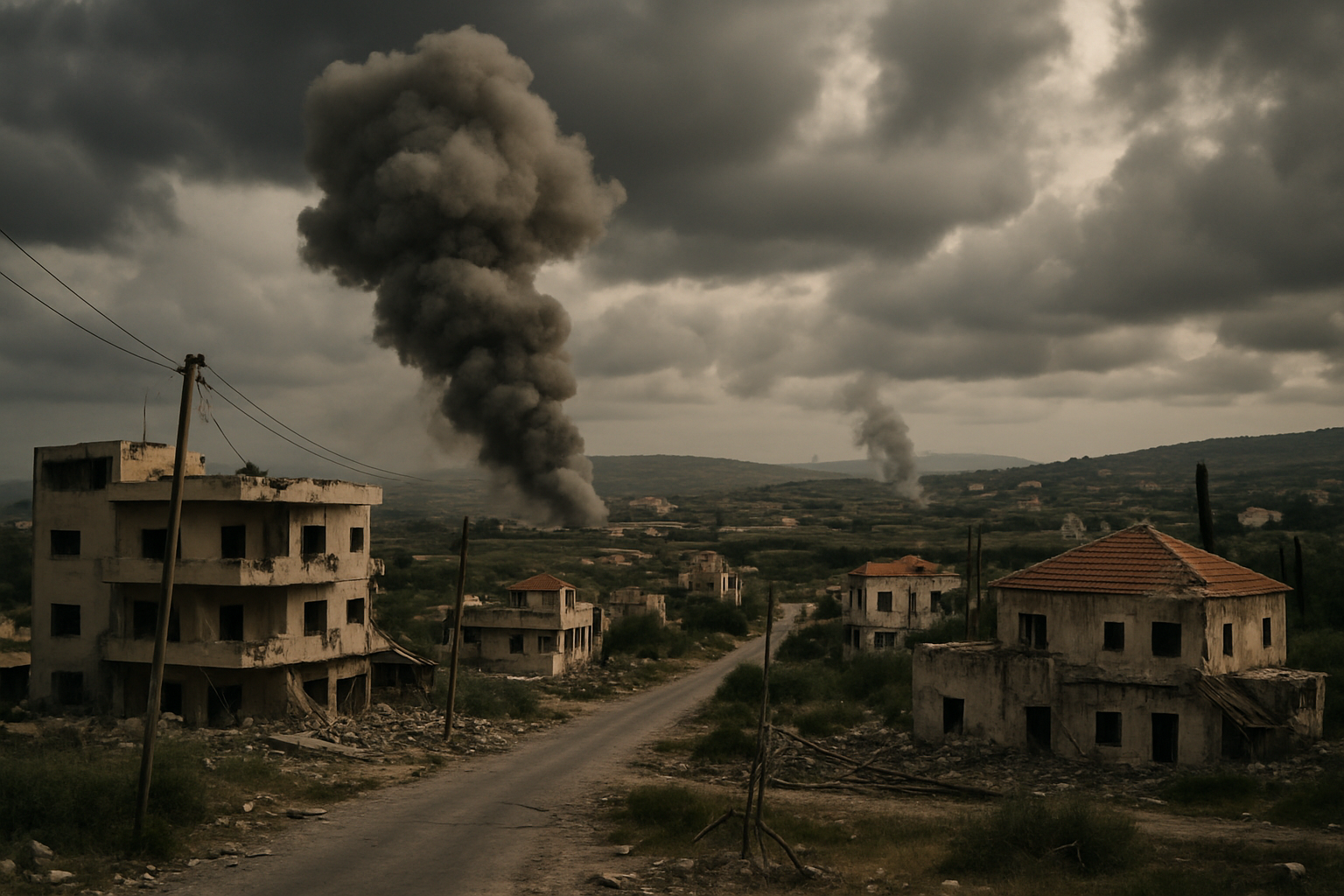
Israel has conducted new military operations in southern Lebanon despite a recently established ceasefire agreement, with Israeli Defense Forces confirming strikes against what they claim were militants approaching Israeli-controlled territory.
According to multiple international reports, Israeli forces carried out artillery attacks in southern Lebanon on Saturday, marking fresh violations of the fragile ceasefire arrangement. The Israeli military justified the operations by claiming they were targeting "militants" who approached what Israel calls the "yellow line" - a controversial demarcation zone established by Israeli forces in southern Lebanon.
New "Yellow Line" Established
Israeli military sources confirmed they have established a "yellow line" in southern Lebanon, similar to the controversial demarcation they created in the Gaza Strip. This line effectively divides Lebanese territory under Israeli military control, raising serious concerns about sovereignty violations and the expansion of Israeli territorial control beyond its internationally recognized borders.
Palestinian sources report that the Israeli military claims to have "targeted militants who attempted to approach their forces along this line," though the specific nature of these alleged violations remains disputed. Lebanese military officials have documented what they describe as "acts of aggression" by Israeli forces, including artillery shelling of southern villages.
Systematic Ceasefire Violations
The latest incidents represent part of a broader pattern of ceasefire violations that have plagued the region. According to historical context, the November 2024 US-French brokered Israel-Hezbollah ceasefire had held for over a year before completely collapsing in March 2026, when Hezbollah faced what officials described as an "impossible choice" between maintaining the ceasefire and responding to Iranian pressure following regional developments.
"Israeli forces have been documented conducting systematic targeting of medical personnel, with 26 paramedics killed and 51 wounded since March, raising serious concerns about Geneva Conventions violations."
— International monitoring sources
The humanitarian situation in Lebanon has reached catastrophic proportions, with over 1.2 million Lebanese civilians displaced - representing approximately 25% of the country's population. Emergency shelters have been overwhelmed, forcing thousands to seek refuge on Beirut's streets.
International Response and Concerns
Al Jazeera correspondents on the ground report that Israeli bulldozers are continuing home demolitions in addition to the military strikes, indicating a broader campaign of territorial control rather than defensive operations.
Spanish media sources indicate that the Israeli government has justified these offensive operations as a response to alleged "violations" by Hezbollah of the ceasefire agreement currently in effect. However, international observers have noted that Israeli forces have issued evacuation warnings affecting hundreds of thousands of Lebanese civilians, suggesting operations extending far beyond defensive measures.
Historical Context of Violations
The current crisis builds upon a long history of ceasefire violations in the region. Previous documentation shows systematic violations across multiple theaters:
- Over 1,600 documented ceasefire violations in Gaza since October 2025, resulting in 680+ Palestinian deaths during supposed peace periods
- Systematic targeting of medical facilities and personnel, including the deadliest attack at Burj Qalaouiyah healthcare center that killed 12 medical workers
- Infrastructure destruction, including the strategic Qasmiyeh Bridge over the Litani River
Regional Implications
The establishment of the "yellow line" in Lebanon mirrors Israeli tactics employed in Gaza, where similar demarcations have been used to control Palestinian movement and establish de facto territorial control. This strategy represents a significant escalation in Israeli military doctrine and territorial expansion beyond internationally recognized borders.
The timing of these operations coincides with broader Middle East tensions and comes amid what UN Secretary-General António Guterres has called "the greatest test of multilateral cooperation in the modern era." French President Emmanuel Macron has offered to host direct Israel-Lebanon talks in Paris, representing the first such diplomatic initiative since the ceasefire collapse.
Humanitarian Crisis Deepens
The continued military operations have exacerbated an already dire humanitarian situation. Emergency medical services report systematic targeting of ambulances and medical facilities, with Israeli military spokesmen threatening strikes against medical personnel while claiming, without evidence, that Hezbollah uses these facilities for military purposes - allegations that Hezbollah has categorically denied.
International humanitarian organizations have documented what they describe as potential war crimes through the systematic targeting of protected medical assets under Geneva Conventions provisions. The WHO has issued a $30.3 million emergency appeal to support healthcare systems across five Middle Eastern countries, describing the regional healthcare infrastructure as "under severe strain."
Looking Forward
The current escalation represents what international observers describe as a critical juncture that will determine whether diplomatic intervention can prevent broader regional warfare or if the trajectory toward continued military escalation will affect millions more civilians.
The fragility of the ceasefire arrangements demonstrates the challenges of maintaining negotiated peace agreements without addressing fundamental underlying political tensions and security concerns that drive the conflict. The international community faces a template-setting moment for 21st-century conflict resolution approaches, with implications extending far beyond the current crisis.
"The stakes include regional war prevention, energy security, nuclear governance credibility, and international law enforcement with implications that will affect approaches to conflict resolution for decades."
— International security analysts
As the situation continues to develop, the effectiveness of international diplomatic mechanisms and the commitment of the global community to upholding humanitarian norms and ceasefire agreements remains under intense scrutiny. The coming days will be crucial in determining whether innovative diplomatic solutions can emerge to prevent the crisis from spiraling into broader regional warfare affecting millions of civilians across the Middle East.