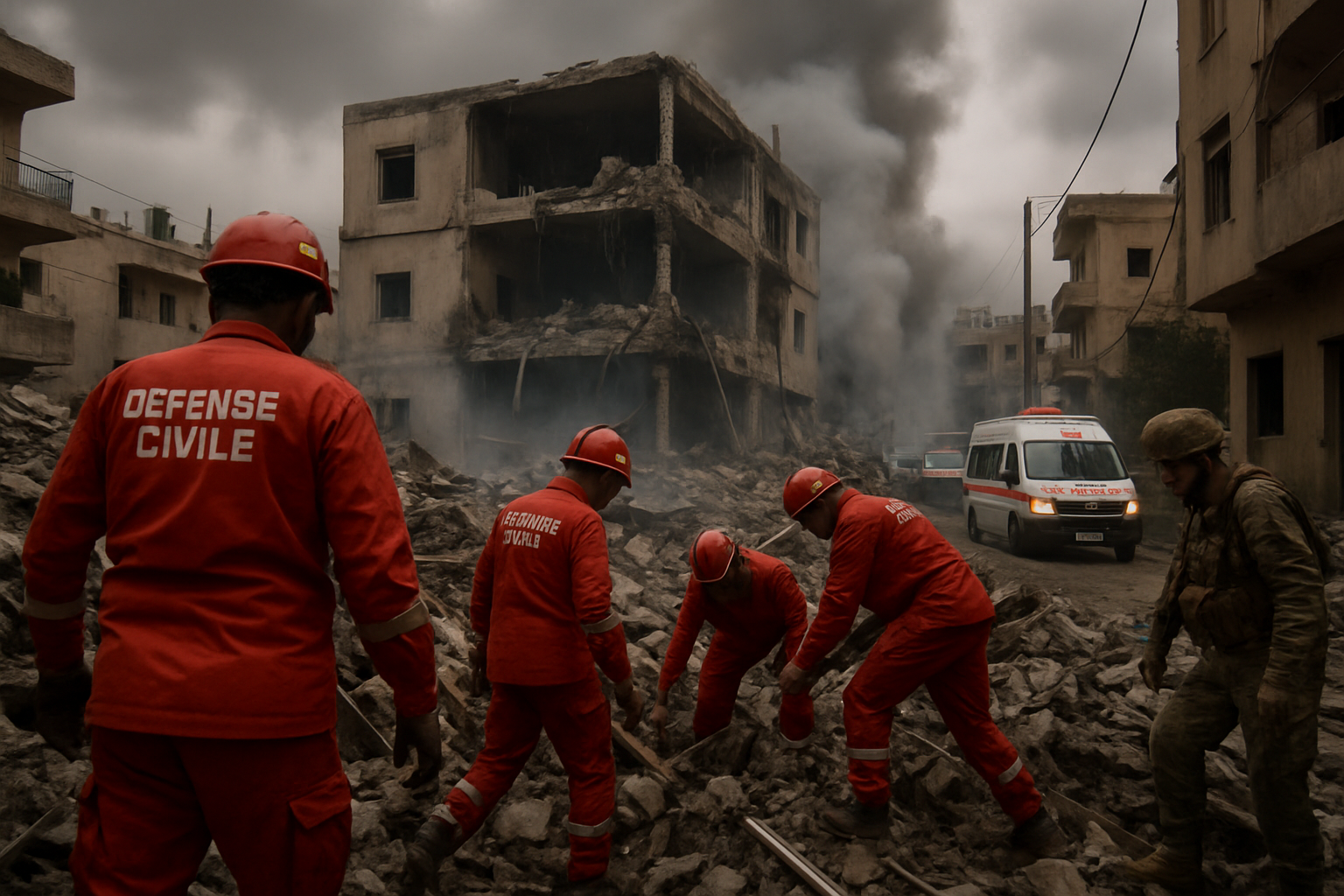
Israeli airstrikes across southern Lebanon killed at least 18 people on Saturday, including a Lebanese soldier, as the deadliest bombardment since March continues despite scheduled peace talks and international pressure to end the devastating conflict.
According to Italian news agency ANSA, the death toll rose throughout the day, with 10 people killed in morning strikes on Nabatieh and an additional 8 fatalities in afternoon attacks in the Sidon region. The casualties mark another grim milestone in a conflict that has claimed over 2,020 lives since fighting escalated in March 2026.
Strategic Targets and Civilian Impact
Lebanese authorities confirmed that Corporal Hussein Ali Nahle, a soldier with the Lebanese Armed Forces, was killed in a strike near the coastal city of Sidon. The attack underscores the expanding scope of Israeli operations, which have increasingly targeted areas beyond traditional conflict zones in southern Lebanon.
French media outlet France 24 reported that despite the intense bombardment across the region, Beirut's Rafik Hariri International Airport remains operational through "close coordination and international guarantees," though operating at significantly reduced capacity. The airport has become a critical lifeline for humanitarian aid and civilian evacuations as the crisis deepens.
German sources indicate that Netanyahu's government continues military operations with the explicit goal of "fundamentally changing the situation in the north," despite mounting international pressure for restraint. Israeli Prime Minister Benjamin Netanyahu, who is notably not participating in ongoing diplomatic initiatives, has vowed that Israel "will continue to fight" until its objectives are achieved.
Diplomatic Breakthrough Amid Military Escalation
The latest casualties come as diplomatic efforts intensify, with historic direct negotiations between Israeli and Lebanese officials scheduled for Tuesday, April 15, 2026, at the U.S. State Department. These talks represent the first formal diplomatic engagement between the two sides since the complete collapse of the November 2024 ceasefire.
"This represents our best opportunity for a lasting peace framework that addresses the security concerns of both sides while protecting Lebanese sovereignty,"
— Senior diplomatic source familiar with the negotiations
The November 2024 U.S.-French brokered ceasefire between Israel and Hezbollah had held for over a year, creating hopes for long-term stability. However, the agreement completely shattered in March 2026 when Hezbollah faced what sources describe as an "impossible choice" between maintaining the ceasefire and responding to Iranian pressure for retaliation following the death of Iranian Supreme Leader Ali Khamenei on March 1.
Humanitarian Crisis Reaches Breaking Point
The human cost of the renewed conflict has been devastating. Lebanese Health Ministry data shows that over 2,020 people have been killed since fighting resumed, with casualties mounting daily. The displacement crisis has reached unprecedented levels, with 1.2 million Lebanese civilians—representing 25% of the population—forced from their homes.
Emergency shelters across Lebanon are overwhelmed, with thousands of displaced families sleeping on the streets of Beirut. The systematic targeting of medical personnel has become a particular concern, with 26 paramedics killed and 51 wounded since March 2, according to health authorities.
Palestinian sources report that the conflict has created ripple effects beyond Lebanon's borders, complicating broader regional dynamics as the international community struggles to contain the crisis.
Regional Implications and International Response
The escalation occurs within the broader context of Middle Eastern instability following the March 1 death of Iran's Supreme Leader Ali Khamenei. Hezbollah's decision to abandon its ceasefire commitments and declare "resistance as the only option" has pulled Lebanon into a wider regional confrontation that has had global implications.
Romanian diplomatic sources confirm that Lebanese Prime Minister Nawaf Salam has postponed his planned visit to the United States and United Nations, citing the need to remain in Beirut to coordinate the national response to the crisis. The decision highlights the severity of the situation facing the Lebanese government.
Qatar-based Al Jazeera reports that the Lebanese Health Ministry's casualty figures exceed 2,000 deaths, making this one of the deadliest periods in Lebanese history since the country's civil war. The systematic nature of the violence has raised concerns among international observers about potential violations of international humanitarian law.
Economic and Infrastructure Impact
The conflict has devastated Lebanon's already fragile economy and critical infrastructure. Israeli forces have targeted key installations, including the destruction of the strategic Qasmiyeh Bridge over the Litani River, while issuing demolition orders for civilian homes near the border.
The ongoing violence has created what analysts describe as the most serious challenge to regional stability since the Cold War, with implications extending far beyond Lebanon's borders. Global markets have been affected, with oil prices rising and aviation routes disrupted due to airspace restrictions.
Path Forward Uncertain
As diplomatic efforts intensify ahead of the April 15 peace talks, the continued military operations raise questions about the viability of negotiations. The scheduled Washington discussions will focus on establishing an immediate ceasefire, creating buffer zones for force withdrawals, and deploying Lebanese army and UN peacekeeping forces.
However, the fundamental challenge remains addressing what led to the collapse of the previous ceasefire. International mediators must find ways to insulate Lebanese-Israeli agreements from broader regional pressures, particularly Iran's influence over Hezbollah, while ensuring Israeli security concerns are addressed.
The coming days will be critical in determining whether diplomatic intervention can prevent further escalation or if the region will face prolonged warfare with devastating humanitarian consequences. The international community continues to pressure both sides to prioritize civilian protection and create space for meaningful negotiations.
With over 2,000 lives lost and more than a million people displaced, the stakes for successful diplomacy have never been higher. The April 15 talks represent what many observers see as a last opportunity to prevent the complete breakdown of regional stability and the emergence of an even wider conflict.