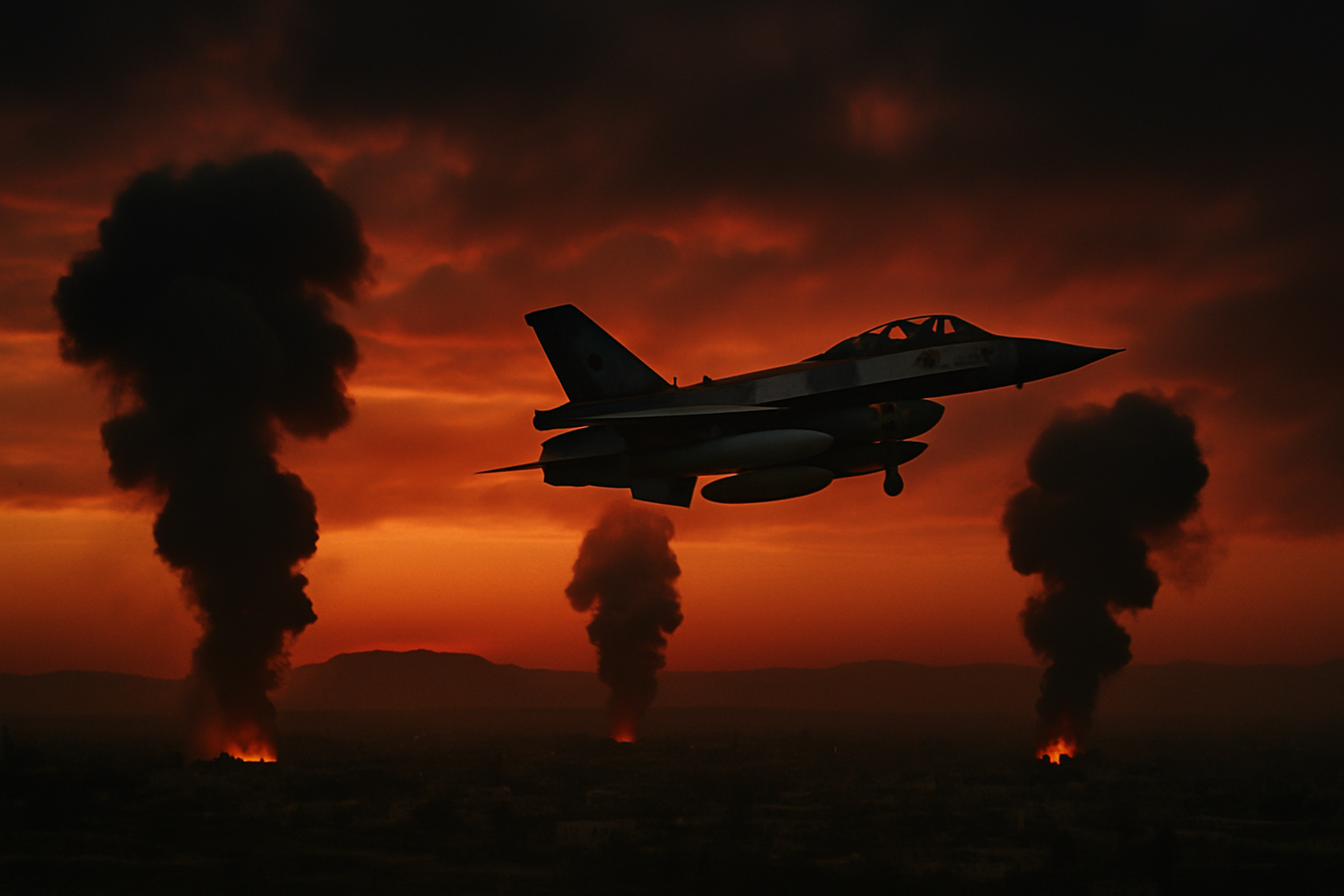
Israel carried out its heaviest strikes on Lebanon since the conflict began in March, killing more than 250 people on Wednesday and wounding over 1,100, as a bitter dispute over whether Lebanon is covered by the fragile US-Iran ceasefire threatened to unravel the truce within hours of its announcement.
The deadly bombardment represents the most devastating single day of warfare since hostilities erupted following the death of Iranian Supreme Leader Ali Khamenei in March. At least five consecutive strikes hit Beirut on Wednesday afternoon, sending columns of smoke over the Lebanese capital as Israel's military announced it had launched the largest coordinated strike of the war.
More than 100 Hezbollah command centers and military sites were targeted across Beirut, the Bekaa Valley and southern Lebanon within ten minutes, according to Israeli military sources. The highest toll was recorded in Beirut, where 91 people were killed, while Lebanon's civil defense service put the overall death toll at 254, with the health ministry reporting 182 dead.
Critical Loophole Threatens Ceasefire Framework
The strikes occurred amid a fundamental disagreement over the scope of the "Islamabad Accord," the Pakistan-mediated ceasefire between the United States and Iran announced Tuesday. Israeli Prime Minister Benjamin Netanyahu explicitly stated that Lebanon is not covered by the agreement, creating what analysts describe as a critical loophole in the diplomatic breakthrough.
US Vice President JD Vance acknowledged Iran's "legitimate misunderstanding" about Lebanon's inclusion but maintained that the United States never agreed to include Israeli-Hezbollah operations in the ceasefire framework. This dispute has already prompted Iranian officials to question whether they will attend scheduled talks in Islamabad on Friday.
"In such a situation, a bilateral ceasefire or negotiations were unreasonable to proceed with," said Iranian parliament speaker Mohammed Bager Qalibaf, Iran's lead negotiator, warning that Iran would consider withdrawal from talks unless comprehensive ceasefire enforcement includes all fronts.
— Mohammed Bager Qalibaf, Iranian Parliament Speaker
Humanitarian Catastrophe Deepens
The latest strikes have exacerbated an already dire humanitarian situation in Lebanon, where over 1.2 million people – representing 25% of the population – have been displaced since March. Emergency shelters are overwhelmed, with thousands of Lebanese families sleeping on the streets of Beirut as traditional support systems collapse under the unprecedented scale of displacement.
Particularly alarming is the systematic targeting of medical personnel, with 26 paramedics killed and 51 wounded since March 2, according to Lebanese health authorities. The deadliest attack occurred at the Burj Qalaouiyah healthcare center in the Bint Jbeil district, where 12 medical workers including doctors, nurses, and paramedics were killed in what international observers describe as potential Geneva Conventions violations.
Israeli military spokesman Avichai Adraee has threatened strikes against ambulances and medical facilities, claiming Hezbollah uses them for military purposes – allegations that Hezbollah categorically denies. Such targeting of protected humanitarian assets under the Geneva Conventions constitutes potential war crimes requiring international investigation.
Background: From Ceasefire to Crisis
The current crisis stems from the complete collapse of the November 2024 US-French brokered ceasefire between Israel and Hezbollah, which had held for over a year despite minor violations. The agreement required both Israeli forces and Hezbollah to withdraw from southern Lebanon, establishing a buffer zone with Lebanese army and UN peacekeepers.
This arrangement shattered in March 2026 following the death of Iranian Supreme Leader Ali Khamenei, when Hezbollah faced what officials described as an "impossible choice" between maintaining the ceasefire and responding to Iranian pressure for retaliation. The organization ultimately chose "Iranian solidarity over Lebanese sovereignty," declaring "resistance as the only option" and pulling Lebanon into the broader Iran-Israel confrontation.
Gaza Operations Continue
Simultaneously, Israeli operations in Gaza have intensified, with forces killing an Al Jazeera Mubasher correspondent Mohammed Wishah among four people in Wednesday's strikes. According to Reuters, Wishah died after a vehicle was hit in Gaza City, marking the latest deadly attack on journalists covering the ongoing conflict.
The Gaza situation remains volatile with over 1,600 documented ceasefire violations since October 2025, resulting in more than 680 Palestinian deaths during what was supposed to be a peace period. The Gaza Civil Defense has shut down due to fuel shortages, while the Rafah crossing operates at severely restricted capacity with only 27 Palestinians crossing daily versus the agreed quota of 200.
Adding to tensions, Israeli forces have compelled a Palestinian resident to demolish his own home in the al-Bustan neighborhood of Silwan, south of Al-Aqsa Mosque, citing construction without permits. The demolition occurred amid extended hours for settler incursions into the mosque compound, described as a dangerous escalation affecting the historical and legal status quo.
International Response and Diplomatic Efforts
French President Emmanuel Macron has offered to host direct Israel-Lebanon talks in Paris – the first such negotiations since the ceasefire collapse. Multiple international leaders, including UN Secretary-General António Guterres, have called the regional situation "the greatest test of multilateral cooperation in the modern era."
Sweden has provided 65 million kronor in humanitarian aid, while Turkey has warned against what it describes as Israeli actions amounting to "new genocide" under the pretext of targeting Hezbollah. The European Union has expressed grave concerns about the escalation and its implications for regional stability.
UN peacekeepers have also been affected, with a UNIFIL base near Mais al-Jabal struck and one peacekeeper wounded – representing the first major breach of peacekeeping arrangements since the November 2024 ceasefire implementation.
Regional and Global Implications
The crisis occurs within the context of the broader Middle East conflict that began following Khamenei's death on March 1, which has already caused unprecedented global disruptions. More than 18,000 flights have been cancelled worldwide, oil prices have surged past $100 per barrel, and Iran's mining of the Strait of Hormuz has affected 40% of global oil transit.
The International Energy Agency has implemented its largest strategic reserve release in 50 years, releasing 400 million barrels to stabilize global markets. Natural gas prices have increased by 24% in Europe and 78% in the United States, while Qatar's LNG production has been halted, threatening European energy supplies.
Regional coalition partners, including Saudi Arabia, the UAE, Qatar, and Egypt, who had maintained unprecedented consensus supporting diplomatic solutions, now find their positions severely strained as Iranian retaliation has directly targeted their territories during the broader conflict.
Looking Ahead: Diplomatic vs. Military Solutions
The coming days are crucial for determining whether international diplomatic intervention can contain the crisis or if the situation will escalate into broader regional warfare affecting millions more civilians. The success or failure of current containment efforts will establish precedents for 21st-century conflict resolution approaches with implications extending decades beyond the current events.
As Hezbollah maintains an estimated 20,000 fighters and has conducted over 40 operations targeting northern Israeli sites reaching as far as Haifa, the organization has declared "direct confrontations" with Israeli forces in southern Lebanon, marking a significant operational escalation from its previous restraint strategy.
The template-setting nature of this crisis, as described by UN leadership, demonstrates the challenges of maintaining negotiated peace agreements when underlying political and security tensions remain unresolved. The international community faces a critical test of its commitment to upholding humanitarian norms in modern conflicts while preventing the expansion of regional warfare that could destabilize the entire Middle East for generations to come.