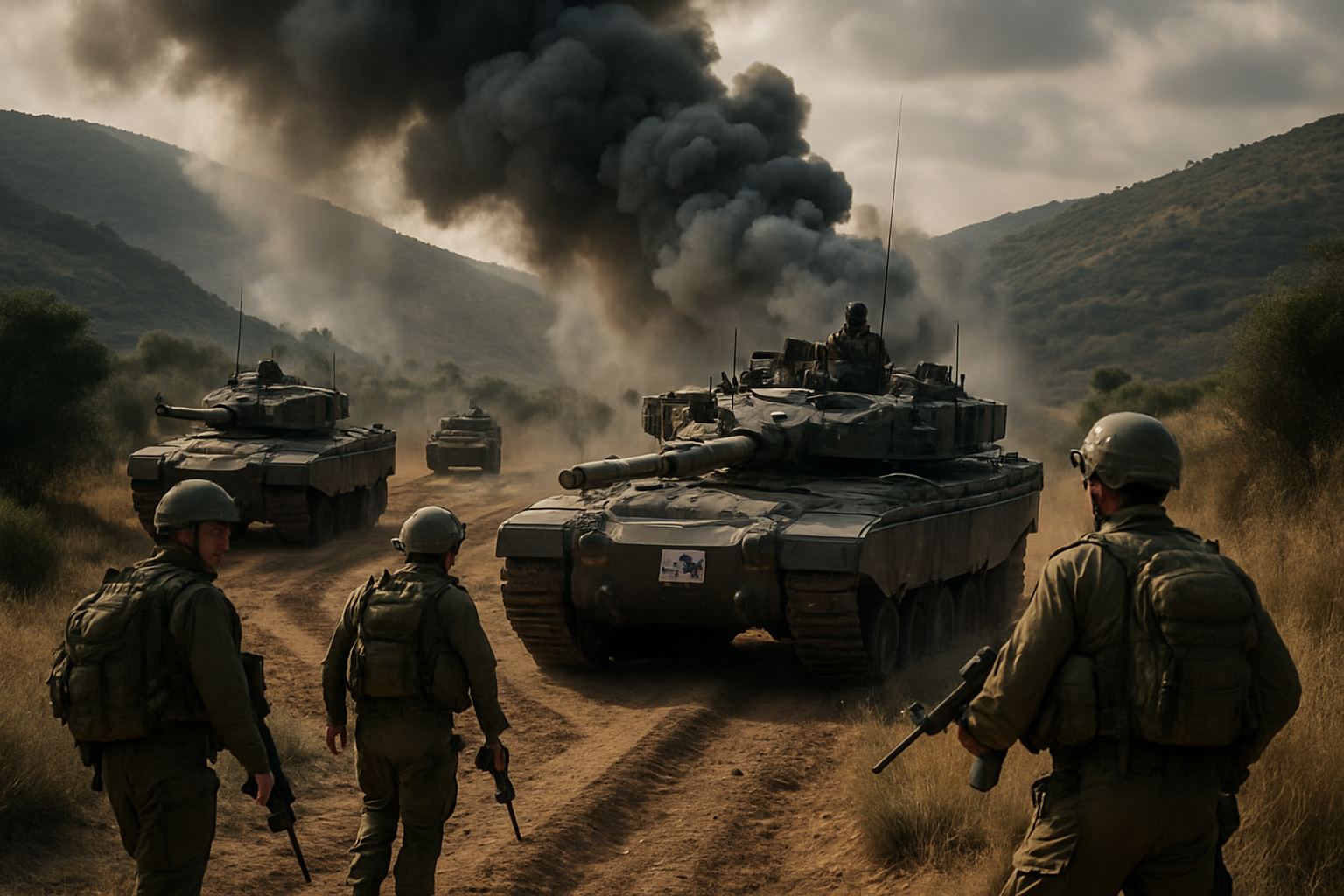
Israeli Defense Forces officially announced the expansion of ground operations in southern Lebanon on Monday, marking a significant escalation in the conflict that has displaced over one million Lebanese civilians since March 2.
The Israeli military described the operations as "limited and targeted" against Hezbollah strongholds, but the scale represents a dramatic shift from the November 2024 ceasefire that had held for over a year. Military spokesperson Lieutenant Colonel Nadav Shoshani confirmed soldiers were conducting operations in "new locations" beyond the five positions Israel had maintained since the ceasefire agreement.
Massive Civilian Displacement Crisis
The humanitarian impact has been catastrophic. Lebanese Health Ministry reports indicate over 886 people have been killed, including 111 children and 38 healthcare workers, according to the latest casualty figures. The displacement crisis has reached unprecedented proportions, with Norwegian sources confirming over one million people have registered as internally displaced within Lebanon.
Emergency shelters across the country have reached breaking point. Thousands of families are sleeping in the streets of Beirut, in their cars, or seeking refuge wherever they can find space. Traditional support systems including schools, religious institutions, and community centers are overwhelmed by the scale of displacement.
"We are still alive, but for how long?"
— Southern Lebanese resident quoted in Le Monde
The systematic targeting of medical personnel has drawn international condemnation. Since March 2, at least 26 paramedics have been killed and 51 wounded according to Lebanon's Health Ministry. The deadliest single attack occurred at Burj Qalaouiyah healthcare center, where 12 medical workers were killed.
November 2024 Ceasefire Completely Collapsed
The current escalation represents the complete breakdown of the November 2024 US-French brokered ceasefire agreement that had required both Israeli forces and Hezbollah to withdraw from southern Lebanon, with Lebanese army and UN peacekeepers establishing a buffer zone.
The ceasefire held for over a year despite minor violations, but came under severe strain following the death of Iranian Supreme Leader Ali Khamenei on March 1, 2026. Hezbollah, faced with an impossible choice between maintaining the ceasefire and responding to Iranian pressure for retaliation, chose to join the broader Iran-Israel conflict.
Israeli Defense Minister Israel Katz warned that Lebanon could face territorial losses and infrastructure damage unless Hezbollah was completely disarmed. "Lebanese displaced won't return until its own citizens are safe," Katz declared, linking the return of displaced Lebanese civilians to Israeli security guarantees.
Regional Context and International Response
The Lebanon crisis unfolds within the broader Middle East conflict that erupted following Operation Epic Fury, the US-Israeli military campaign against Iran. The war has created a cascading series of crises across the region, with over 18,000 flights cancelled worldwide and oil prices surging past $100 per barrel.
French President Emmanuel Macron has offered to host direct Israel-Lebanon talks in Paris, representing the first such negotiations since the ceasefire collapse. UN Secretary-General António Guterres visited Beirut urging diplomatic solutions, while describing the overall regional situation as "the greatest test of multilateral cooperation in the modern era."
Turkey has warned that Israel is committing a "new genocide" under the pretext of targeting Hezbollah, with Foreign Minister Hakan Fidan expressing deep concern about Netanyahu's actions. Sweden has provided 65 million kronor in humanitarian aid responding to UN appeals for the 800,000+ Lebanese displaced.
Military Operations Intensify
Israeli evacuation orders now cover over 300,000 Lebanese civilians according to IDF estimates, with the Lebanese Red Cross suggesting the actual numbers could be higher. The operations have focused on multiple strategic areas: Bekaa Valley weapons depots and command centers, southern Lebanon Hezbollah positions, and Beirut's southern suburbs.
Hezbollah has responded with over 40 operations targeting northern Israeli military sites, with some reaching as far as Haifa. The group declared "direct confrontations" with Israeli forces in southern Lebanon, marking a significant operational escalation from its previous defensive posture.
UN peacekeepers have also come under attack. A UNIFIL base near Mais al-Jabal was struck, wounding one peacekeeper. UNIFIL spokeswoman Kandice Ardiel described the situation as "precarious and volatile," affecting both peacekeepers and civilians forced to evacuate southern Lebanon.
International Law Concerns
The systematic targeting of medical facilities and personnel has raised serious questions about compliance with international humanitarian law. Israeli military spokesman Avichai Adraee threatened strikes against ambulances and medical facilities, claiming Hezbollah was using them for military purposes without providing evidence. Hezbollah officials categorically denied these allegations.
The targeting of protected humanitarian assets under the Geneva Conventions constitutes potential war crimes requiring international investigation. The healthcare system collapse has compromised emergency response capabilities across southern Lebanon and parts of the Bekaa Valley.
Economic and Social Impact
Lebanon's already fragile economy faces additional devastating blows from managing the displacement crisis. The country was still recovering from years of economic collapse and political instability when the current crisis began. Critical infrastructure in southern Lebanon and the Bekaa Valley has suffered significant damage, affecting electricity, water, and telecommunications.
The Lebanese diaspora worldwide is experiencing anguish watching the humanitarian catastrophe unfold. In cities like Vancouver, Lebanese-Canadian communities are organizing support networks for families, many of whom have lost contact with relatives due to damaged communication infrastructure in affected areas.
Path Forward Uncertain
With military analysts warning that the current trajectory risks prolonged regional warfare, the coming days and weeks will be crucial in determining whether diplomatic intervention can arrest the escalating violence. The international community faces the challenge of managing the Iran crisis, succession issues following Khamenei's death, and now the Lebanon containment challenge simultaneously.
The success or failure of international mediation efforts will have implications far beyond Lebanon's borders, potentially setting precedents for how the international community responds to humanitarian crises in the context of broader regional conflicts.
"This is a template-setting moment for international commitment to upholding humanitarian norms in modern conflicts."
— International humanitarian law expert
As Israeli ground operations continue to expand and the humanitarian crisis deepens, the situation represents one of the most significant tests of diplomatic conflict resolution mechanisms in decades. The stakes extend beyond immediate casualties and displacement to fundamental questions about civilian protection, international law enforcement, and regional stability in an increasingly interconnected world.