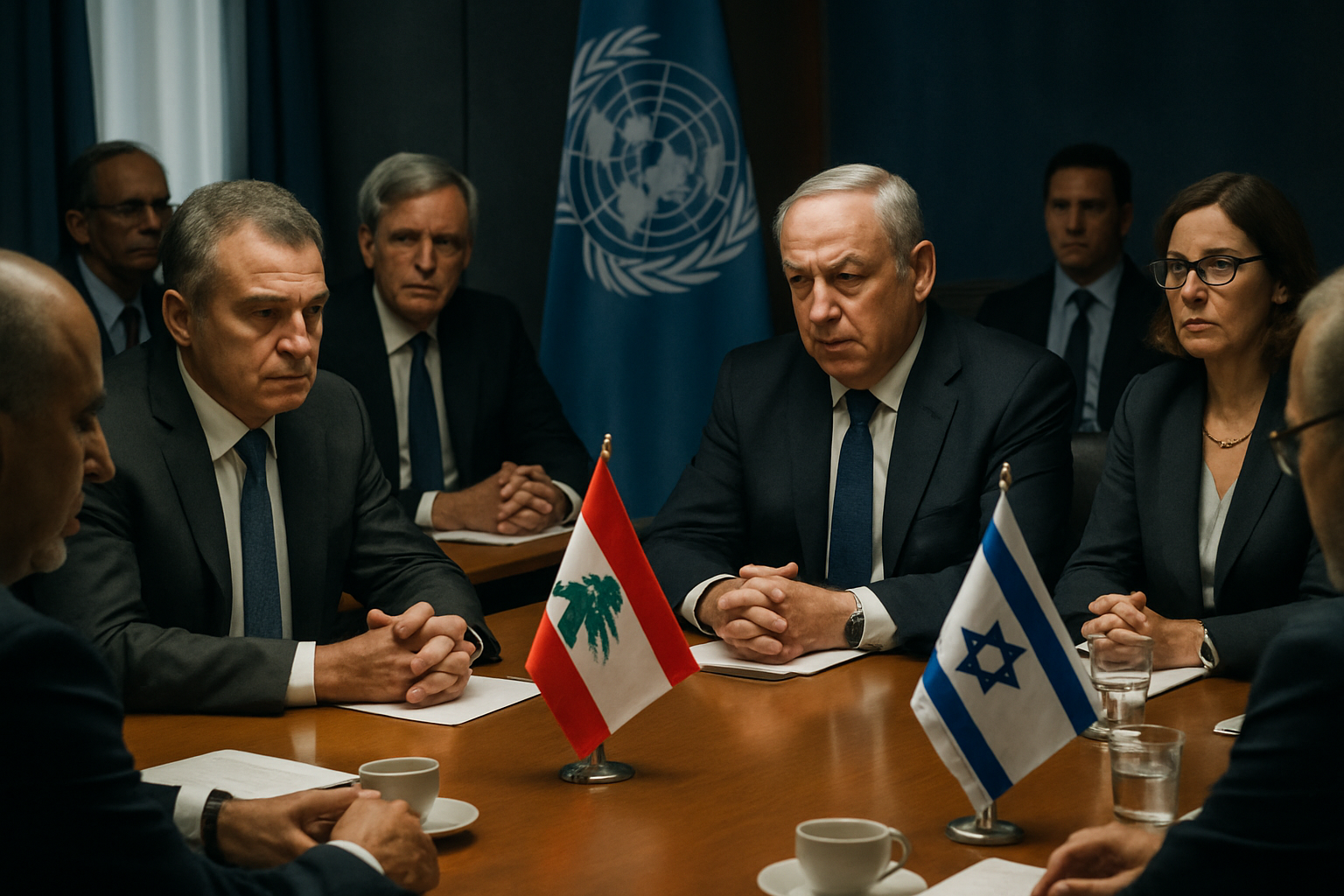
International diplomatic efforts have intensified to broker direct talks between Israel and Lebanon as the conflict with Hezbollah continues to escalate, with mounting casualties and increasing concerns that the violence could expand across the region amid the broader Middle East crisis.
French President Emmanuel Macron announced Saturday that Lebanon was ready to engage in "direct talks" with Israel, offering to host negotiations in Paris. This diplomatic initiative comes as Lebanon faces its most severe humanitarian crisis since 2006, with over 800 people killed and nearly 832,000 displaced since Israeli operations began on March 2, according to Palestinian sources.
Diplomatic Push Amid Escalating Violence
The French diplomatic initiative follows a visit to Beirut by UN Secretary-General António Guterres, who urged all parties to pursue a diplomatic solution to the crisis. Macron's offer to host talks represents the most significant international mediation effort since the complete collapse of the November 2024 ceasefire agreement brokered by the United States and France.
According to multiple sources, Israel and Lebanon are expected to hold their first direct talks in the coming days, marking the first such negotiations since the start of the broader Iran war that has drawn Lebanon deeper into the regional conflict. Israeli newspaper Haaretz reported that both Tel Aviv and Washington are currently reviewing the French proposal.
The proposed negotiations would aim to reach a "political declaration" within one month, according to reports from Palestinian media sources citing French diplomatic initiatives. However, the French Foreign Ministry has denied the existence of any specific "French plan for peace in Lebanon," stating instead that they have "offered to facilitate talks between the parties."
Humanitarian Crisis Deepens
The humanitarian situation in Lebanon continues to deteriorate dramatically. Lebanese Health Ministry figures show 826 people have died and 2,009 have been injured since the Israeli offensive began. The displacement crisis has reached unprecedented levels, with emergency shelters overwhelmed and many families forced to sleep on the streets of Beirut.
Particularly concerning are reports of systematic targeting of medical personnel and facilities. According to France 24 reporting, 26 paramedics have been killed and 51 wounded since March 2. A devastating overnight Israeli strike in southern Lebanon killed a dozen health workers at a clinic in the Bint Jbeil district, highlighting the dangerous conditions faced by emergency responders.
The Israeli military has warned that it may strike ambulances and medical facilities, claiming they are being used unlawfully by Hezbollah, though no evidence has been provided for these allegations. Hezbollah officials have categorically denied using medical facilities for military purposes. Such targeting of medical personnel and facilities constitutes a serious violation of the Geneva Conventions and international humanitarian law.
Regional and International Concerns
The conflict has drawn sharp international criticism, with Turkey warning that Israel may commit "a new genocide" in Lebanon under the pretext of fighting Hezbollah. Turkish Foreign Minister Hakan Fidan expressed deep concern that Israeli Prime Minister Benjamin Netanyahu is "moving toward a new genocide under the pretext of fighting Hezbollah."
The escalation has also prompted Sweden to provide 65 million kronor ($6 million) in humanitarian aid to Lebanon, responding to UN appeals for urgent support. The Swedish aid package will help the approximately 800,000 Lebanese who have fled their homes during the ongoing conflict.
Hezbollah has continued its military operations, with the group announcing over 40 operations targeting military sites and settlements in northern Israel, reaching as far as the city of Haifa. The organization has declared it is engaging in "direct confrontations" with Israeli forces in southern Lebanon, marking a significant escalation from previous conflict phases.
Context of Broader Regional Crisis
The Lebanon-Israel conflict is unfolding within the context of the broader Middle East war that began with the death of Iran's Supreme Leader Ali Khamenei on March 1, 2026. Hezbollah's decision to join the regional conflict in solidarity with Iran marked the complete breakdown of the November 2024 ceasefire that had held for over a year despite minor violations.
The ceasefire, brokered by the United States and France, had required the withdrawal of both Israeli forces and Hezbollah from southern Lebanon, with Lebanese army and UN peacekeepers establishing a buffer zone. The agreement's collapse has now drawn Lebanon into a multi-front regional conflict involving Iran, Israel, and the United States.
UN peacekeeping forces have also come under fire, with a UNIFIL base near the village of Mais al-Jabal in southern Lebanon struck, wounding one peacekeeper. UNIFIL spokeswoman Kandice Ardiel noted that "the situation here in South Lebanon is precarious and volatile, not just for peacekeepers, but also for the civilians who live here and who have had to leave this area as well."
International Mediation Efforts
The current diplomatic push represents a critical test of international conflict resolution mechanisms. The French initiative, supported by UN mediation efforts, comes at a time when the international community is already stretched managing the broader Iran crisis and succession issues following Khamenei's death.
Reports suggest that any successful agreement would need to address not only immediate ceasefire arrangements but also longer-term security guarantees and the status of Hezbollah's military capabilities. The group, estimated to have 20,000 fighters, faces an impossible choice between maintaining regional solidarity with Iran and protecting Lebanese sovereignty.
The timing of these diplomatic efforts is crucial, as military analysts warn that the current trajectory could lead to a prolonged regional war affecting multiple countries and potentially drawing in other Iranian proxy groups across the Middle East.
Challenges Ahead
Several major obstacles remain for any successful diplomatic resolution. First, the ongoing broader Middle East conflict involving Iran, Israel, and the United States creates a complex regional dynamic that extends far beyond the bilateral Lebanon-Israel relationship.
Second, the humanitarian crisis in Lebanon has reached such severe proportions that immediate action is needed to address the displacement of nearly one million people and the breakdown of essential services. Any ceasefire agreement must include robust humanitarian provisions and international support for reconstruction.
Third, the systematic targeting of medical facilities and personnel has created deep concerns about compliance with international humanitarian law. The international community will need to address accountability for these violations as part of any comprehensive settlement.
The international diplomatic efforts come at a critical juncture when the conflict could either be contained through renewed negotiations or spiral into a broader regional war. The success or failure of these mediation attempts will likely determine whether the Middle East faces months or years of continued warfare, with devastating consequences for millions of civilians across the region.
As French President Macron's offer to host direct talks awaits responses from all parties, the international community watches closely to see whether diplomatic solutions can still prevail over military escalation in one of the world's most volatile regions.