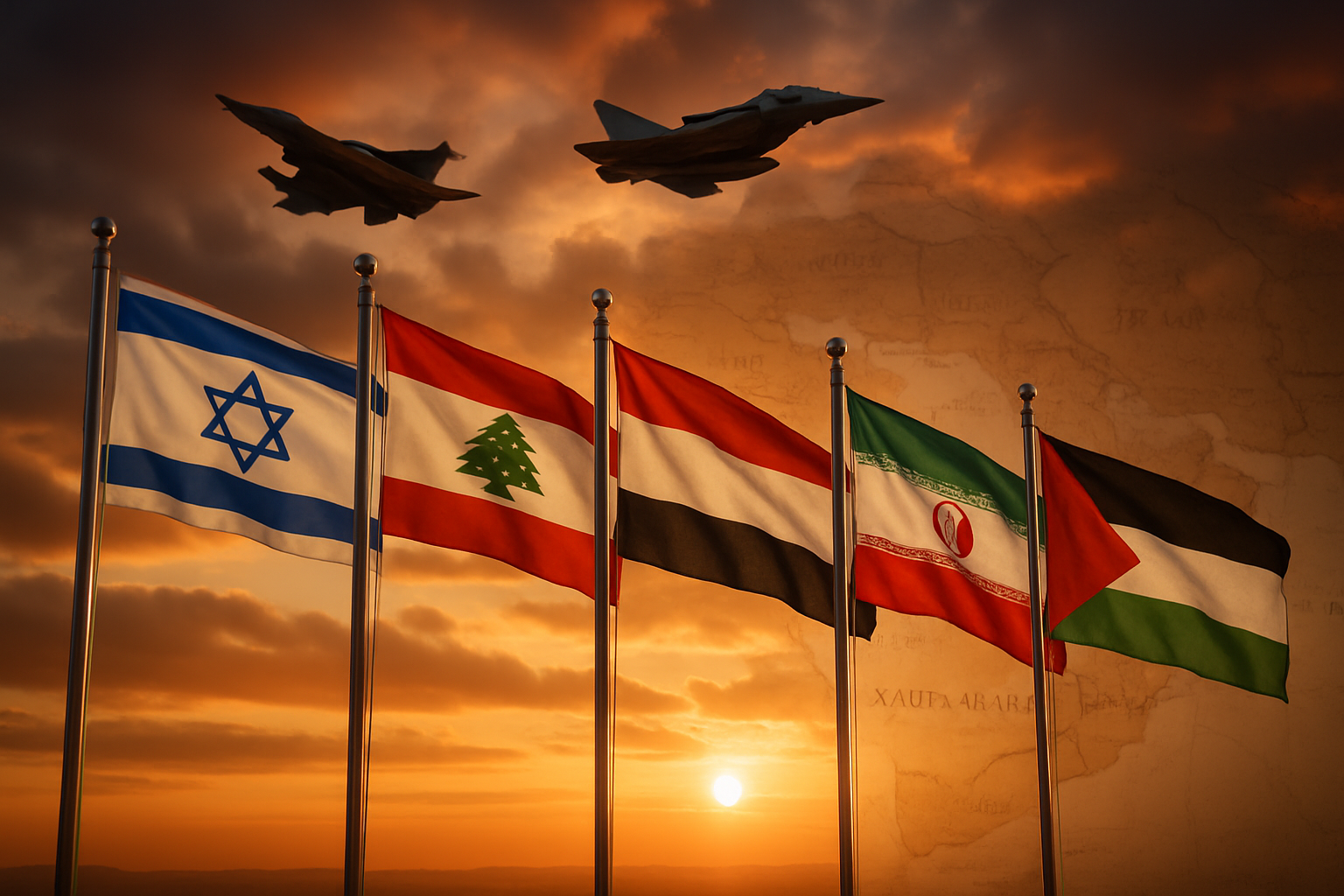
Israeli military operations across Lebanon and Gaza have intensified dramatically as regional tensions reach a critical juncture, with humanitarian officials reporting over 1,200 deaths and more than 1.2 million displaced amid preparations for historic Israel-Lebanon peace talks scheduled for Tuesday.
The escalating violence comes as diplomatic efforts to contain the broader Middle East crisis have achieved mixed results, with Pakistan successfully mediating a historic US-Iran ceasefire through the "Islamabad Accord" while Israeli operations continue unabated in multiple theaters.
Lebanon Crisis Reaches Breaking Point
Lebanese authorities report that Israeli strikes have killed at least 254 people in a single day this week, marking the deadliest bombardment since the conflict began in March 2026. The humanitarian catastrophe has reached unprecedented levels, with 1.2 million Lebanese displaced – representing 25% of the country's population.
Emergency shelters across Lebanon have been overwhelmed, forcing thousands to sleep on Beirut's streets as the country struggles to cope with the displacement crisis. The systematic targeting of medical personnel has drawn international condemnation, with 26 paramedics killed and 51 wounded since March 2.
"The situation has become precarious and volatile, affecting both peacekeepers and civilians who are being forced to evacuate southern Lebanon areas."
— Kandice Ardiel, UNIFIL Spokeswoman
The deadliest single attack on healthcare workers occurred at the Burj Qalaouiyah primary healthcare center in Bint Jbeil district, where 12 medical workers – including doctors, nurses, and paramedics – were killed in what international observers describe as potential Geneva Conventions violations.
Gaza Operations Continue Despite Ceasefire Claims
Meanwhile, Israeli operations in Gaza have resulted in at least seven additional deaths in the Al-Bureij refugee camp and Beit Lahiya areas. Palestinian health officials report these strikes are part of a systematic pattern of ceasefire violations, with over 1,600 documented breaches since October 2025 resulting in 680+ Palestinian deaths during what was supposed to be a peace period.
The Gaza Civil Defense has been forced to shut down operations due to fuel shortages, severely hampering emergency response capabilities. The Rafah crossing, Gaza's only non-Israeli controlled access point, remains severely restricted with only 27 Palestinians able to cross daily versus the agreed quota of 200.
Dr. Mohamed Abu Selmiya, Director of Al-Shifa Hospital, has repeatedly questioned "Where is the ceasefire?" as health officials report that 20,000 Palestinians await blocked medical evacuations, with 6-10 critically ill patients dying daily according to Health Ministry Director Zaher al-Wahidi.
Diplomatic Breakthrough Amid Military Escalation
Despite the intensifying violence, diplomatic efforts have achieved a significant breakthrough with the announcement of direct Israel-Lebanon peace talks scheduled for Tuesday, April 15, 2026, at the US State Department. This marks the first formal diplomatic engagement between the two countries since the November 2024 ceasefire collapsed in March.
The talks come as Pakistan has successfully mediated the historic "Islamabad Accord" between the United States and Iran, achieving a ceasefire just 88 minutes before President Trump's "whole civilization die" deadline. The agreement has led to a dramatic 20% crash in oil prices from $119.50 to below $100 per barrel and the partial reopening of the Strait of Hormuz.
Critical Loophole Threatens Broader Peace
However, a critical loophole has emerged that threatens the sustainability of the broader diplomatic framework. Israeli Prime Minister Netanyahu has explicitly excluded Lebanon from the US-Iran ceasefire, creating what Vice President JD Vance acknowledged as Iran's "legitimate misunderstanding" about the scope of the agreement.
Iran has threatened to withdraw from the Islamabad talks unless comprehensive ceasefire enforcement is applied to all fronts, including Lebanon. This disagreement has emerged as the most dangerous threat to the Pakistan-mediated diplomatic breakthrough that prevented what many observers described as the most serious international crisis since the Cold War.
Collapse of Previous Ceasefire Arrangements
The current crisis stems from the complete collapse of the November 2024 US-French brokered ceasefire between Israel and Hezbollah, which had held for over a year. The agreement broke down in March 2026 when Hezbollah faced what officials described as an "impossible choice" between maintaining the ceasefire and responding to Iranian pressure for retaliation following Supreme Leader Ali Khamenei's death on March 1.
Hezbollah ultimately chose what it termed "Iranian solidarity over Lebanese sovereignty," declaring "resistance as the only option" and pulling Lebanon into the broader Iran-Israel confrontation that has reshaped Middle Eastern geopolitics.
Regional and Global Implications
The expanding crisis has had far-reaching global implications, with over 18,000 flights cancelled worldwide in what represents the most severe aviation disruption since COVID-19. The International Energy Agency has conducted its largest strategic reserve release in 50-year history, deploying 400 million barrels to stabilize global energy markets.
Regional coalition partners including Saudi Arabia, UAE, Qatar, and Egypt have maintained their diplomatic support for peaceful solutions despite coming under Iranian attack during the broader crisis. The coalition survived maximum strain when Iran conducted "Operation True Promise 4," which resulted in casualties across member territories including one death in the UAE, 32 injured in Kuwait, and eight wounded in Qatar.
"This represents the greatest test of multilateral cooperation in the modern era. The success or failure of these diplomatic efforts will determine whether we can prevent broader regional warfare."
— UN Secretary-General António Guterres
International Response and Condemnation
International condemnation has been swift and unified, with the UK describing the situation as "deeply troubled," France calling it "unacceptable," and Italy condemning the targeting of civilian populations. French President Emmanuel Macron has offered to host direct Israel-Lebanon talks in Paris as the first major diplomatic initiative since the ceasefire collapse.
The World Health Organization has launched a $30.3 million emergency appeal to support health systems across five Middle Eastern countries, warning that healthcare infrastructure is "under severe strain." The systematic destruction of medical facilities has raised concerns about generational impacts requiring sustained international engagement for reconstruction.
Military Escalation and Future Operations
Israeli Defense Forces Chief Eyal Zamir has declared that current operations are "just beginning," with "several weeks" of continued ground operations planned. Israeli forces have expanded beyond their November 2024 ceasefire positions to "new locations," destroying strategic infrastructure including the Qasmiyeh Bridge over the Litani River and issuing demolition orders for civilian homes near the border.
Hezbollah, estimated to maintain 20,000 fighters, has conducted over 40 operations targeting northern Israeli military sites reaching as far as Haifa. The organization has declared "direct confrontations" with Israeli forces in southern Lebanon, marking a significant operational escalation from its previous restraint strategy.
Template-Setting Moment for 21st Century Diplomacy
The crisis represents what many analysts describe as a template-setting moment for 21st-century conflict resolution, testing whether diplomatic innovation can prevent catastrophic escalation when traditional great power mechanisms fail. Pakistan's emergence as a crucial mediator demonstrates the potential for middle power diplomacy to bridge major adversary divides through innovative approaches like the "message relay system" used in the US-Iran negotiations.
The two-week window following the Islamabad Accord is considered decisive in determining whether the temporary pause can be converted into a lasting peace framework or whether the world will return to what many consider the most dangerous international crisis since the Cold War ended.
Critical Challenges Ahead
The coming days will be crucial in determining whether the historic Israel-Lebanon talks can address the fundamental security concerns underlying the conflict while the broader diplomatic framework remains threatened by the Lebanon loophole in the US-Iran ceasefire.
Success in containing the crisis would establish important precedents for diplomatic solutions over military confrontation, affecting regional war prevention, global energy security, and nuclear governance credibility with implications extending decades beyond current events.
As the international community watches these parallel diplomatic and military developments unfold, the stakes could not be higher for millions of civilians caught between ongoing military operations and the hope for sustainable peace in one of the world's most volatile regions.