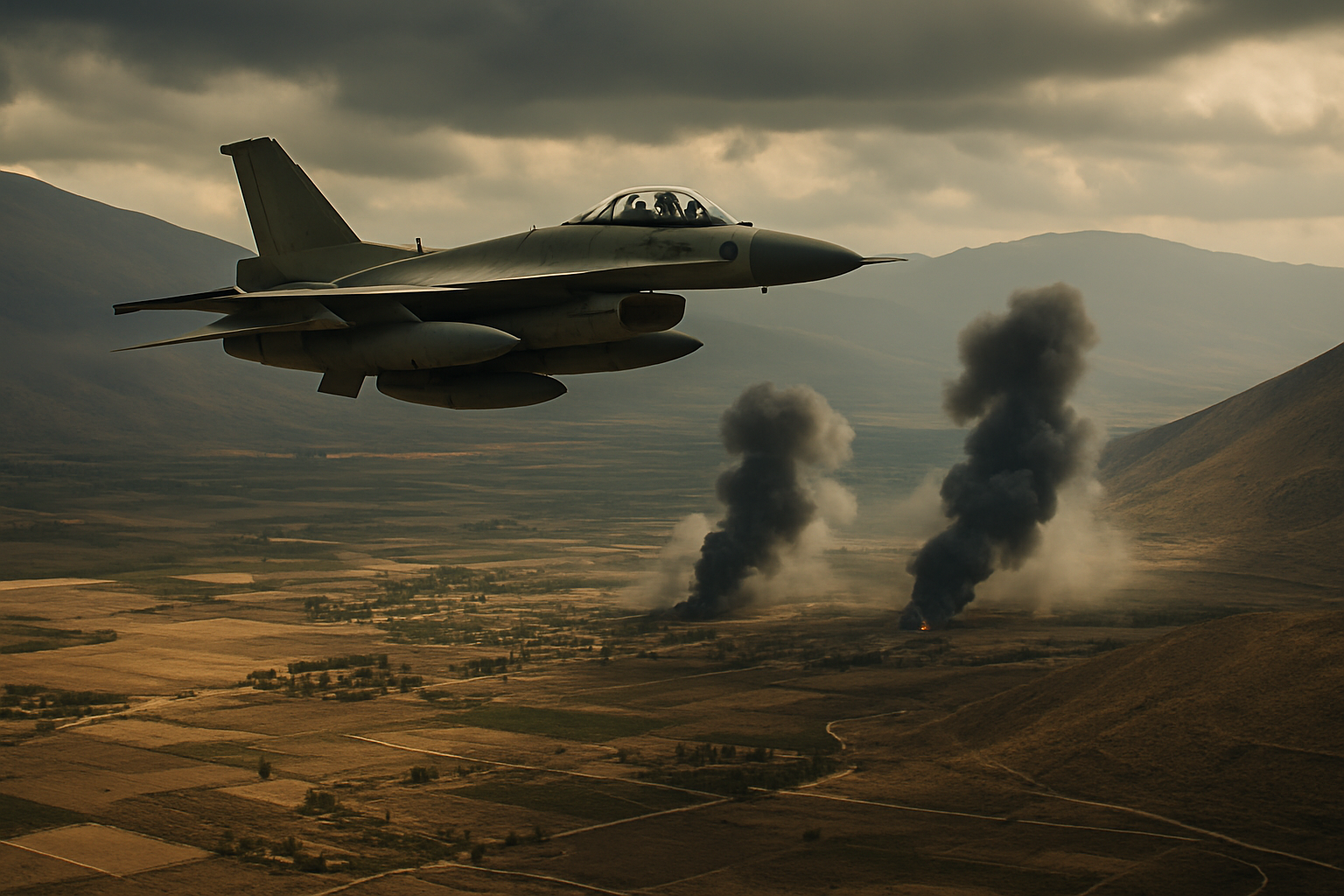
Israeli airstrikes across Lebanon killed at least 12 people on Friday, with attacks targeting Hamas command centers and Hezbollah positions in eastern Lebanon's Bekaa Valley and the Ein el-Hilweh Palestinian refugee camp near Sidon.
The strikes represent the deadliest Israeli military action in Lebanon in recent weeks, raising concerns about the stability of ceasefire arrangements and broader regional escalation. Lebanese security sources and media reports confirmed casualties ranging from 8 to 13 people, with dozens more wounded across multiple locations.
Multiple Strike Locations Across Lebanon
The Israeli Defense Forces conducted operations in several key areas, with the most significant casualties occurring in the Bekaa Valley region. Lebanese state media reported that strikes hit the towns of Rayak, Badnayel, Qasrnaba, and the Tamanin Plain, areas known for militant activity.
In a separate operation, Israeli forces targeted the Hittin neighborhood of the Ein el-Hilweh Palestinian refugee camp, Lebanon's largest such facility. Lebanese official news agency NNA reported that an Israeli drone strike killed at least two people in the camp, which has historically served as a stronghold for various Palestinian militant groups.
"These strikes were precision operations targeting terrorist infrastructure and command centers that posed immediate threats to Israeli security."
— Israeli Military Spokesman
Targeting Hamas and Hezbollah Infrastructure
Israeli military officials justified the operations as targeting what they described as Hamas command centers and Hezbollah weapons facilities. The strikes focused on areas where intelligence suggested the presence of senior operatives from both organizations.
According to Israeli sources cited in multiple reports, the Bekaa Valley operations specifically targeted Hezbollah weapons depots and underground facilities near the Syrian border. The Times of Israel reported that at least one senior Hezbollah official was among those killed in the valley strikes.
The Hamas-focused operation at Ein el-Hilweh marked a significant escalation, as the camp has remained relatively quiet in recent months despite hosting various Palestinian militant factions. Israeli officials claimed the targeted facility served as a command center for Hamas operations planning.
Regional Context and Escalation Concerns
The strikes occur against a backdrop of heightened regional tensions, with multiple conflict zones experiencing increased activity. The timing coincides with ongoing diplomatic efforts to maintain stability across the Middle East, including ceasefire arrangements in Gaza and broader regional peace initiatives.
Norwegian media reported that at least 13 people were killed across multiple Israeli attacks in Lebanon, while Portuguese sources confirmed 12 fatalities. The variation in casualty reports reflects the ongoing nature of rescue operations and the difficulty of accessing some strike locations.
Russian news agency TASS reported that six Hezbollah militants were confirmed killed in the eastern Lebanon operations, along with strikes on underground weapons depots and bunkers near the Syrian border. This suggests a coordinated campaign targeting militant infrastructure across the Lebanon-Syria frontier.
International Response and Diplomatic Implications
The escalation comes at a particularly sensitive time for regional diplomacy, with multiple international initiatives underway aimed at maintaining stability across the Middle East. The strikes threaten to complicate ongoing peace efforts and reconstruction plans that depend on sustained calm.
Lebanese officials condemned the attacks as violations of sovereignty, while Palestinian sources described them as continued aggression against refugee populations. The targeting of Ein el-Hilweh specifically raises concerns about the vulnerability of civilian populations in refugee camps.
The international community has been monitoring the situation closely, particularly given the camp's civilian population and the broader implications for regional stability. The Ein el-Hilweh camp houses approximately 80,000 Palestinian refugees and has been a frequent flashpoint for tensions.
Military Strategy and Operational Scope
The coordinated nature of the strikes suggests a planned operation targeting what Israeli intelligence identified as high-value targets across multiple locations. The simultaneous attacks in both the Bekaa Valley and southern Lebanon indicate extensive surveillance and preparation.
Security analysts note that the operations demonstrate Israel's continued intelligence capabilities and willingness to act against perceived threats across Lebanese territory. The strikes on underground facilities and weapons depots suggest efforts to prevent arms transfers and militant infrastructure development.
The targeting of positions near the Syrian border particularly raises questions about cross-border weapons smuggling and Iran's influence in the region through proxy groups. Israeli officials have consistently cited Iranian weapons transfers through Syria to Lebanon as a primary security concern.
Casualties and Humanitarian Impact
Lebanese medical sources reported treating dozens of wounded in addition to the confirmed fatalities. The strikes caused significant damage to civilian infrastructure in several locations, with rescue operations continuing into the evening hours.
Palestinian medical officials in Ein el-Hilweh confirmed treating multiple casualties from the drone strike, though the full extent of injuries remained unclear due to ongoing security concerns in the camp. The facility has limited medical resources to handle mass casualty events.
Local authorities expressed concern about the impact on civilian populations, particularly given the dense nature of refugee camp housing and the proximity of militant positions to civilian areas. This has been a consistent challenge in addressing security threats while minimizing civilian harm.
Regional Stability Implications
The strikes represent a significant escalation that could affect broader regional dynamics, particularly ongoing diplomatic efforts to maintain calm across multiple conflict zones. The targeting of both Hamas and Hezbollah positions suggests Israeli concerns about coordination between different militant groups.
The operations occur as international mediators work to strengthen ceasefire arrangements and prevent broader regional conflict. The timing and scope of the strikes may complicate these efforts and potentially trigger retaliatory actions.
Regional observers note that the strikes demonstrate the fragility of current arrangements and the potential for rapid escalation despite diplomatic efforts. The involvement of both Lebanese and Palestinian territories in a single operation particularly raises concerns about expanding conflict zones.
As rescue operations continue and casualty figures are confirmed, the international community watches closely for signs of retaliation and the potential impact on broader regional stability efforts. The strikes mark a notable escalation in tensions that could have significant implications for ongoing peace initiatives across the Middle East.