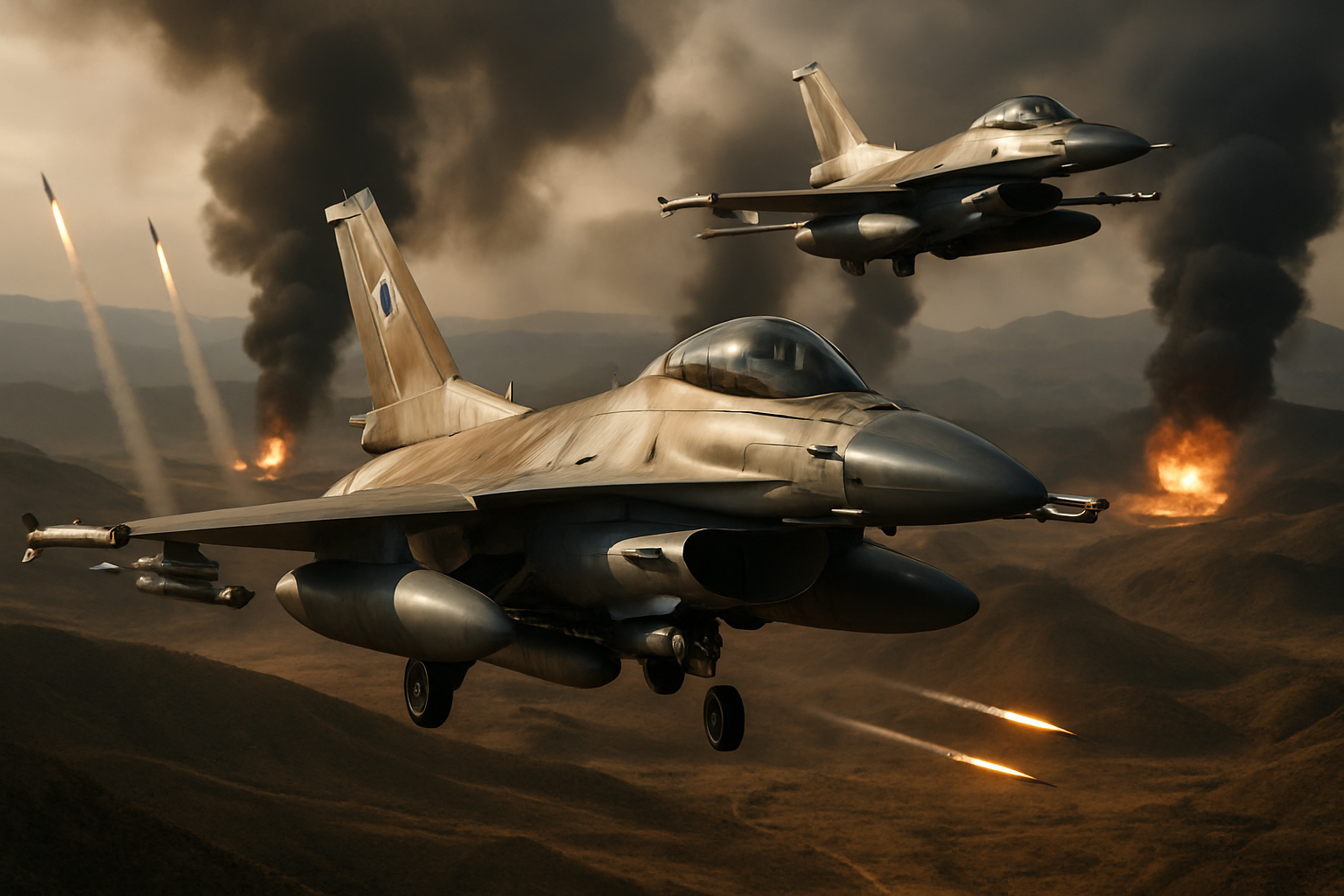
Israeli military forces announced Thursday they had completed "a series of large-scale strikes against infrastructures of the terrorist Iranian regime" in multiple locations across Iran, marking the latest escalation in a conflict that has spiraled into the most dangerous international crisis since the Cold War.
The strikes, which targeted what Israeli forces described as "regime infrastructure," come as the Middle East war enters its 27th day following the death of Iran's Supreme Leader Ali Khamenei on March 1 during the massive US-Israeli "Operation Epic Fury" campaign. The conflict has evolved from nuclear negotiations breakdown to comprehensive military confrontation affecting global energy markets, aviation networks, and international stability.
Unprecedented Regional Warfare
According to military sources, Israeli forces struck multiple targets in Isfahan and other Iranian cities, continuing the systematic campaign that has already resulted in over 2,000 Iranian targets being hit since the conflict began. The strikes represent the latest phase of operations that have fundamentally altered Middle Eastern geopolitics and created unprecedented global disruption.
Iran's immediate response came through its Revolutionary Guard Corps (IRGC), which has maintained its "Operation True Promise 4" systematic targeting of Israeli and US assets across the region. The IRGC declared that "no red lines remain," establishing a framework of unlimited military escalation that has drawn multiple countries into the expanding conflict.
"The Israeli army completed a series of attacks on a large scale against the infrastructures of the Iranian terrorist regime in several places in the country"
— Israeli Defense Forces Statement
Trump's Nuclear Ultimatum
US President Donald Trump has dramatically escalated diplomatic pressure, warning he is ready to "unleash hell" if Iran refuses to accept terms for ending the war. This represents a complete reversal from earlier hints at negotiations, with Trump now demanding Iran's "unconditional surrender" and claiming the right to personally choose Iran's next Supreme Leader.
The President's approach has evolved from nuclear-focused concerns to comprehensive regime change objectives, marking the most explicit American interference in Iranian internal affairs since 1979. This policy shift has eliminated diplomatic solution possibilities and ensured prolonged military confrontation with global consequences.
Global Economic Crisis
The conflict has created unprecedented disruption to global systems:
- Aviation Crisis: Over 18,000 flights cancelled worldwide - the most extensive disruption since COVID-19
- Energy Security: Oil prices have surged past $100 per barrel as Iran maintains closure of the Strait of Hormuz, affecting 40% of global oil transit
- Supply Chain Collapse: Major shipping companies Maersk and MSC have suspended Persian Gulf operations, with 150+ tankers stranded carrying billions in cargo
- Natural Gas Crisis: Prices increased 24% in Europe and 78% in the US as regional production facilities face systematic targeting
Iranian Leadership Transformation
The death of Supreme Leader Ali Khamenei has triggered the first hereditary succession in Islamic Republic history, with his son Mojtaba Khamenei emerging as the favored candidate. This represents a fundamental shift from clerical to military governance under Revolutionary Guards control, consolidating hardline elements during active warfare.
CIA assessments suggest the new leadership structure will be dominated by Revolutionary Guards members, indicating a more militaristic and confrontational approach to regional policies. This succession crisis occurs under unprecedented conditions, with the Assembly of Experts selecting a new Supreme Leader during active international warfare.
European Territory Attacked
The conflict has expanded beyond Middle Eastern boundaries with Iranian drone strikes on RAF Akrotiri in Cyprus - marking the first attack on European territory since World War II. This escalation prompted an unprecedented naval coalition response, with HMS Dragon, Spanish frigates, and vessels from Italy, France, Netherlands, and Greece deploying to protect European interests.
The European Union activated its ESTIA evacuation plan for Cyprus for the first time in bloc history, demonstrating how the regional conflict has evolved into a global security challenge with template-setting implications for future crisis management.
Humanitarian Crisis Mounting
The human cost continues to escalate across multiple fronts:
- Iran's Red Crescent reports over 787 civilian casualties from US-Israeli strikes
- Lebanon faces a humanitarian catastrophe with 826 killed and 832,000 displaced
- Systematic targeting of medical personnel has resulted in 26 paramedics killed since March 2
- International evacuations have reached Arab Spring-scale proportions, with Australia reporting 115,000 nationals trapped and Germany evacuating 30,000 stranded tourists
The Pentagon has confirmed responsibility for elementary school strikes killing 165-185 students due to "outdated targeting data," highlighting the devastating civilian impact of rapid military escalation.
Nuclear Governance Crisis
The current crisis emerged from the complete collapse of nuclear diplomacy despite achieving "broad agreement on guiding principles" in Geneva - representing the most significant progress since the 2018 JCPOA breakdown. However, fundamental scope disagreements proved insurmountable, with Iran maintaining nuclear-only talks while the US demanded comprehensive agreements including missiles, proxies, and human rights conditions.
Iran continues uranium enrichment at 60% purity with over 400kg of weapons-grade material, sufficient for multiple weapons if weaponized. This occurs amid broader nuclear governance breakdown following New START treaty expiration on February 5 - the first time in over 50 years without US-Russia nuclear constraints.
Congressional and International Pressure
Domestic political pressure in the United States continues mounting, with bipartisan congressional leaders demanding answers about strategy, costs, and potential ground troop deployment. Senator Richard Blumenthal expressed being "more concerned than ever" about boots on the ground, while conflict unpopularity has reached "almost unprecedented" levels with only 25% American public support.
Operation Epic Fury has cost $11.3 billion in its first week alone, with Pentagon operations now planned through September - far beyond the initial 4-6 week timeline. Financial markets have emerged as the "ultimate constraint" on continued escalation, with Pakistan's KSE-100 suffering its largest single-day decline in history at -8.97%.
Regional Coalition Under Strain
The unprecedented diplomatic coalition of Saudi Arabia, UAE, Qatar, and Egypt that initially supported diplomatic solutions faces severe strain as Iranian retaliation directly targets member territories. Egyptian President Sisi has condemned attacks on "sisterly Arab countries," warning of "comprehensive chaos spreading across the region."
Gulf states find themselves caught between US alliance obligations and Iranian pressure, affecting security arrangements that have maintained regional stability for decades. Multiple evacuations from Sweden and Serbia cite "extremely uncertain" security conditions, while various countries have ordered immediate evacuations from Iran.
Template-Setting Historical Significance
UN Secretary-General António Guterres has called the crisis "the greatest test of multilateral cooperation and crisis management in the modern era." The rapid transition from diplomatic framework to military escalation demonstrates the fragility of crisis management mechanisms in the multipolar era.
The stakes extend far beyond Middle Eastern boundaries, affecting regional war prevention, global energy security, nuclear governance credibility, and international law enforcement based on post-WWII order principles. Success in containing the crisis could provide a framework for future nuclear dispute resolution, while failure may accelerate military solutions globally, undermining diplomatic credibility worldwide.
Looking Forward
As the conflict enters its fourth week, the international community faces critical decisions that will reverberate through international relations for decades. The current trajectory toward prolonged confrontation affects not only Middle Eastern stability but also global energy architecture, aviation networks, supply chain resilience, and nuclear proliferation prevention mechanisms.
With Trump's ultimatum demanding Iranian capitulation and Iran's new hardline leadership consolidating military control, diplomatic channels appear completely broken. The coming phase will determine whether this remains a contained regional confrontation or escalates into broader warfare with implications extending decades beyond current events, establishing precedents for 21st-century conflict resolution approaches worldwide.