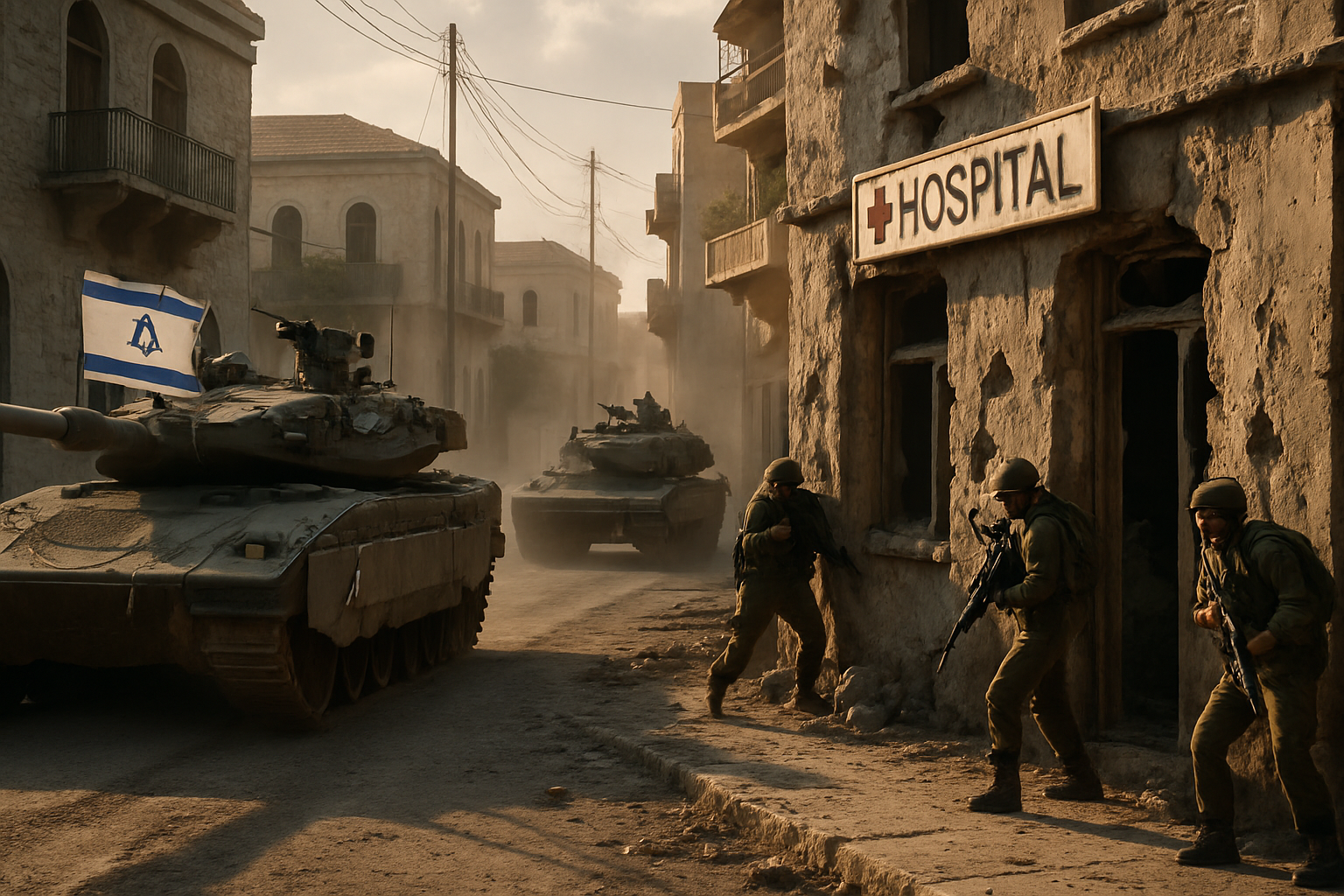
Israeli Defense Forces conducted a military raid on a hospital complex in Bint Jbeil, southern Lebanon, which Israeli officials claim was being used by Hezbollah for military purposes, as fierce clashes continue in the group's traditional stronghold.
According to Israeli military sources, the operation targeted what they described as a healthcare facility that had been "repurposed by Hezbollah for military activities." The IDF reported killing a Hezbollah gunman during the operation who they claim was responsible for the death of an Israeli soldier the previous week.
Escalating Ground Operations in Southern Lebanon
The raid represents the latest escalation in Israel's ground operations in southern Lebanon, which have intensified dramatically since the complete collapse of the November 2024 US-French brokered ceasefire. The operations have moved far beyond the original ceasefire positions, with Israeli forces now controlling an estimated 10% of Lebanese territory between the border and the Litani River.
IDF Chief Eyal Zamir has declared these operations are "just beginning" with "several weeks" of continued ground operations planned. The military has destroyed critical infrastructure including the strategic Qasmiyeh Bridge over the Litani River and issued demolition orders for civilian homes near the border.
"The military says troops killed Hezbollah gunman responsible for killing soldier last week"
— IDF Statement via Times of Israel
Bint Jbeil: A Strategic Hezbollah Stronghold
Bint Jbeil holds particular significance in the current conflict, as it has been a traditional stronghold of Hezbollah in southern Lebanon. The town was the site of one of the deadliest incidents in the systematic targeting of medical personnel that has characterized this conflict - the March attack on the Burj Qalaouiyah primary healthcare center that killed 12 medical workers including doctors, nurses, and paramedics.
The targeting of medical facilities has become a contentious aspect of the current military operations. Israeli military spokesman Avichai Adraee has threatened strikes against ambulances and medical facilities, claiming Hezbollah uses them "extensively for military purposes" without providing evidence. Hezbollah has categorically denied these allegations.
International Humanitarian Law Concerns
The raid on the Bint Jbeil hospital complex raises serious questions about adherence to international humanitarian law. The Geneva Conventions explicitly protect medical workers, facilities, and vehicles during armed conflict. The systematic targeting of medical assets has led to documented violations with 26 paramedics killed and 51 wounded since March 2, 2026.
WHO Director-General Tedros Adhanom Ghebreyesus has emphasized that "attacks on healthcare are attacks on humanity itself," launching a $30.3 million emergency appeal to support health systems across five Middle Eastern countries affected by the crisis.
Broader Context of Regional Conflict
The current escalation stems from the March 1, 2026 death of Iranian Supreme Leader Ali Khamenei, which created what observers describe as an "impossible choice" for Hezbollah between maintaining the November 2024 ceasefire or responding to Iranian pressure for retaliation. The organization ultimately chose what they termed "Iranian solidarity over Lebanese sovereignty," declaring "resistance as the only option."
This decision pulled Lebanon into the broader Iran-Israel confrontation, completely shattering a ceasefire that had held for over a year despite minor violations. The November 2024 agreement had required both Israeli forces and Hezbollah to withdraw from southern Lebanon, establishing buffer zones patrolled by the Lebanese army and UN peacekeepers.
Humanitarian Crisis Deepens
The ongoing military operations have created an unprecedented humanitarian catastrophe in Lebanon. Over 1.2 million Lebanese civilians - representing 25% of the country's population - have been displaced from their homes. Emergency shelters are overwhelmed, with thousands forced to sleep on the streets of Beirut.
The Lebanese Health Ministry reports over 1,200 civilian deaths since the March 2026 escalation began. The systematic targeting of medical personnel and infrastructure has compromised Lebanon's healthcare system's ability to respond to the crisis, with medical workers struggling to reach affected areas amid ongoing military operations.
International Response and Peacekeeping Challenges
The conflict has severely strained international peacekeeping efforts. UNIFIL (United Nations Interim Force in Lebanon) has reported that one of their bases near Mais al-Jabal was struck, wounding one peacekeeper - the first major breach of peacekeeping arrangements since the November 2024 ceasefire was implemented.
French President Emmanuel Macron has offered to host direct Israel-Lebanon talks in Paris, which would be the first such negotiations since the ceasefire collapse. UN Secretary-General António Guterres has called the regional situation "the greatest test of multilateral cooperation in the modern era."
Military Dynamics and Hezbollah Response
Hezbollah, with an estimated 20,000 fighters, has conducted over 40 operations targeting northern Israeli military sites, with some reaching as far as Haifa. The organization has declared "direct confrontations" with Israeli forces in southern Lebanon, marking a significant operational escalation from their previous strategy of restraint.
The military dynamics represent a fundamental shift in Hezbollah's approach. Rather than attempting to maintain the ceasefire framework while managing Iranian pressure, the organization has embraced active resistance as part of what they describe as regional solidarity with Iran's broader confrontation with Israel.
Global Implications and Economic Impact
The conflict has generated global repercussions extending far beyond the Middle East. Over 18,000 flights have been cancelled worldwide - approaching COVID-19 scale disruptions. Oil prices have surged past $100 per barrel for the first time since 2014, with Iran's mining of the Strait of Hormuz affecting 40% of global oil transit.
The International Energy Agency has conducted its largest strategic reserve release in 50 years - 400 million barrels - to stabilize global energy markets. Natural gas prices have increased 24% in Europe and 78% in the United States, affecting household costs worldwide.
Diplomatic Efforts Under Strain
Current diplomatic efforts face significant challenges due to what officials describe as a critical "Lebanon loophole" in broader ceasefire frameworks. While Pakistan successfully mediated an "Islamabad Accord" between the US and Iran, Israeli Prime Minister Netanyahu explicitly excluded Lebanon from the agreement, creating a dangerous gap in regional peace efforts.
Iran has threatened to withdraw from regional talks unless comprehensive enforcement across all fronts is implemented. The fragility of these diplomatic arrangements demonstrates the challenges of maintaining negotiated peace without addressing fundamental security concerns of all parties involved.
Looking Forward: Template-Setting Crisis
The Bint Jbeil hospital raid represents more than a tactical military operation - it occurs within what analysts describe as the most serious Middle East crisis since the Cold War's end. The conflict is testing international crisis management mechanisms, humanitarian law enforcement, and civilian protection frameworks that will set precedents for 21st-century conflict resolution.
The systematic targeting of medical facilities, the collapse of long-standing ceasefire arrangements, and the regional expansion of what began as bilateral tensions between Iran and Israel all contribute to what the UN Secretary-General has characterized as a template-setting moment for multilateral cooperation.
As Israeli forces continue operations in Bint Jbeil and other parts of southern Lebanon, the international community faces the challenge of preventing broader regional warfare while protecting vulnerable civilian populations caught between competing geopolitical pressures. The coming weeks will be crucial in determining whether diplomatic intervention can contain the crisis or whether the Middle East faces prolonged warfare with devastating humanitarian consequences.