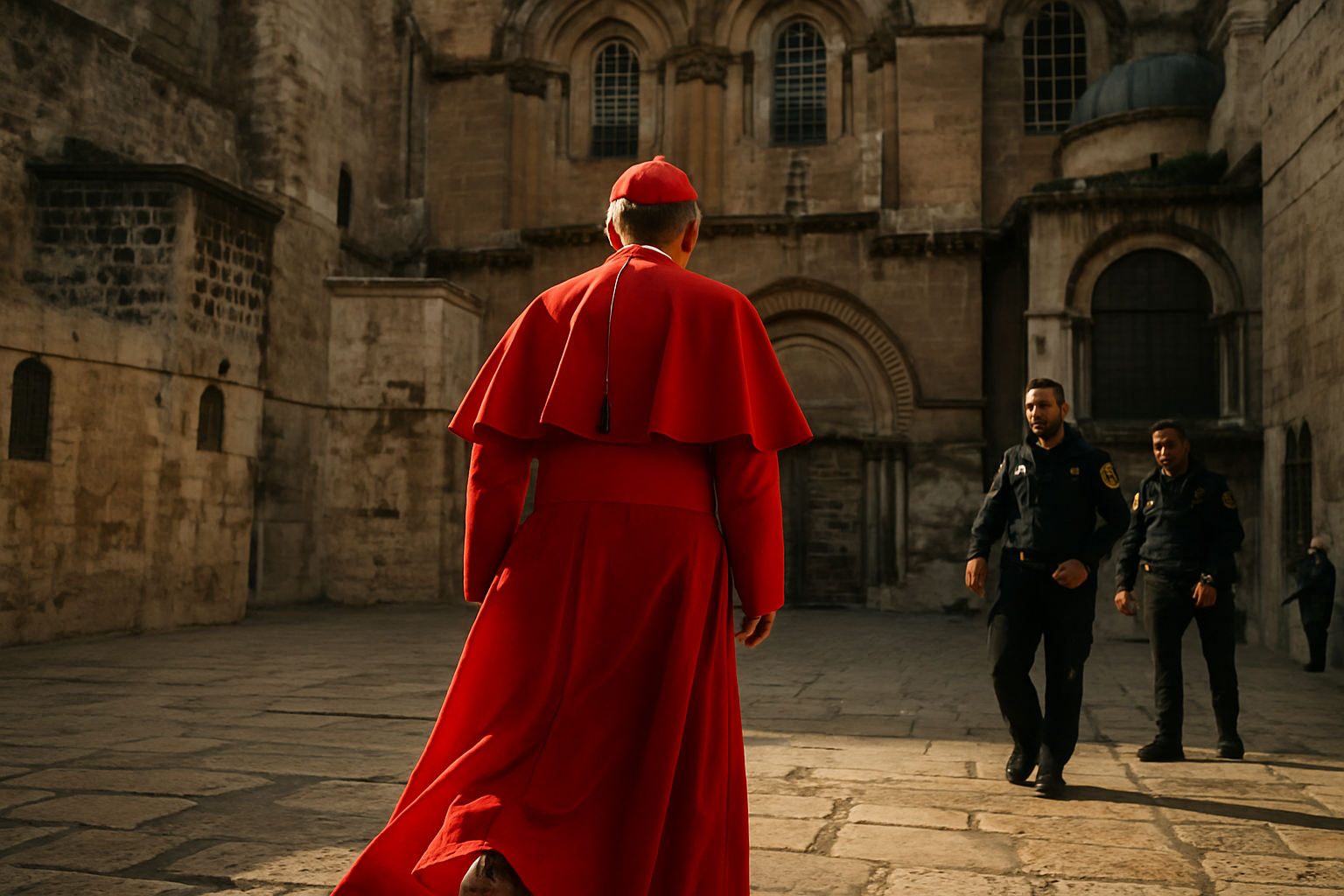
Israeli Prime Minister Benjamin Netanyahu ordered the immediate restoration of access to Jerusalem's Church of the Holy Sepulchre after a controversial decision to block Catholic Patriarch Pierbattista Pizzaballa from the sacred site on Palm Sunday triggered an unprecedented international outcry spanning multiple governments and religious leaders.
The Latin Patriarch of Jerusalem, Cardinal Pierbattista Pizzaballa, along with Friar Francesco Ielpo, were prevented by Israeli police from entering Christianity's holiest site to celebrate traditional Palm Sunday liturgy, marking what observers called the "first time in centuries" such restrictions have been imposed during the sacred Christian holiday.
Swift International Condemnation Forces Policy Reversal
Within hours of the incident becoming public, a cascade of international criticism prompted Netanyahu's office to issue a statement declaring that the Prime Minister had "instructed the relevant authorities to grant Cardinal Pierbattista Pizzaballa full and immediate access to the Church of the Holy Sepulchre in Jerusalem."
The Vatican expressed strong disapproval through Cardinal Zuppi, who conveyed both solidarity with his colleague and "indignation for a fact painful for the many Christians of those lands." Italian Prime Minister Giorgia Meloni condemned the action as an "offense to the faithful," while French President Emmanuel Macron denounced the decision through diplomatic channels.
The scale of international response was remarkable for its breadth and speed. Danish officials joined multiple European leaders in formal protests, while eight Arab nations including Jordan issued joint condemnations describing the restrictions as violations of international law. The Organization of Islamic Cooperation (OIC) also condemned what they termed "continuing massacres" and restrictions on religious freedom.
Security Concerns Amid Regional Crisis
Israeli authorities initially justified the restrictions by citing security concerns related to the ongoing conflict with Iran, which has brought missile strikes dangerously close to holy sites throughout Jerusalem. The nation has enforced comprehensive bans on gatherings in synagogues, churches, and mosques during what officials describe as the most serious Middle East crisis since the Cold War.
"Israeli police prevented access citing security concerns as Israel enforces a ban on gatherings in synagogues, churches and mosques during the ongoing war with Iran, which has brought missile strikes near holy sites."
— Source close to Israeli security services
The broader context involves the unprecedented "Operation Epic Fury" - the largest U.S.-Israeli coordinated military operation since 2003, which has resulted in over 18,000 flight cancellations worldwide and oil prices surging past $100 per barrel as the Strait of Hormuz remains closed, affecting 40% of global oil transit.
Historical Significance of the Ottoman Status Quo
The Church of the Holy Sepulchre operates under the centuries-old "Status Quo" arrangement that carefully regulates Christian denominations' rights and access to the sacred site. This Ottoman-era system has been meticulously preserved through successive political authorities and is recognized as part of customary international law governing Jerusalem's holy sites.
The decision to override this ancient arrangement demonstrated the exceptional nature of the current regional security situation, but also raised significant questions about religious freedom during wartime and the protection of internationally recognized religious rights.
Multi-Faith Impact During Holy Periods
The timing of the restrictions proved particularly sensitive, as they affected not only 2.4 billion Christians during Holy Week but also occurred amid simultaneous limitations on 2 billion Muslims during Ramadan. Al-Aqsa Mosque has faced 17 consecutive days of closure to Muslim worshippers, while iftar meal distribution has been banned in mosque courtyards.
This unprecedented situation affecting all three Abrahamic faiths' access to their sacred sites represents a combined impact on 4.4 billion believers worldwide, creating what religious freedom advocates describe as a watershed moment for religious liberty during contemporary conflicts.
Papal Response and Global Christian Unity
Pope Leo XIV delivered his strongest warfare condemnation yet during Palm Sunday Mass at St. Peter's Square, declaring that God rejects prayers of leaders who start wars with "hands full of blood." The papal statement, citing the Old Testament book of Isaiah, represented a significant escalation in Vatican rhetoric regarding the Middle East conflict.
The Pope's message came as the Vatican had planned a historic papal visit to Algeria - the first in papal history - as part of a comprehensive African tour aimed at strengthening Catholic-Muslim dialogue. The Holy Sepulchre incident complicated these interfaith outreach efforts at a critical moment for Vatican diplomacy.
Legal and Diplomatic Implications
Legal experts noted that breaking the Status Quo arrangement without proper religious consultation represents a significant departure from established practice and potentially violates international religious freedom protections. The arrangement has been recognized by successive political authorities as part of customary law governing Jerusalem holy sites.
The rapid policy reversal following international pressure demonstrated both the effectiveness of coordinated diplomatic response and the sensitive nature of religious access issues in Jerusalem. European Union officials characterized the initial decision as unprecedented, while over 400 EU diplomats had previously called for increased pressure on Israeli authorities regarding religious freedom issues.
Regional Coalition Concerns
The incident strained relationships with key regional partners who had been supporting diplomatic solutions to the broader Middle East crisis. Saudi Arabia, UAE, Qatar, and Egypt - which had formed an unprecedented coalition backing diplomatic processes - expressed concern about the restrictions affecting religious observances during both Ramadan and Holy Week.
Egyptian President Abdel Fattah el-Sisi had previously warned against attacks on "sisterly countries," and the religious restrictions added another layer of complexity to maintaining the delicate regional coalition supporting peaceful resolution of the Iran crisis.
Historical Context and Precedent
The last comparable restrictions on the Church of the Holy Sepulchre occurred during periods of active warfare or extreme political upheaval. The fact that the restrictions were implemented and then quickly reversed within the same day highlights both the extraordinary nature of current security concerns and the enduring importance of international religious freedom protections.
Vatican observers noted that this marked a critical test of religious freedom during wartime and established important precedents for how the international community responds to restrictions on religious liberty during conflicts. The successful diplomatic pressure for reversal provided a template for protecting religious rights even during active military operations.
Community Response and Resilience
Despite the initial restrictions, Christian communities in Jerusalem demonstrated remarkable resilience. When access was restored, hundreds of worshippers gathered for the traditional Palm Sunday observations, carrying blessed palm branches in processions that had been temporarily threatened.
The Latin Patriarchate of Jerusalem called for "prayers for peace" while seeking dialogue with Israeli authorities to prevent future restrictions on religious access. Interfaith leaders emphasized the importance of maintaining religious freedoms even during periods of heightened security concerns.
The incident ultimately reinforced the critical importance of the ancient Status Quo system and demonstrated how quickly international pressure can mobilize to protect religious liberty. As the region continues to face unprecedented security challenges, the Holy Sepulchre controversy established important precedents for balancing security needs with fundamental religious rights in one of the world's most sacred and contested spaces.