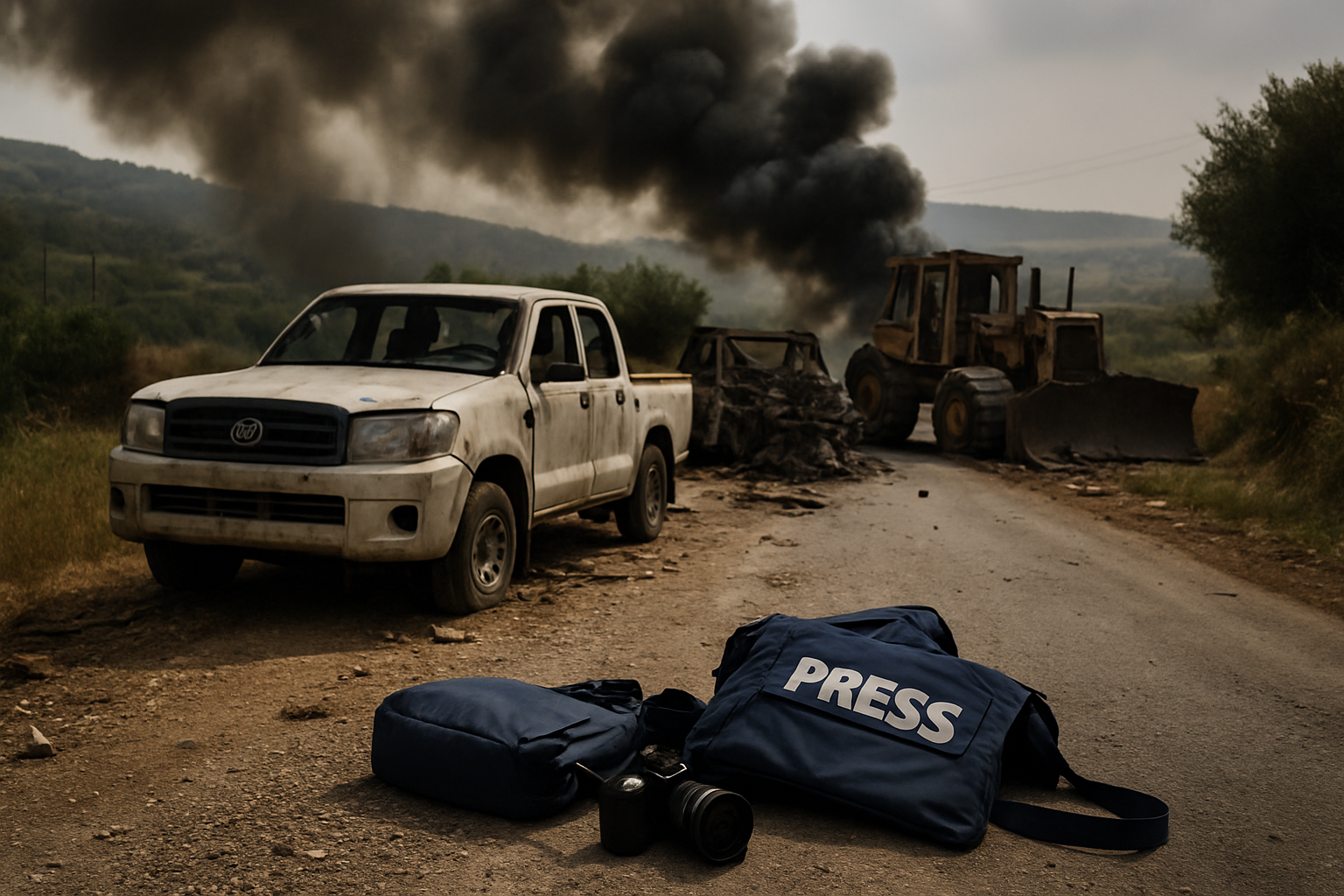
Three Lebanese journalists were killed in an Israeli airstrike on Saturday, March 28, 2026, in southern Lebanon while covering the ongoing conflict between Israel and Hezbollah, their television stations confirmed. The deaths have sparked widespread international condemnation and renewed concerns about the systematic targeting of media personnel in conflict zones.
The victims have been identified as Ali Shoaib, a longtime correspondent for Hezbollah's al-Manar TV, Fatima Ftouni, a correspondent for Al Mayadeen TV, and Mohammed Ftouni, Fatima's brother who worked as a cameraman. According to Al Mayadeen, the Israeli airstrike "directly struck a vehicle clearly marked as press car" in the Jezzine area of southern Lebanon.
International Response and Condemnation
Lebanese President Joseph Aoun condemned the strike as a "flagrant crime that violates all laws and agreements that protect journalists," reflecting the gravity with which regional leaders view this latest escalation in targeting media personnel. The incident has drawn sharp criticism from international media watchdog organizations and government officials worldwide.
The Israeli military acknowledged targeting Shoaib, claiming without providing evidence that he was a "Hezbollah intelligence operative." This post-hoc justification represents a troubling pattern of Israeli forces attacking clearly identified media personnel and subsequently attempting to justify these actions through unsubstantiated intelligence claims.
"This represents a dangerous escalation in the systematic targeting of journalists and violates fundamental principles of international humanitarian law."
— International Press Freedom Advocate
Part of Broader Pattern of Media Targeting
The killing of these three journalists is part of a documented pattern of systematic targeting of media personnel that has intensified since the collapse of the November 2024 ceasefire between Israel and Hezbollah. According to comprehensive reporting, 26 paramedics have been killed and 51 wounded since March 2, 2026, when the current escalation began following the death of Iranian Supreme Leader Ali Khamenei.
The most devastating single attack occurred at the Burj Qalaouiyah primary healthcare center, where 12 medical workers including doctors, nurses, and paramedics were killed in what international observers describe as potential Geneva Conventions violations. Israeli military spokesperson Avichai Adraee has threatened strikes against ambulances and medical facilities, claiming Hezbollah uses "ambulances extensively for military purposes" – allegations categorically denied by Hezbollah.
Escalating Humanitarian Crisis
The journalists' deaths occur within the context of an unprecedented humanitarian catastrophe in Lebanon. Over 800,000 Lebanese civilians have been displaced, with emergency shelters overwhelmed and thousands forced to sleep on Beirut's streets. The Lebanese Health Ministry reports more than 800 people have been killed in the current escalation, including numerous children and healthcare workers.
The systematic targeting of medical personnel represents a clear violation of international humanitarian law. Under the Geneva Conventions, medical workers, emergency responders, and journalists are protected civilians who should not be deliberately targeted during armed conflicts.
Context of Regional Conflict
The killing of the three journalists comes amid the most dangerous Middle East crisis since the end of the Cold War. The conflict expanded dramatically following the death of Iranian Supreme Leader Ali Khamenei on March 1, 2026, which led to the complete collapse of the November 2024 US-French brokered ceasefire between Israel and Hezbollah that had held for over a year.
Hezbollah faced what analysts describe as an "impossible choice" between maintaining the ceasefire or responding to Iranian pressure for retaliation following Khamenei's death. The organization ultimately chose Iranian solidarity, declaring "resistance only option" and joining the broader regional conflict.
The crisis has had unprecedented global implications, with over 18,000 flights cancelled worldwide, oil prices surging past $100 per barrel, and the Strait of Hormuz effectively closed due to Iranian mining operations affecting 40% of global oil transit.
Press Freedom Under Attack Globally
The deaths of Ali Shoaib, Fatima Ftouni, and Mohammed Ftouni add to what the Committee to Protect Journalists documented as 129 journalists killed globally in 2025, marking one of the deadliest years for press freedom in recent history. The systematic nature of targeting in conflict zones raises serious concerns about potential war crimes.
International law is clear that journalists are civilians requiring protection from attack. The deliberate targeting of clearly marked press vehicles, as reported in this case, potentially constitutes war crimes under international humanitarian law. The pattern of attacking media personnel appears to represent a deliberate strategy to silence coverage of military operations rather than isolated incidents.
International Legal Implications
Legal experts emphasize that under international law, journalists covering conflicts are considered civilians and are entitled to protection under the Geneva Conventions. The systematic targeting of clearly marked press vehicles and medical personnel represents serious violations that demand international investigation.
The incident highlights the critical importance of upholding press freedom and ensuring journalists can perform their democratic function without fear of targeted attacks. The international community's response to these violations will be crucial in determining whether accountability mechanisms can effectively protect media workers in conflict zones.
Broader Impact on Regional Stability
The targeting of journalists comes as French President Emmanuel Macron has offered to host direct Israel-Lebanon talks in Paris – the first such negotiations since the ceasefire collapse. UN Secretary-General António Guterres has called the overall regional situation the "greatest test of multilateral cooperation in the modern era."
The systematic breakdown of negotiated agreements, including the November 2024 ceasefire, demonstrates the profound challenges of maintaining stability without addressing underlying political and security issues that drive these conflicts. The template-setting nature of this crisis will influence international approaches to conflict resolution for decades to come.
Looking Forward
The killing of three journalists in southern Lebanon represents more than a tragic loss of life – it symbolizes the dangerous erosion of protections for civilians, medical personnel, and media workers in modern conflicts. The international community's response to these violations will determine whether mechanisms exist to protect those who risk their lives to inform the public during times of war.
As diplomatic efforts continue to seek a resolution to the broader regional crisis, the deaths of Ali Shoaib, Fatima Ftouni, and Mohammed Ftouni serve as a stark reminder of the human cost of conflict and the urgent need for accountability when international humanitarian law is violated. Their sacrifice in pursuit of truth and transparency must not be forgotten as the international community works to prevent such tragedies in the future.