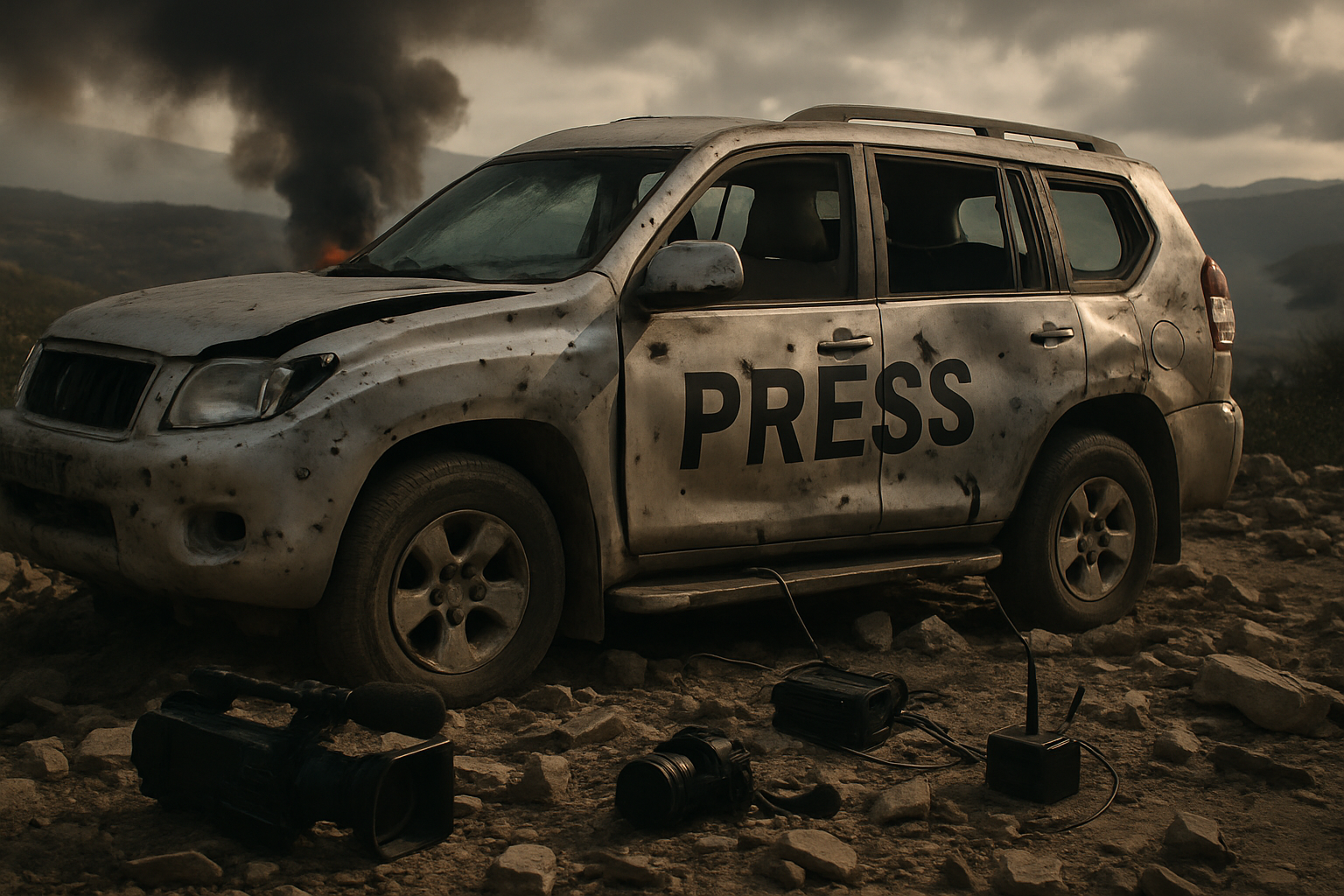
Israeli forces killed three Lebanese journalists on Saturday in a targeted airstrike on a clearly marked press vehicle in southern Lebanon, marking a deadly escalation in attacks on media personnel covering the ongoing Middle East conflict.
The victims were identified as Ali Shoaib, a longtime correspondent for Hezbollah-affiliated Al Manar television; Fatima Ftouni, a correspondent for the pan-Arab broadcaster Al Mayadeen; and Mohammed Ftouni, Fatima's brother who worked as a cameraman for Al Mayadeen. The strike occurred near the town of Jezzine in southern Lebanon, according to multiple sources.
Lebanese Information Minister Paul Morcis confirmed the deaths of all three journalists, while Al Mayadeen reported that the Israeli airstrike "directly struck a vehicle clearly marked as a press car in which she and fellow journalists were travelling." The broadcaster emphasized that the vehicle was unmistakably identified as belonging to media personnel.
Deliberate Targeting Raises War Crimes Concerns
According to Al Mayadeen's correspondent Jamal Ghourabi, Israeli forces targeted Fatima's vehicle with four precision missiles. In a disturbing escalation, when ambulances arrived at the scene to assist the wounded, paramedics were then targeted in a follow-up attack, resulting in the death of one paramedic. This pattern of targeting first responders constitutes a serious violation of international humanitarian law.
"Israel targeted Fatima's vehicle with four precision missiles. After that, when ambulances arrived on the scene, paramedics were then targeted, leading to the martyrdom of one paramedic."
— Jamal Ghourabi, Al Mayadeen correspondent
The Israeli military acknowledged the strike, claiming it had targeted one of the journalists without providing evidence for its accusations. Military spokesman Avichai Adraee alleged that Ali Shoaib was a "Hezbollah intelligence operative," though no supporting evidence was presented. This represents a concerning pattern of post-hoc justifications for attacks on clearly identified media personnel.
International Condemnation and Legal Implications
The targeting of clearly marked press vehicles has drawn widespread international condemnation from media organizations and human rights groups. The Committee to Protect Journalists documented 129 journalists killed globally in 2025, making it one of the deadliest years for press freedom in recent history, with systematic targeting in conflict zones raising particular concern about potential war crimes.
Under international humanitarian law, journalists are considered civilians and must be protected from attack. The Geneva Conventions provide specific protections for media workers in conflict zones, and deliberate targeting of clearly marked press vehicles potentially constitutes a war crime requiring international investigation.
Lebanese authorities denounced the attack as a "blatant crime" against journalists, with multiple sources describing it as part of a broader pattern of systematic targeting of media personnel covering the regional conflict. The incident adds to mounting concerns about the dangerous environment facing Middle Eastern journalists.
Context of Broader Regional Crisis
This attack occurred within the context of the ongoing Middle East conflict that began with the death of Iranian Supreme Leader Ali Khamenei on March 1, 2026. Lebanon was drawn into the broader regional war when Hezbollah chose to support Iran following the collapse of the November 2024 ceasefire with Israel that had held for over a year.
Since March 2, systematic targeting of medical personnel in Lebanon has resulted in 26 paramedics killed and 51 wounded, according to the Lebanese Health Ministry. The deadliest single attack was on the Burj Qalaouiyah primary healthcare center, which killed 12 medical workers including doctors, nurses, and paramedics in the Bint Jbeil district.
The humanitarian crisis has reached unprecedented levels, with over 800,000 Lebanese displaced according to official figures. Emergency shelters throughout the country have reached breaking point, with thousands of families forced to sleep on Beirut's streets and in cars as traditional support systems become overwhelmed.
Pattern of Media Targeting
This incident represents part of a concerning global pattern of attacks on journalists. The targeting comes amid what press freedom organizations have described as a systematic assault on media freedom worldwide, with conflicts creating increasingly dangerous environments for journalists attempting to document events and inform the public.
Both Al Manar and Al Mayadeen are established regional television networks that have covered Middle Eastern developments for years. The targeting of their clearly marked vehicle while journalists were performing their democratic function of reporting on events raises serious questions about the protection of press freedom during conflicts.
"This represents a significant escalation in targeting media personnel covering regional events, highlighting the critical importance of upholding press freedom and ensuring journalists can perform their vital democratic function without fear of targeted attacks."
— International media rights advocate
Calls for Investigation and Accountability
International human rights organizations are demanding immediate investigations into potential war crimes related to the systematic targeting of clearly marked press vehicles. The incident underscores the urgent need for stronger international protection mechanisms for journalists working in conflict zones.
The attack has drawn comparisons to other incidents where media workers have been deliberately targeted despite being clearly identified as non-combatants. Under international humanitarian law, all parties to a conflict are required to take precautions to protect civilian media workers and ensure their safety while performing their professional duties.
Media advocacy groups emphasize that attacks on journalists not only violate international law but also deprive the public of crucial information about conflicts and their humanitarian consequences. The systematic nature of such targeting raises questions about whether there is a deliberate strategy to silence media coverage of military operations.
Implications for Press Freedom
The deaths of these three journalists add to the growing toll on media workers covering conflicts in the Middle East and represent a significant blow to press freedom in the region. Their deaths highlight the dangerous environment facing journalists who risk their lives to document events and provide critical information to the public.
This incident occurs within the broader context of what has been described as a global crisis of press freedom, with journalists facing increasing threats from state and non-state actors worldwide. The deliberate targeting of clearly marked media personnel represents an escalation that threatens the fundamental principle that journalists should be protected while performing their vital democratic function.
The international community's response to this incident will be closely watched as a test of commitment to upholding press freedom and ensuring accountability for attacks on media workers. The systematic targeting of journalists covering conflict zones requires a coordinated international response to strengthen protection mechanisms and ensure those responsible for such attacks face consequences.