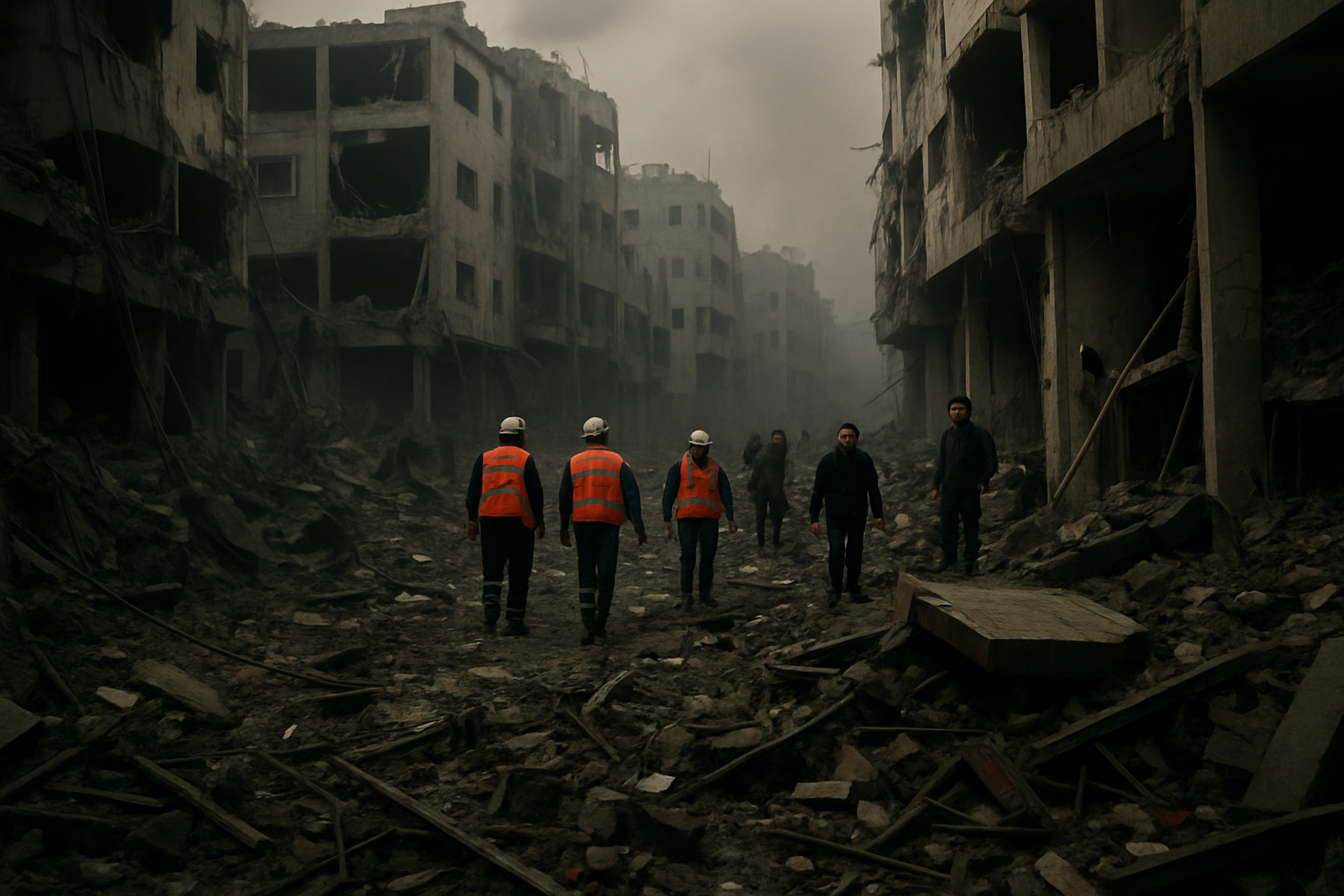
Israeli airstrikes killed at least 11 Palestinians across the Gaza Strip on Sunday, Palestinian officials reported, in what Israeli military sources described as a response to ceasefire violations by Palestinian militant groups, raising fresh concerns about the fragility of the US-brokered truce that has been in effect since October 2025.
The deadly strikes hit multiple locations throughout Gaza, including a tent encampment housing displaced families in the north where four people were killed, according to Gaza's civil defense agency. Another five Palestinians died in an airstrike in Khan Younis in the southern part of the territory, while health officials confirmed at least one additional fatality in the north of the strip.
The attacks occurred despite a ceasefire agreement that was reached in October 2025 following intensive US-mediated negotiations. The Israeli military justified the strikes as "precise operations" targeting what they called Hamas "terrorists," specifically citing violations that occurred Saturday in Beit Hanoun where militants reportedly emerged from tunnels east of the "yellow line" ceasefire demarcation zone.
Pattern of Systematic Violations
The latest casualties add to a mounting death toll that has accumulated despite the official ceasefire. According to the Gaza Government Media Office, there have been over 1,600 systematic violations of the ceasefire agreement documented since October 2025, resulting in more than 573 Palestinian deaths and 1,553 injuries during what was supposed to be a period of peace.
These figures represent what international observers are describing as "systematic implementation failures" rather than isolated incidents, calling into question the effectiveness of the ceasefire enforcement mechanisms put in place by international mediators.
"Where is the ceasefire?" questioned Dr. Mohamed Abu Selmiya, Director of Al-Shifa Hospital in Gaza, echoing the frustration of many Palestinians who have witnessed continued military operations despite the truce agreement.
International Condemnation Mounts
The ongoing violence has drawn sharp criticism from regional powers and international observers. Eight Arab and Muslim nations - Saudi Arabia, Jordan, Egypt, the UAE, Qatar, Indonesia, Pakistan, and Turkey - have issued joint condemnations of what they characterize as Israeli violations of international law.
The Organization of Islamic Cooperation (OIC) has separately condemned what it terms "continuing massacres," describing the situation as a "dangerous escalation" that threatens broader regional stability. Over 400 European Union diplomats have called for increased pressure on Israeli authorities to ensure compliance with ceasefire terms.
"These systematic violations threaten not only the ceasefire agreement but also broader peace initiatives including the upcoming Trump Board of Peace summit,"
— Regional diplomatic source
The violations are raising concerns about their impact on the Trump administration's Gaza peace plan and the implementation of UN Resolution 2803, both of which depend on sustained adherence to ceasefire commitments.
Humanitarian Crisis Deepens
The continued military operations have exacerbated an already severe humanitarian crisis in Gaza. The Gaza Civil Defense, responsible for emergency response and rescue operations, has been forced to shut down completely due to fuel shortages, severely hampering the territory's ability to respond to emergencies and provide assistance to civilians.
Despite the reopening of the Rafah crossing with Egypt in February 2026 - a critical development after nearly two years of closure - humanitarian access remains severely restricted. Only 27 Palestinians were able to cross on the opening day, far below the intended quota of 200 daily crossings. Palestinian officials report that approximately 20,000 Palestinians are currently awaiting medical evacuation.
Hamas has condemned what it characterizes as "systematic harassment" at the crossing, alleging that Israeli security forces denied passage to 38 of 50 Palestinians who had been approved for return to Gaza. The crossing operations are limited to pedestrian traffic only during six-hour windows under strict Israeli-Egyptian security protocols.
Military Justifications and Disputed Claims
Israeli military sources have consistently justified their operations as defensive responses to what they describe as ceasefire violations by Palestinian militant groups. The military specifically cited Saturday's incident in Beit Hanoun, where they claim militants emerged from tunnel systems in violation of the ceasefire demarcation agreements.
However, Palestinian officials dispute these characterizations, arguing that the scale and frequency of Israeli military operations far exceed any proportionate response to alleged violations. They point to the targeting of civilian areas, including tent encampments housing displaced families, as evidence that the operations constitute violations of international humanitarian law.
The discrepancy between Israeli justifications and Palestinian accounts highlights the absence of effective neutral monitoring mechanisms that could provide independent verification of ceasefire compliance by all parties.
Regional Diplomatic Implications
The continued violations are having significant implications for broader regional diplomatic initiatives. The Trump administration's Board of Peace summit, scheduled for February 19, 2026, with commitments of over $1 billion in Gaza reconstruction funding, faces serious obstacles due to the deteriorating security situation.
Egypt, which has deployed 150 hospitals on alert and 300 ambulances to support Palestinian medical evacuations, continues to play a crucial mediation role. However, Egyptian officials have expressed concern that continued violations could undermine the gradual expansion of humanitarian operations through the Rafah crossing.
The European Left Coalition has gathered over 400,000 signatures on a petition against EU-Israel partnerships, reflecting growing public pressure in Europe for accountability measures. This grassroots pressure is complementing diplomatic efforts by European officials to address what they see as systematic violations of international law.
Historical Context and Precedent
The current situation follows a pattern that has persisted since the October 2025 ceasefire agreement was first implemented. The total Gaza death toll has now reached 71,800, with the period since the ceasefire began accounting for over 600 of these casualties according to Palestinian health officials.
International legal experts point to potential violations of UN Security Council resolutions and Geneva Conventions regarding the protection of civilians in occupied territories. The systematic nature of the violations, they argue, meets international legal definitions of collective punishment, which is prohibited under international humanitarian law.
Previous ceasefire agreements in the Israeli-Palestinian conflict have faced similar implementation challenges, but observers note that the current violations appear to be more systematic and sustained than in previous instances.
Impact on Peace Process
The ongoing violations are raising fundamental questions about the viability of current peace process frameworks. Hamas leadership has categorically rejected disarmament demands, with Political Bureau leader Khaled Meshaal declaring in Doha that armed resistance will continue "while there is occupation."
This position has complicated international reconstruction efforts and calls into question traditional post-conflict demilitarization models that typically serve as prerequisites for international aid and development assistance.
Palestinian Authority President Mahmoud Abbas has condemned the Israeli actions as creating "obstacles" that block the implementation of Phase 2 of the ceasefire agreement, which was supposed to include broader security arrangements and Israeli withdrawal monitoring.
International Law and Accountability
Legal experts and human rights organizations have documented systematic patterns that they argue constitute violations of international humanitarian law. The targeting of civilian infrastructure, including medical facilities and displacement camps, raises questions about compliance with Geneva Convention provisions protecting civilian populations during conflicts.
The Geneva Center for Democracy and Human Rights, working with the International Union of Lawyers, has warned of serious violations of international humanitarian law and human rights conventions in areas under Israeli control in Gaza.
The systematic nature of the documented violations has led to calls for international accountability mechanisms, including potential referrals to international legal bodies for investigation and prosecution of alleged war crimes.
Future Prospects and Challenges
The continued violence poses significant challenges for the sustainability of the ceasefire agreement and broader peace initiatives. The Trump administration's ambitious timeline for comprehensive peace arrangements, including the February 19 Board of Peace summit, faces serious obstacles from the ongoing security deterioration.
Regional mediators, including Qatar and Egypt, continue dialogue efforts, but the systematic nature of the violations and the expansion of conflict zones complicate traditional peace-building initiatives. The international community faces pressure to develop more effective enforcement mechanisms for ceasefire agreements.
The situation also raises broader questions about the effectiveness of current international frameworks for conflict resolution and the enforcement of international humanitarian law in situations involving occupied territories and asymmetric power relationships.
As the death toll continues to mount despite the official ceasefire, the international community confronts fundamental questions about accountability, enforcement mechanisms, and the protection of civilian populations in contemporary conflicts. The coming weeks will be critical in determining whether diplomatic intervention can arrest the escalating violence or whether the region faces the prospect of broader conflict escalation.