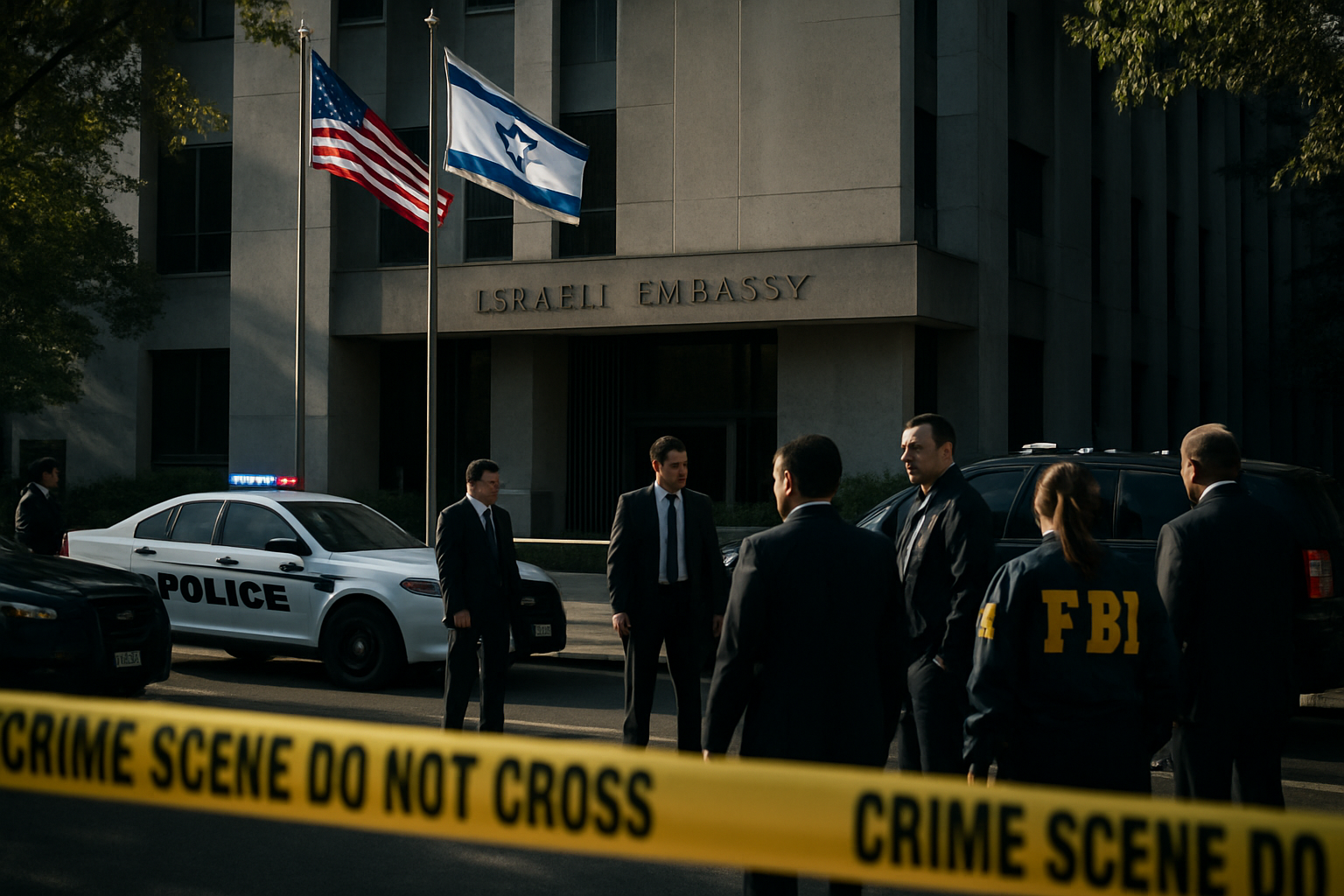
A man accused of killing two Israeli Embassy staff members in Washington, D.C. last year has been indicted on four additional counts of terrorism, bringing the total charges against him to nine, according to federal prosecutors.
Elias Rodriguez, 31, was initially charged with first-degree murder and hate crimes in connection with the shooting deaths of Israeli diplomats Yaron Lischinsky and Sarah Milgrim near the Capital Jewish Museum on May 21, 2025. The superseding indictment unsealed Wednesday includes the new terrorism charges, which U.S. prosecutors say "carry a mandatory life sentence."
The maximum penalty Rodriguez now faces is death or life in prison without parole, the U.S. Attorney's Office for the District of Columbia announced. The case represents one of the most serious attacks against Israeli diplomatic personnel on American soil in recent memory.
Details of the Attack
The deadly shooting occurred in broad daylight near the Capital Jewish Museum in Washington's downtown area, sending shockwaves through both the diplomatic community and local residents. According to court documents, the attack appeared to be premeditated and targeted specifically at Israeli Embassy personnel.
The two victims, Yaron Lischinsky and Sarah Milgrim, were both working for the Israeli Embassy at the time of their deaths. Their killings prompted an intensive federal investigation involving multiple law enforcement agencies, including the FBI and local Washington D.C. police.
The location of the attack, near a prominent Jewish cultural institution, added to concerns about the potentially antisemitic motivations behind the violence. Federal investigators treated the case as both a diplomatic incident and a hate crime from the outset.
Escalation to Terrorism Charges
The decision to add terrorism charges reflects the severity prosecutors place on Rodriguez's alleged actions and their potential impact on U.S.-Israel diplomatic relations. The superseding indictment indicates federal investigators have gathered additional evidence linking the defendant's motivations to broader anti-Israeli or antisemitic ideology.
Legal experts note that terrorism charges in domestic cases require prosecutors to demonstrate that the defendant's actions were intended to intimidate or coerce civilians or influence government policy through the use of violence. The addition of these charges suggests prosecutors believe they can prove Rodriguez's attack was designed to send a broader political message.
"The additional charges related to terrorism reflect the gravity of these crimes and their impact on our diplomatic community and national security."
— U.S. Attorney's Office for the District of Columbia
The mandatory life sentence associated with the terrorism charges means that even if Rodriguez avoids the death penalty, he would face life imprisonment without the possibility of parole if convicted on these counts.
Diplomatic and Security Implications
The attack marked a significant security breach that prompted immediate reviews of diplomatic security protocols in the Washington area. Israeli Embassy officials worked closely with U.S. State Department security teams to enhance protection measures for diplomatic personnel following the shooting.
The incident occurred during a period of heightened tensions in the Middle East, though investigators have not publicly linked Rodriguez's alleged actions to any specific international events or organized terrorist groups. The case highlights the ongoing security challenges faced by foreign diplomatic missions, particularly those representing countries involved in regional conflicts.
International law enforcement cooperation has been crucial to the investigation, with Israeli authorities providing assistance to their U.S. counterparts. The case has also strengthened calls for enhanced security measures around diplomatic facilities and cultural institutions in major American cities.
Legal Proceedings and Timeline
Rodriguez has been in federal custody since his arrest shortly after the May 2025 shooting. His case has moved through the federal court system with multiple sealed hearings and extensive pre-trial motions, typical of high-profile terrorism cases involving international implications.
The superseding indictment represents a significant escalation in the charges against Rodriguez, moving beyond standard homicide and hate crime allegations to include federal terrorism statutes. This shift indicates prosecutors believe they have developed a stronger case regarding the defendant's motivations and the broader implications of his alleged actions.
Defense attorneys are expected to challenge both the original charges and the new terrorism counts, potentially arguing that the prosecution has not met the threshold for proving terrorist intent versus other criminal motivations.
Broader Context and Security Concerns
The Rodriguez case comes amid broader concerns about security threats to Jewish and Israeli institutions in the United States. FBI statistics show increasing incidents of antisemitic violence and threats against Jewish community centers, synagogues, and diplomatic facilities.
The shooting also highlighted the vulnerability of diplomatic personnel operating outside traditional embassy compounds. Many diplomatic staff members regularly travel throughout host cities for official business, cultural events, and community engagement activities, making comprehensive security coverage challenging.
Law enforcement agencies have increased coordination with international partners to monitor potential threats against diplomatic targets, particularly those representing countries involved in ongoing geopolitical conflicts. The Rodriguez case serves as a reminder of the complex security environment facing diplomatic communities in major world capitals.
The trial date has not yet been set, but given the complexity of terrorism cases and the international dimensions involved, legal proceedings are expected to continue for several months. The outcome will likely influence how similar cases are prosecuted and could impact diplomatic security protocols for years to come.