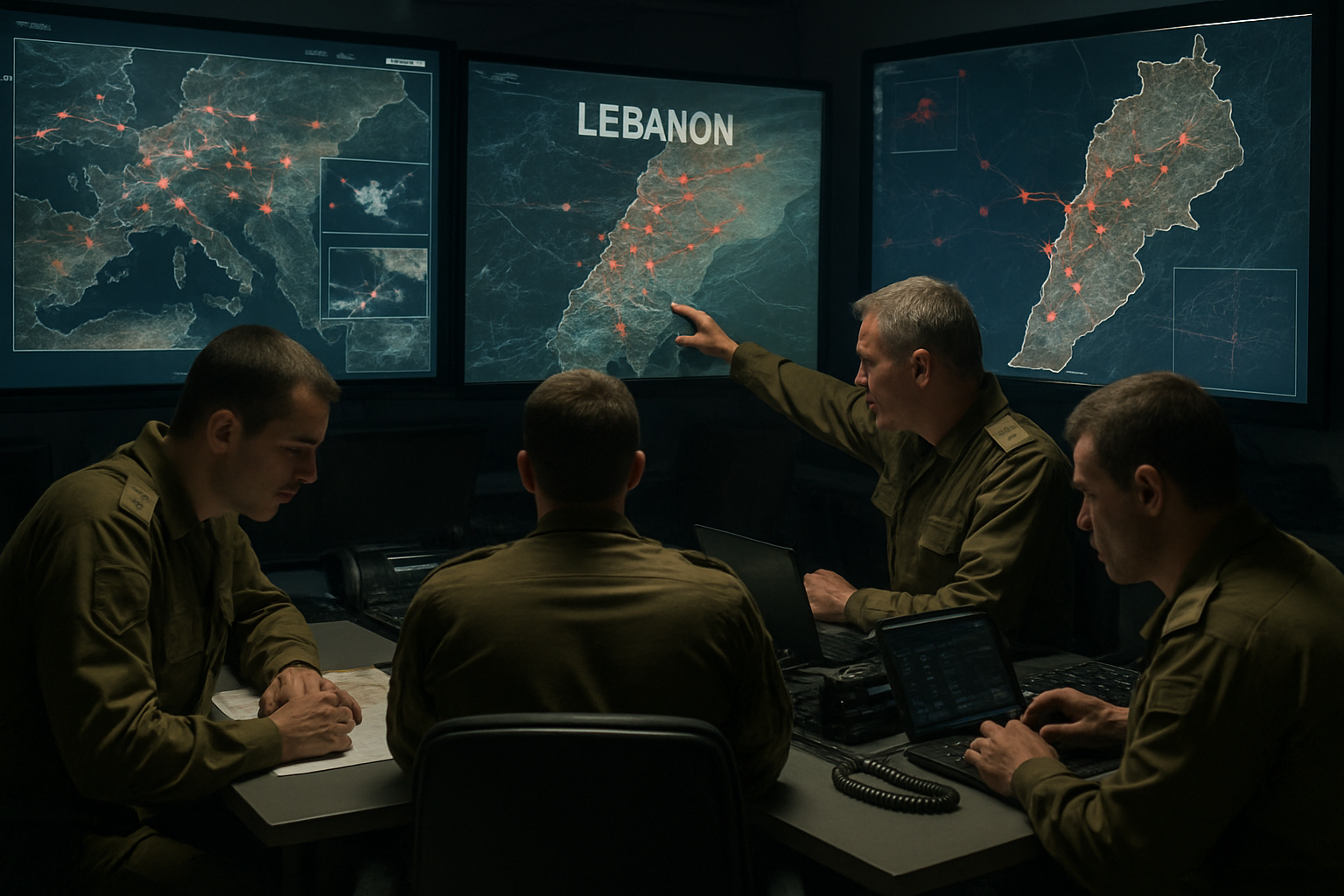
The Israel Defense Forces announced on Monday the commencement of ground operations in southern Lebanon, describing them as "limited and targeted operations" against Hezbollah strongholds, marking a dangerous new phase in the Middle East crisis that has already plunged the region into its most severe conflict since the Cold War.
The announcement, confirmed by multiple sources across Azerbaijan, Egypt, Italy, and Sweden, represents a significant escalation from the aerial bombardment campaign that has devastated Lebanon over the past weeks, with casualties mounting to over 800 killed and more than 800,000 displaced according to the Lebanese Health Ministry.
Ground Operations Launch Amid Broader Regional War
According to reports from AzerNews, the Israeli military characterized the operations as targeting specific Hezbollah infrastructure in southern Lebanon. Italian sources from ANSA confirmed that the Israeli Defense Forces stated their "objectives are Hezbollah strongholds," while Egyptian media reported that Israel described the operations as "limited and specifically targeted in southern Lebanon."
The ground invasion comes as the broader Iran-Israel conflict continues to rage, having begun with Operation Epic Fury in early March following the death of Iranian Supreme Leader Ali Khamenei. That conflict has already cost over $11.3 billion in its first week alone and led to unprecedented global disruptions including 18,000+ flight cancellations worldwide.
Humanitarian Crisis Reaches Catastrophic Levels
The Lebanese humanitarian situation has reached catastrophic proportions, with the Health Ministry reporting 394 civilians killed including dozens of children since the escalation began. Perhaps most alarming, 26 paramedics have been killed and 51 wounded, with systematic targeting of emergency responders documented by international observers.
The displacement crisis is unprecedented in scale, with 454,000 Lebanese civilians forced from their homes according to official tracking - the highest numbers since the 2006 war. Emergency shelters have reached breaking point, with thousands sleeping on Beirut's corniche and in cars as France 24's Catherine Norris Trent reported "nowhere left to go."
"The systematic targeting of medical personnel and facilities violates fundamental international humanitarian law protections."
— International Humanitarian Law Experts
International Diplomatic Efforts Intensify
Despite the military escalation, diplomatic initiatives have intensified with French President Emmanuel Macron offering to host direct Israel-Lebanon talks in Paris - the first such negotiations since the November 2024 ceasefire collapse. UN Secretary-General António Guterres has visited Beirut urging diplomatic solutions, while Turkey warns Israel of committing "new genocide" under Hezbollah pretext.
Sweden has provided 65 million kronor in humanitarian aid responding to UN appeals for the 800,000 Lebanese displaced, while multiple countries continue issuing evacuation orders and travel warnings as the crisis deepens.
Broader Middle East Context: The Iran War Connection
The Lebanon ground operations cannot be understood separately from the broader Middle East war that began March 1, 2026, with the death of Iranian Supreme Leader Ali Khamenei in US-Israeli Operation Epic Fury. This broader conflict has created unprecedented global implications:
- Oil prices have surged past $100 per barrel as Iran has mined the Strait of Hormuz, affecting 40% of global oil transit
- A global aviation crisis has seen 18,000+ flights cancelled worldwide
- The first attack on European territory since WWII occurred when Iranian drones struck RAF Akrotiri in Cyprus
- Mojtaba Khamenei has become Iran's new Supreme Leader in the first hereditary succession in Islamic Republic history
Hezbollah's Strategic Dilemma
Hezbollah, with an estimated 20,000 fighters, faced an impossible choice between maintaining the November 2024 ceasefire arrangements versus responding to Iranian pressure for retaliation following Khamenei's death. The organization chose to join the broader Iran-Israel confrontation, leading to the complete collapse of the US-French brokered ceasefire that had held for over a year.
The group has conducted over 40 operations targeting northern Israeli military sites reaching as far as Haifa, declaring "direct confrontations" with Israeli forces in southern Lebanon - marking a significant operational escalation from previous limited engagements.
International Law Concerns Mount
The systematic targeting of medical personnel and facilities has drawn international condemnation, with 26 paramedics killed and 51 wounded since strikes began. The Israeli military spokesman Avichai Adraee has threatened strikes against ambulances and medical facilities, claiming Hezbollah uses "ambulances extensively for military purposes" - allegations Hezbollah categorically denies.
UN peacekeepers have also come under attack, with a UNIFIL base near Mais al-Jabal struck and one peacekeeper wounded. UNIFIL spokeswoman Kandice Ardiel described the situation as "precarious and volatile," affecting both peacekeepers and civilians forced to evacuate southern Lebanese areas.
Global Economic and Strategic Implications
The Lebanon crisis occurs within the context of the most dangerous international crisis since the Cold War, with template-setting implications for 21st-century conflict resolution. The rapid transition from diplomatic frameworks to military confrontation demonstrates the fragility of crisis management in the multipolar era.
Energy markets have been severely disrupted, with natural gas prices up 24% in Europe and 78% in the US. Qatar has halted LNG production, threatening European supplies, while major shipping companies Maersk and MSC have suspended Persian Gulf operations, leaving over 150 tankers stranded with billions in cargo.
Congressional and International Scrutiny
In Washington, bipartisan lawmakers are demanding answers on strategy, costs, and potential ground troop deployment as the broader Iran conflict continues. Senator Richard Blumenthal expressed being "more concerned than ever" about boots on the ground, while conflict unpopularity reaches "almost unprecedented" levels with only 25% American support.
The Pentagon has quietly prepared operations through September, far beyond the initially projected 4-6 week timeline, with costs already reaching $11.3 billion in the first week alone.
Looking Ahead: Critical Juncture
The launch of Israeli ground operations in Lebanon represents a critical juncture that could determine whether the current crisis remains contained or escalates into a broader regional war with devastating consequences for millions. Coming days and weeks will be crucial in determining diplomatic breakthrough versus extended warfare with devastating humanitarian consequences.
The international community faces what UN Secretary-General Guterres has called "the greatest test of multilateral cooperation in the modern era," as the crisis tests regional war prevention, global energy security, nuclear governance credibility, and international law enforcement mechanisms simultaneously.
With nearly one million Lebanese affected by the crisis and regional coalitions under severe strain as Iranian attacks target Gulf state territories, the stakes could not be higher for Middle East stability and the post-Cold War international order.