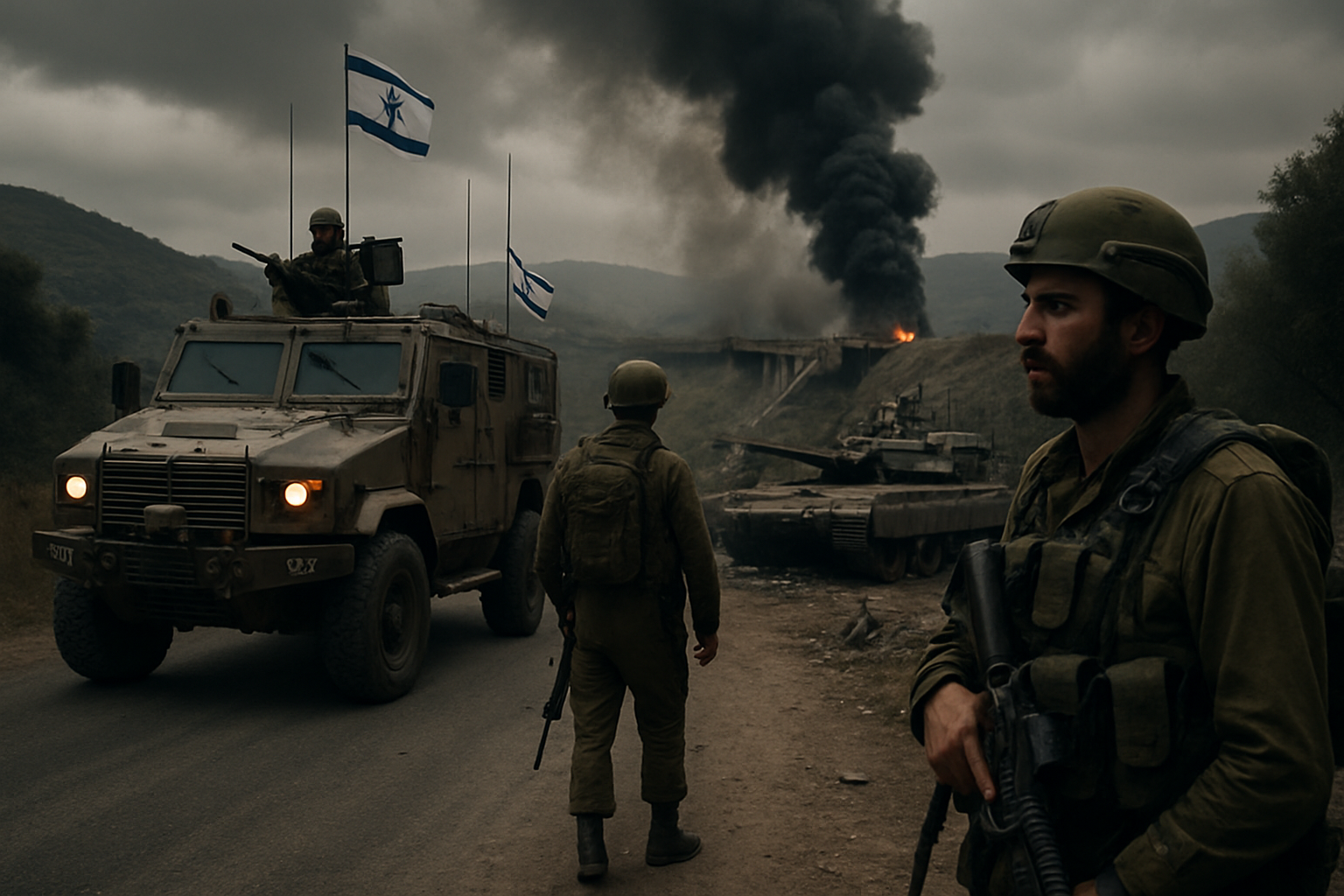
Israeli military forces announced the expansion of ground operations in southern Lebanon and vowed to continue combat operations for "several weeks," marking the most significant escalation in the region since the collapse of the November 2024 ceasefire agreement.
The Israel Defense Forces (IDF) confirmed Sunday the destruction of a strategic bridge over the Litani River near Qasmiyeh and issued demolition orders for residential buildings near the Lebanese border, representing a dramatic intensification of military operations against Hezbollah positions in southern Lebanon.
Infrastructure Targeting Marks New Phase
Israeli forces destroyed the Qasmiyeh bridge, which spans the Litani River in southern Lebanon, in what Lebanese President Joseph Aoun described as "a dangerous escalation and a flagrant violation of Lebanon's sovereignty." The bridge represents critical infrastructure connecting southern Lebanese communities and has strategic importance for regional movement.
The destruction of bridges and civilian infrastructure marks what military analysts describe as a shift from targeted military strikes to broader infrastructure warfare. German defense sources confirmed these operations represent the most intensive Israeli campaign in Lebanon since the November 2024 ceasefire breakdown.
According to Portuguese military sources, IDF Chief of Staff Lieutenant General Eyal Zamir announced that Israel would "intensify targeted ground operations and airstrikes in Lebanon," declaring the operation against Hezbollah is "just beginning."
Extended Ground Campaign Announced
Israeli Defense Minister Israel Katz drew comparisons to Gaza operations, suggesting the Lebanon campaign could follow a similar extended timeline. Military officials indicated the ground operations, initially described as "limited and targeted," would continue for several additional weeks with thousands of targets remaining.
The IDF has issued the most extensive evacuation warnings in Israeli history, affecting over 300,000 Lebanese civilians according to Israeli estimates, with Lebanese Red Cross figures potentially higher. Romanian sources confirm the military is operating "ahead of schedule" but extensive campaign targeting Hezbollah infrastructure will persist.
Romanian media reports indicate Israeli forces have moved beyond the five positions held since the November 2024 ceasefire to "new locations" targeting Hezbollah strongholds throughout southern Lebanon.
Regional Context and Escalation
The current escalation occurs within the broader Middle East crisis following the death of Iranian Supreme Leader Ali Khamenei on March 1, 2026, and the subsequent breakdown of regional stability mechanisms. Hezbollah faces what sources describe as an "impossible choice" between maintaining the November 2024 ceasefire arrangements and responding to Iranian pressure for retaliation.
Lebanese Health Ministry figures indicate severe humanitarian consequences, with hundreds killed and over 800,000 displaced persons since the conflict escalation began. The systematic targeting of medical personnel has resulted in 26 paramedics killed and 51 wounded since March 2, raising serious international humanitarian law concerns.
According to multiple European defense sources, the November 2024 US-French brokered ceasefire that required Israeli-Hezbollah withdrawal from southern Lebanon with a Lebanese army and UN peacekeepers buffer zone has completely collapsed after holding for over a year despite minor violations.
International Response and Diplomatic Efforts
French President Emmanuel Macron has offered to host direct Israel-Lebanon negotiations in Paris, representing the first such talks since the ceasefire collapse. UN Secretary-General António Guterres called the overall regional situation "the greatest test of multilateral cooperation in the modern era" during his visit to Beirut urging diplomatic solutions.
Turkey has issued strong warnings, with officials stating Israel is committing "new genocide" under the pretext of fighting Hezbollah. Sweden has provided 65 million kronor in humanitarian aid responding to UN appeals for assistance to the 800,000+ Lebanese displaced persons.
UN peacekeepers have come under attack, with a UNIFIL base near Mais al-Jabal struck, wounding one peacekeeper. UNIFIL spokeswoman Kandice Ardiel described a "precarious and volatile" situation affecting both peacekeepers and civilians evacuating southern Lebanon areas.
Humanitarian Crisis Deepens
The humanitarian situation has reached catastrophic levels, with emergency shelters at breaking point and thousands of families sleeping on Beirut streets. Traditional support systems including schools, places of worship, and community centers have reached capacity, forcing families to seek shelter wherever possible.
The systematic targeting of medical facilities and personnel has compromised Lebanon's emergency response capabilities. The deadliest attack at Burj Qalaouiyah primary healthcare center killed 12 medical workers including doctors, nurses, and paramedics, representing potential Geneva Conventions violations.
Israeli military spokesman Avichai Adraee has threatened strikes against ambulances and medical facilities, claiming Hezbollah uses "ambulances extensively for military purposes" without providing evidence. Hezbollah officials have categorically denied these allegations.
Strategic Military Assessment
Military analysts note that Hezbollah, with an estimated 20,000 fighters, has conducted over 40 operations targeting northern Israeli military sites reaching as far as Haifa. The organization has declared "direct confrontations" with Israeli forces in southern Lebanon, marking significant operational escalation from the ceasefire period.
The current operations represent a fundamental shift from the November 2024 arrangements that established buffer zones and withdrawal requirements. Israeli forces are now conducting systematic operations across multiple Lebanese regions, including the Bekaa Valley weapons depots and command centers, southern Lebanon Hezbollah positions, and Beirut southern suburbs.
Defense analysts indicate the infrastructure targeting, particularly bridges and transportation networks, suggests preparation for extended military operations and potential efforts to prevent Hezbollah resupply and movement between different operational areas.
Global Implications
The Lebanon crisis occurs within the context of the broader Iran-Israel conflict, which has resulted in unprecedented global disruptions including over 18,000 flights cancelled worldwide, oil prices surging past $100 per barrel, and the effective closure of the Strait of Hormuz affecting 40% of global oil transit.
The expansion of Israeli ground operations in Lebanon threatens to further complicate international diplomatic efforts to contain the regional crisis. Multiple nations have issued evacuation orders and travel warnings, with the largest international evacuation since the Arab Spring of 2011 currently underway.
European officials have expressed grave concern about the conflict's expansion, particularly following the first attack on European territory since World War II when Iranian drones struck RAF Akrotiri in Cyprus, prompting an unprecedented naval coalition response from multiple European nations.
Looking Forward
The coming weeks will be crucial in determining whether the Lebanon-Israel fighting can be contained through renewed diplomatic efforts or represents the beginning of a broader regional war. International mediators face the challenge of managing both the Iran nuclear and succession crisis while attempting to contain the Lebanon escalation.
Military officials indicate that current trajectory risks prolonged regional conflict involving multiple Iranian proxy groups throughout the Middle East. The Revolutionary Guards' hardline elements, emboldened by the succession crisis, could potentially lead to more aggressive proxy operations across the region.
The success or failure of containing this crisis will have template-setting implications for 21st-century conflict resolution mechanisms, regional stability frameworks, and international humanitarian law enforcement in modern warfare contexts.