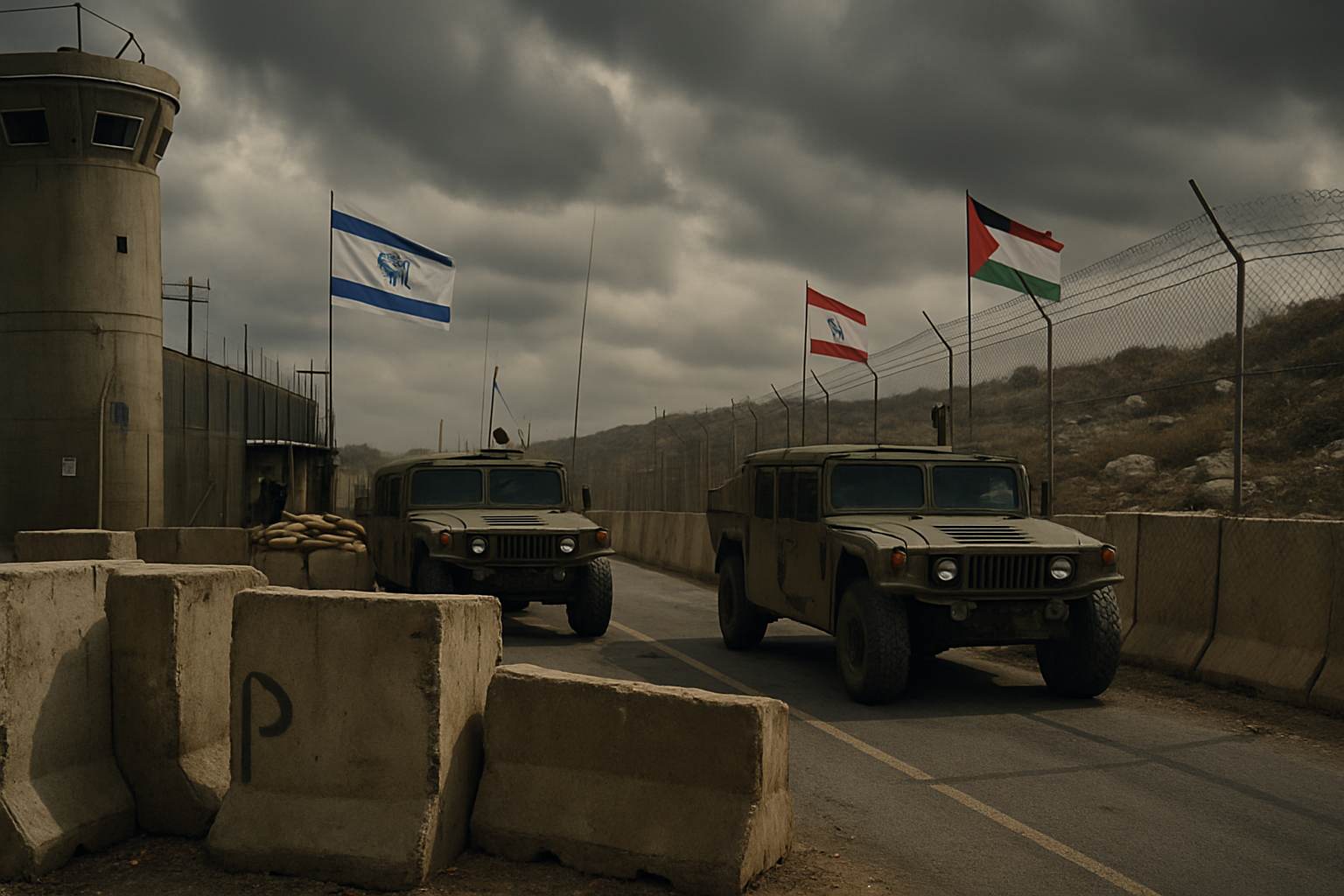
The Israeli Defense Forces confirmed the authenticity of images showing an Israeli soldier destroying a Jesus statue in Lebanon, while the government simultaneously reestablished a West Bank settlement evacuated 21 years ago, intensifying regional tensions amid ongoing ceasefire violations.
The IDF acknowledged Sunday that a widely circulated image depicting a soldier destroying a religious statue in southern Lebanon is genuine, stating the military "views the incident with great severity" and that it will be handled "through the chain of command." The military also pledged to help restore the statue, though the incident has already sparked significant international outrage and raised questions about conduct during military operations.
Religious Freedom Violations Spark International Condemnation
Social media users have condemned what they describe as Western silence regarding attacks on religious symbols and sites by Israeli soldiers and settlers. The destruction of the Christian religious statue comes amid broader concerns about religious freedom violations in the region, particularly during the ongoing conflicts affecting multiple faiths.
The incident occurred as Israel continues military operations in southern Lebanon despite a fragile 10-day ceasefire announced by President Trump following negotiations with Israeli Prime Minister Benjamin Netanyahu and Lebanese President Joseph Aoun. The ceasefire, which took effect Thursday evening, has already faced immediate violations, with Lebanese military sources documenting Israeli "acts of aggression" including artillery shelling of southern villages within hours of the agreement.
West Bank Settlement Reestablishment After Two Decades
Simultaneously, Israeli authorities reestablished the West Bank settlement of Sa-Nur, located south of Jenin, marking a significant escalation in settlement expansion policies. The ceremony was attended by Defense Minister Israel Katz and Finance Minister Bezalel Smotrich, along with settlement leaders and Israeli officials.
Smotrich described the reestablishment as a "historic correction to the sinful expulsion from northern Samaria" under the 2005 Disengagement Plan. The settlement had been evacuated 21 years ago as part of broader Israeli withdrawal policies, making its reestablishment particularly controversial.
"This step represents the continuing policy to kill the idea of a Palestinian state."
— Bezalel Smotrich, Israeli Finance Minister
Peace Now, an Israeli advocacy organization, condemned the move as "stupid and wicked," warning that it would add to the IDF's operational burden while undermining prospects for peace. The organization emphasized that settlement expansion violates international law and complicates security arrangements in the West Bank.
Systematic Ceasefire Violations Continue
The religious statue incident and settlement reestablishment occur within a broader pattern of systematic violations affecting multiple conflict zones. Palestinian officials have documented over 1,600 ceasefire violations in Gaza since October 2025, resulting in more than 680 Palestinian deaths during what was supposed to be a period of peace.
In Lebanon, the humanitarian crisis has reached unprecedented levels, with 1.2 million people displaced—representing 25% of the population—since March 2026 escalation. Systematic targeting of medical personnel has resulted in 26 paramedics killed and 51 wounded, including the deadliest attack on the Burj Qalaouiyah healthcare center that killed 12 medical workers, raising serious Geneva Conventions concerns.
Regional Implications and International Response
The November 2024 US-French brokered ceasefire between Israel and Hezbollah had held for over a year until its complete collapse in March 2026. Hezbollah faced what sources describe as an "impossible choice" between maintaining the ceasefire and responding to Iranian pressure for retaliation following the death of Supreme Leader Ali Khamenei on March 1.
The organization ultimately chose "Iranian solidarity over Lebanese sovereignty," declaring "resistance the only option" and pulling Lebanon into the broader Iran-Israel confrontation that has created global economic disruptions, including 18,000+ cancelled flights worldwide and oil prices exceeding $100 per barrel.
Palestinian and Arab Response
Hamas leadership described the settlement reestablishment as representing "dangerous escalatory steps that consolidate annexation plans" affecting Palestinian existence in the West Bank. Palestinian officials view the Sa-Nur reestablishment as part of broader Israeli policies designed to prevent the emergence of a viable Palestinian state.
Eight Arab nations, including countries that have normalized relations with Israel such as the UAE and Saudi Arabia, have issued joint condemnations of Israeli actions as violations of international law "aimed at imposing unlawful Israeli sovereignty" and undermining the two-state solution.
Critical Loophole in Peace Framework
A significant complication has emerged in regional peace efforts, as Netanyahu explicitly excluded Lebanon from the Pakistan-mediated "Islamabad Accord" between the US and Iran, creating what officials describe as a dangerous gap in the ceasefire framework. Iran has threatened to withdraw from regional talks unless comprehensive enforcement is applied to all fronts.
Vice President Vance has acknowledged Iran's "legitimate misunderstanding" regarding Lebanon's inclusion in broader ceasefire arrangements, though US officials maintain they never agreed to include Lebanon operations in the Pakistan-mediated framework.
Global Economic and Security Impact
The regional conflicts have created unprecedented global disruptions reminiscent of the COVID-19 pandemic's impact on international systems. Aviation networks have been severely affected, with major airlines suspending operations to affected regions and airports closing due to security concerns.
The International Energy Agency has conducted its largest strategic reserve release in 50 years, releasing 400 million barrels to stabilize oil markets. Natural gas prices have surged 24% in Europe and 78% in the US, affecting household energy costs and broader economic stability.
Template-Setting Implications for 21st Century Diplomacy
UN Secretary-General António Guterres has characterized the current crisis as "the greatest test of multilateral cooperation in the modern era," emphasizing the stakes for international governance credibility. The rapid transition from diplomatic agreements to military escalation demonstrates the fragility of negotiated settlements when underlying political tensions remain unresolved.
The World Health Organization has issued a $30.3 million emergency appeal for healthcare systems across five countries that are "under severe strain," while peacekeeping operations have been compromised by attacks on UN facilities, including the wounding of peacekeepers at UNIFIL bases.
Looking Forward: Diplomatic Intervention vs. Military Escalation
The current trajectory represents what analysts describe as a template-setting moment for 21st-century conflict resolution. The success or failure of diplomatic interventions will influence approaches to territorial sovereignty disputes, proxy relationships, and great power competition for decades to come.
French President Emmanuel Macron has offered to host direct Israel-Lebanon talks in Paris—the first such diplomatic initiative since the November 2024 ceasefire collapse—while multiple international actors work to prevent broader regional warfare that could affect millions more civilians.
The coming weeks will prove decisive in determining whether international diplomatic pressure can contain the current escalation or whether the region will continue on a trajectory toward more comprehensive warfare with global implications for energy security, international law enforcement, and civilian protection frameworks.