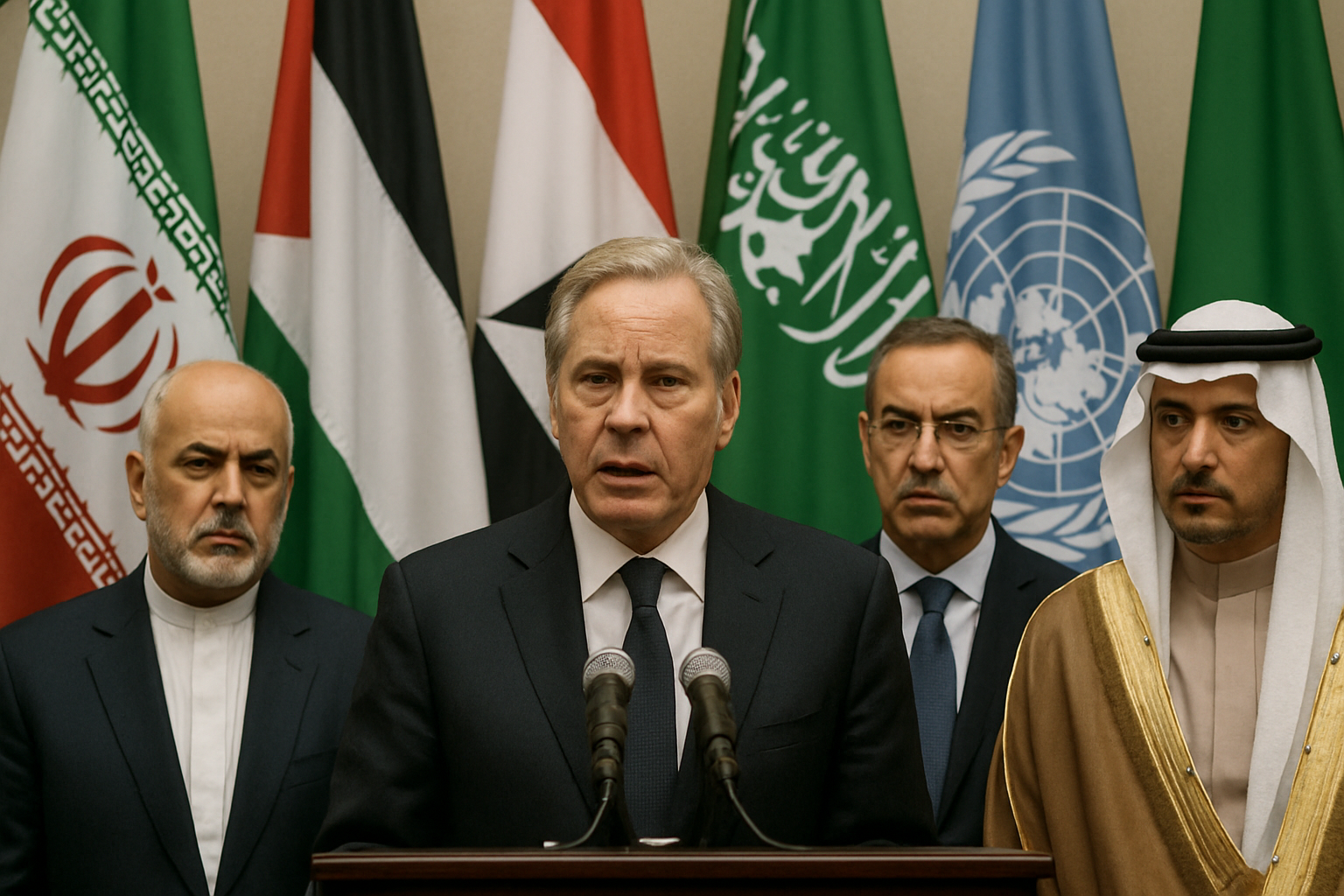
Israeli forces continue extensive military operations in Lebanon and Gaza, with reports of significant civilian casualties including UNICEF water delivery contractors, as international pressure mounts for a comprehensive ceasefire amid the most serious Middle East crisis since the Cold War.
According to multiple international sources, Israeli military operations have intensified across several fronts, with Lebanese state media reporting continued building demolitions in southern Lebanon despite ongoing ceasefire negotiations. The operations occur against the backdrop of what UN Secretary-General António Guterres has called "the greatest test of multilateral cooperation in the modern era."
Civilian Casualties Mount Across Gaza and West Bank
In a disturbing development, UNICEF confirmed that Israeli forces killed two of its water delivery contractors in Gaza on Saturday. The UN agency expressed outrage at the killings, stating that the drivers were contracted to provide clean water to families in the Gaza Strip. Israeli military sources claimed troops opened fire after "armed terrorists" approached the ceasefire line in northern Gaza, though this account has been disputed.
The incident adds to a documented pattern of systematic ceasefire violations. Since October 2025, over 1,600 violations have been recorded, resulting in more than 680 Palestinian deaths during what was supposed to be a peace period. Dr. Mohamed Abu Selmiya, Director of Al-Shifa Hospital, has repeatedly questioned "Where is the ceasefire?"
In the West Bank, violence has escalated with reports of settlers attacking Palestinian communities. According to Israeli sources, a Palestinian woman was evacuated for medical treatment following an assault in Turmus Ayya, while her sons were detained by Israeli Defense Forces (IDF). The town, known for its large Palestinian-American population, was reportedly raided twice in a single day.
Lebanon Operations Expand Despite Diplomatic Efforts
Greek media reports indicate that Israeli forces conducted further demolitions in Bint Jbeil, a town in southern Lebanon where a ceasefire is theoretically in effect. The operations represent a significant escalation in what international observers describe as Israel's establishment of a "yellow line" in Lebanon, similar to tactics used in Gaza.
"It is the first time Israel has referred to such a 'yellow line' in Lebanon, after using a similar measure in Gaza."
— Al Jazeera, Regional Analysis
The Lebanese government has documented what it terms "acts of aggression" by Israeli forces, including artillery attacks on southern villages. This systematic approach represents a concerning expansion of Israeli territorial control mechanisms beyond internationally recognized borders.
Humanitarian Crisis Reaches Critical Point
The humanitarian situation has deteriorated dramatically across the region. In Lebanon, over 1.2 million people - representing 25% of the population - have been displaced since March 2026. Emergency shelters are overwhelmed, forcing thousands to sleep on the streets of Beirut.
Particularly alarming is the systematic targeting of medical personnel. Since March 2, 26 paramedics have been killed and 51 wounded in Lebanon, representing what international legal experts consider potential Geneva Conventions violations. The deadliest single incident occurred at the Burj Qalaouiyah healthcare center, where 12 medical workers were killed.
In Gaza, the Civil Defense has been completely shut down due to fuel shortages, severely hampering emergency response capabilities. The Rafah crossing operates at minimal capacity - only 27 Palestinians crossed daily versus the agreed quota of 200, with Hamas condemning what it describes as "systematic harassment" by Israeli security forces.
International Response and Diplomatic Pressure
The international community has responded with unprecedented unity in condemning the ongoing operations. Eight Arab nations, including countries with normalized relations with Israel such as the UAE and Saudi Arabia, have issued joint condemnations calling the actions violations of international law.
More than 400 European Union diplomats have demanded increased pressure on Israeli authorities, while a European petition against EU-Israel partnerships has exceeded 400,000 signatures. The World Health Organization has issued a $30.3 million emergency appeal to support healthcare systems described as being "under severe strain."
November 2024 Ceasefire Framework Collapse
The current crisis stems from the complete breakdown of the November 2024 US-French brokered ceasefire between Israel and Hezbollah. That agreement had held for over a year until March 2026, when Hezbollah faced what sources describe as an "impossible choice" between maintaining the ceasefire and responding to Iranian pressure following the death of Supreme Leader Ali Khamenei on March 1.
Hezbollah ultimately chose "Iranian solidarity over Lebanese sovereignty," declaring that "resistance is the only option" and pulling Lebanon into the broader Iran-Israel confrontation. The organization, estimated to have 20,000 fighters, has conducted over 40 operations targeting northern Israeli sites and declared "direct confrontations" with Israeli forces in southern Lebanon.
Global Economic and Security Implications
The regional conflict has created global reverberations, with over 18,000 flights cancelled worldwide in what aviation analysts describe as the most significant disruption since COVID-19. Oil prices have surged past $100 per barrel for the first time since 2014, while the closure of the Strait of Hormuz affects 40% of global oil transit.
The International Energy Agency has authorized the largest strategic reserve release in its 50-year history - 400 million barrels - to stabilize global energy markets. Natural gas prices have increased 24% in Europe and 78% in the United States, directly impacting household costs worldwide.
Legal and Enforcement Challenges
International legal experts have raised serious concerns about systematic violations of UN Security Council resolutions and Geneva Conventions. The establishment of "yellow line" systems and systematic targeting of medical personnel constitute what many describe as potential war crimes requiring investigation.
The crisis has also exposed critical loopholes in diplomatic frameworks. Israeli Prime Minister Benjamin Netanyahu explicitly excluded Lebanon from the Pakistan-mediated "Islamabad Accord" between the US and Iran, creating what Vice President Vance acknowledged as a "legitimate misunderstanding" by Iran. This exclusion threatens broader regional peace efforts, with Iran threatening to withdraw from talks unless comprehensive enforcement covers all fronts.
Looking Forward: Template-Setting Implications
The current crisis represents what many analysts describe as a "template-setting moment" for 21st-century conflict resolution. The rapid transition from diplomatic agreements to military escalation demonstrates the fragility of negotiated settlements when underlying political tensions remain unresolved.
As UN Secretary-General Guterres noted, the success or failure of international intervention in this crisis will influence approaches to territorial disputes, proxy relationships, and great power competition for decades to come. The stakes extend far beyond the immediate region, affecting global governance credibility, international law enforcement, and the international community's capacity to prevent systematic violations of humanitarian norms.
With diplomatic efforts continuing despite ongoing military operations, the coming weeks will be crucial in determining whether international pressure can achieve a sustainable resolution or whether the region will face the prospect of broader warfare affecting millions of civilians across multiple countries.