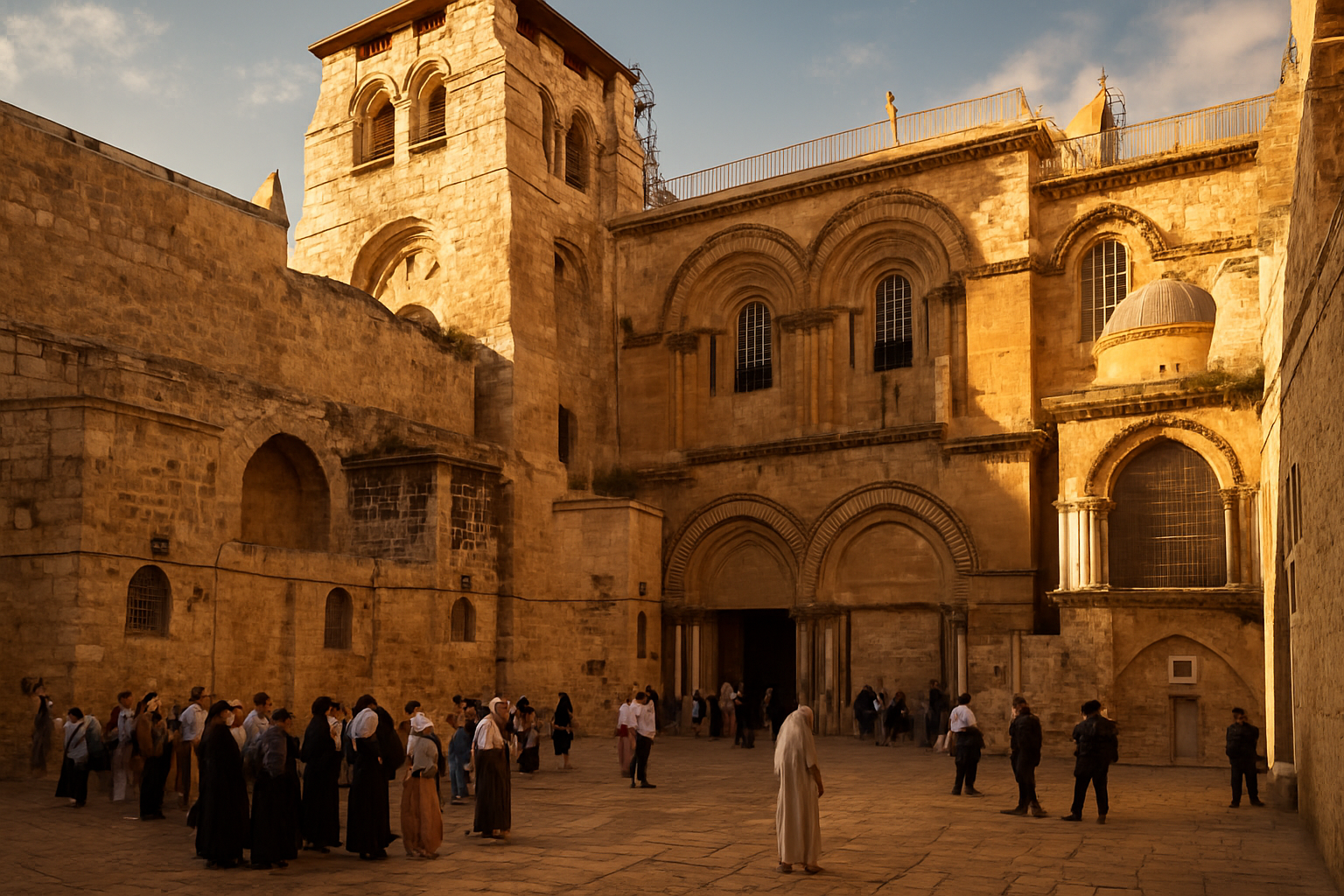
Israeli authorities prevented the Latin Patriarch of Jerusalem, Cardinal Pierbattista Pizzaballa, from entering the Church of the Holy Sepulchre to celebrate Palm Sunday mass on March 29, 2026, marking what the Latin Patriarchate called "the first time in centuries" that Catholic leadership has been barred from Christianity's holiest site during this sacred observance.
Cardinal Pizzaballa, the top Catholic figure in Jerusalem, and Friar Francesco Ielpo, the Custos of the Holy Land, were stopped by Israeli police while walking to the church built on the site where Christians believe Jesus was crucified and rose from the dead. The incident has sparked widespread international condemnation and raised serious questions about religious freedom in Jerusalem.
Historic Precedent Broken
"As a result, and for the first time in centuries, the Heads of the Church were prevented from celebrating the Palm Sunday Mass at the Church of the Holy Sepulchre," the Latin Patriarchate of Jerusalem stated in an official release. The unprecedented nature of this restriction has reverberated throughout the Christian world and diplomatic circles.
According to the Patriarchate's joint statement with the Custody of the Holy Land, the Cardinal and Custos "were stopped on their way and were forced to turn back" as they proceeded privately to the church without any ceremonial procession or public demonstration.
Security Concerns Cited
Israeli police justified their actions by citing security concerns linked to the ongoing Iran war, stating that all holy sites in Jerusalem's Old City—including those sacred to Christians, Muslims, and Jews—had been closed to worshippers since the start of the U.S.-Israeli conflict with Iran, particularly locations without bomb shelters.
Police emphasized that the closure affected sites of all three Abrahamic faiths, not targeting Christianity specifically. However, the timing during Palm Sunday, one of Christianity's most important observances, has amplified the controversy surrounding the decision.
International Diplomatic Fallout
The incident triggered swift condemnation from European leaders, with Italy's Prime Minister Giorgia Meloni labeling it an "offence to the faithful." French President Emmanuel Macron denounced the decision, calling it an "appeal to resistance" and warning of a "worrying increase in violations of the status of the Holy Places."
"This is completely unacceptable. The freedom to worship must be protected, especially at Christianity's holiest sites during our most sacred observances."
— Italian Prime Minister Giorgia Meloni
Italian Foreign Minister Antonio Tajani summoned the Israeli ambassador to Rome to explain the incident, while Denmark's leaders also formally condemned the decision. The Vatican has yet to issue an official response, but sources indicate Pope Leo XIV is closely monitoring the situation from the recently renovated Apostolic Palace.
Regional Security Context
The Palm Sunday restrictions occurred against the backdrop of the most serious Middle East crisis since the Cold War. The ongoing U.S.-Israeli military operations against Iran, which began with "Operation Epic Fury" in late February 2026, have created unprecedented security concerns throughout the region.
Oil prices have surged past $100 per barrel, over 18,000 flights have been canceled worldwide, and the Strait of Hormuz—through which 40% of global oil transits—has been effectively closed due to Iranian mining operations. In this context, Israeli authorities argue that exceptional security measures are necessary to protect civilians and religious sites alike.
Historical Significance of the Holy Sepulchre
The Church of the Holy Sepulchre, located in Jerusalem's Christian Quarter, is considered Christianity's holiest site. Built over the locations where Jesus Christ was crucified, buried, and resurrected according to Christian tradition, it serves as the focal point for Christian worship in the Holy Land.
The church operates under a complex arrangement known as the "Status Quo," dating back to Ottoman times, which carefully regulates the rights and responsibilities of various Christian denominations. The fact that even this ancient system was overridden for security concerns underscores the exceptional nature of current regional tensions.
Palm Sunday's Religious Importance
Palm Sunday commemorates Jesus Christ's triumphal entry into Jerusalem, marking the beginning of Holy Week leading to Easter. For Catholics worldwide, the celebration at the Holy Sepulchre holds special significance as it connects modern believers to the actual locations of the biblical narrative.
Cardinal Pizzaballa's inability to celebrate mass at the site has disrupted centuries of religious tradition. The Patriarchate noted that alternative arrangements were hastily made, but emphasized that nothing could replace the spiritual significance of worship at Christianity's most sacred location.
Broader Pattern of Religious Restrictions
The Palm Sunday incident fits within a broader pattern of religious restrictions affecting all faiths in Jerusalem. During the concurrent holy month of Ramadan, Al-Aqsa Mosque faced significant limitations, with worshipper numbers restricted and traditional iftar meal distributions banned in mosque courtyards.
These restrictions have affected nearly 2 billion Muslims worldwide observing Ramadan, just as the Christian restrictions impact 2.4 billion Christians globally. The simultaneous limitations on both faiths' access to their holiest sites represent an unprecedented situation in modern Jerusalem.
Legal and Diplomatic Implications
International law experts have noted that restrictions on religious worship at established holy sites raise serious questions under international religious freedom protections. The coordinated nature of the diplomatic protests suggests that multiple governments view the incident as a violation of established norms governing religious access in Jerusalem.
Jordan, which serves as the guardian of Islamic and Christian holy sites in Jerusalem under international agreements, strongly condemned the restrictions as violations of international law and humanitarian principles. Eight other Arab nations joined in formal condemnation, warning of dangerous precedents for religious freedom.
Community Response and Resilience
Despite the restrictions, Christian communities in Jerusalem and worldwide demonstrated remarkable resilience. Alternative Palm Sunday celebrations were organized in nearby locations, and international Christian leaders emphasized that while access to sacred sites can be restricted, faith itself cannot be diminished.
Local Christian communities reported that the incident has actually strengthened interfaith solidarity, with Jewish and Muslim residents of Jerusalem expressing support for their Christian neighbors' right to worship freely.
Looking Ahead
As the Middle East crisis continues, questions remain about when normal religious access will be restored to Jerusalem's holy sites. The incident has highlighted the complex challenges of maintaining religious freedom during wartime while ensuring public safety.
Cardinal Pizzaballa, for his part, has called for "prayers for peace and understanding" while expressing hope that such restrictions will not become normalized. The Latin Patriarchate has indicated it will continue seeking dialogue with Israeli authorities to ensure future religious observances can proceed without interference.
The Palm Sunday 2026 incident will likely be remembered as a watershed moment in the complex relationship between security concerns and religious freedom in one of the world's most contested and sacred cities. As international pressure mounts for a resolution to both the regional conflict and the religious access issues it has created, the eyes of the global Christian community—and indeed all people of faith—remain focused on Jerusalem.