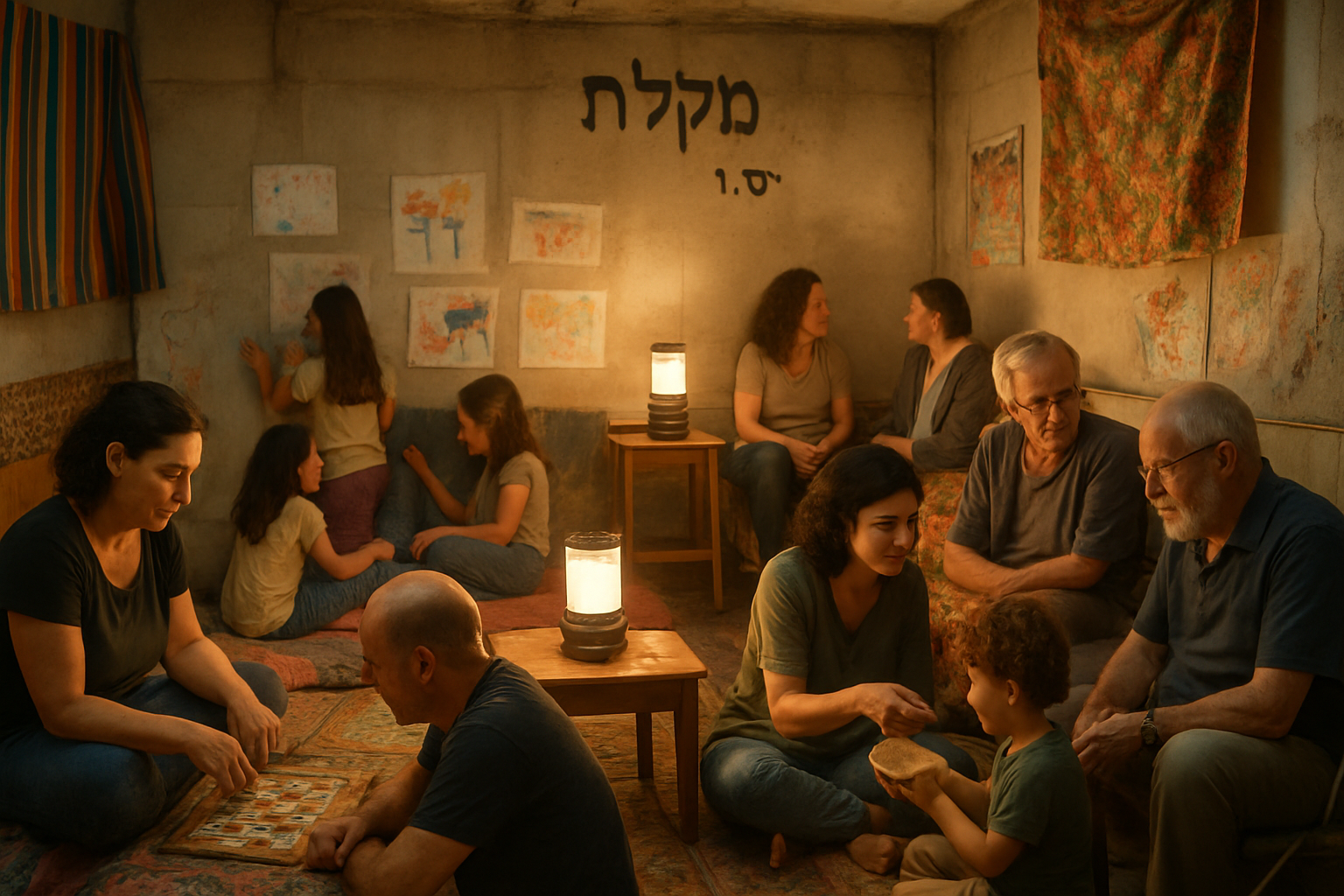
In the shadow of ongoing conflict and the backdrop of Purim celebrations, Israeli public bomb shelters have undergone a remarkable transformation, evolving from stark concrete refuges into warm community spaces where neighbors discover the power of shared resilience and human connection.
As air raid sirens continue to pierce the air across Israel following the dramatic escalation with Iran in recent weeks, these underground sanctuaries have become more than just places of protection. They have emerged as unexpected centers of community life, where children's laughter mingles with adult conversations, where elderly residents share stories with young families, and where the bonds of neighborhood solidarity are strengthened through shared adversity.
From Fear to Fellowship
The transformation began organically as Israelis found themselves spending extended periods in shelters during the recent "Operation Epic Fury" crisis and subsequent Iranian retaliation. What started as nervous gatherings of strangers huddled for safety has evolved into a network of informal community centers throughout the country.
"At first, we were all scared, just sitting in silence waiting for the all-clear," explains Sarah Cohen, a Tel Aviv resident who has become an informal coordinator for her neighborhood shelter. "But after the third or fourth time, people started bringing blankets, snacks, games for the children. Now it feels like an extension of our living rooms."
The shelters, originally designed for purely functional protection, have been gradually furnished with donated items from residents. Colorful blankets soften concrete walls, battery-powered lamps provide warm lighting, and children's artwork adds splashes of color to the utilitarian spaces.
Purim Spirit in Underground Havens
The timing of the current crisis with the Jewish holiday of Purim has added an unexpected dimension to these shelter communities. Known as a celebration of survival against adversity, Purim's themes resonate deeply with the current experience of Israelis finding joy and connection amid uncertainty.
In shelters across the country, families have brought Purim costumes, sharing them with children who forgot to grab theirs during emergency evacuations. Adults have organized impromptu readings of the Megillah, the scroll telling the Purim story, while maintaining the safety protocols required during alerts.
"The children don't understand the politics or the fear we adults carry. They see a costume party in a new place, and suddenly the shelter becomes magical to them."
— David Levi, Father of three from Jerusalem
Rabbi Michael Goldstein from a Jerusalem synagogue notes the profound symbolism: "Purim teaches us about hidden miracles, about finding light in darkness. These shelter communities embody that spirit - people finding ways to celebrate life even in the most challenging circumstances."
Building Bridges Across Generations
One of the most striking aspects of these shelter communities is how they have bridged generational divides. Elderly residents who might normally have limited interaction with young families find themselves playing games with children and sharing stories of their own experiences during past conflicts.
Miriam Rosen, 78, has become a beloved storyteller in her Haifa shelter. "These children remind me of my own grandchildren, but they live far away," she says. "Here, I have a whole new family of little ones who want to hear my stories. It gives purpose to this scary time."
The intergenerational connections have proven mutually beneficial. Young parents appreciate the wisdom and calm presence of older residents, while elderly participants report feeling more connected to their community than they have in years.
Organized Activities and Informal Leadership
What began as spontaneous gatherings has evolved into more organized community activities. Residents have established informal leadership structures, with different individuals taking responsibility for various aspects of shelter life.
Some organize children's activities, others coordinate food sharing, and many take charge of maintaining the emotional well-being of their temporary community. Board games, card tournaments, group singing, and storytelling sessions have become regular features of extended shelter stays.
"We've learned that waiting in fear is much harder than staying busy together," observes Dr. Rachel Friedman, a psychologist who has studied community resilience during crises. "These activities serve a dual purpose - they provide distraction from anxiety while building genuine social connections."
Children's Perspective: Adventure in Adversity
Perhaps nowhere is the transformation more evident than in how children have adapted to shelter life. What adults perceive as a disruption to normal life, children often experience as an adventure - a chance to make new friends and engage in activities they wouldn't encounter in their regular routines.
Eight-year-old Maya Stern from Netanya describes her shelter experience with enthusiasm: "It's like a big sleepover with all our neighbors. We play games, and Mrs. Goldman tells us stories about when she was little. Sometimes we even do art on the walls!"
Child psychologists note that this positive framing helps children process potentially traumatic experiences more healthily. The presence of caring adults from the community, combined with structured activities, provides a sense of normalcy and security even in uncertain circumstances.
Practical Adaptations and Innovations
The evolution of these spaces has also involved practical innovations. Residents have learned to pack "shelter bags" containing not just emergency supplies, but items for community building - coloring books, musical instruments, cooking supplies for shared meals, and games that can accommodate multiple players.
Technology has played a role too, with residents sharing phone chargers, creating group chats for coordination, and using tablets to stream educational content for children during longer stays. Some shelters have even established informal libraries, with residents contributing books that remain in the space for future use.
Impact on Israeli Society
The shelter communities represent a microcosm of broader changes in Israeli society during this period of heightened security concerns. Neighbors who previously knew each other only in passing have developed deeper relationships, creating stronger community networks that extend beyond the shelter walls.
Social worker Yael Ashkenazi from the Israeli Association for Community Centers has observed these changes firsthand: "We're seeing a renaissance of neighborhood connection. People who discovered friendship in the shelters are now organizing regular social activities, helping each other with daily challenges, and creating support networks that will outlast this crisis."
The phenomenon has also highlighted the resilience embedded in Israeli culture. Rather than allowing fear to dominate their experience, communities have found ways to maintain their humanity and celebrate their connections even during the most challenging circumstances.
Lessons in Resilience
The transformation of bomb shelters into community spaces offers broader lessons about human resilience and the power of social connection during crisis. Research on disaster psychology consistently shows that communities that maintain social cohesion and find ways to preserve normalcy fare better both during and after traumatic events.
Dr. Friedman explains: "What we're seeing in these shelters is a masterclass in community resilience. People are refusing to let fear define their experience. Instead, they're creating meaning, connection, and even joy in circumstances that could easily lead to despair."
The shelter communities have also demonstrated the importance of inclusive spaces where different segments of society can interact naturally. In these underground havens, economic differences, political affiliations, and social barriers seem to dissolve in favor of shared humanity and mutual support.
Looking Forward: Lessons Beyond Crisis
As the immediate security situation continues to evolve following the recent Iran crisis and ongoing tensions, many participants in these shelter communities express hope that the connections forged underground will continue above ground. Several neighborhoods are already discussing ways to maintain the community spirit they've discovered during this challenging period.
Some are organizing regular community gatherings, others are establishing neighborhood support networks for elderly residents, and many are planning to continue the intergenerational activities that have proven so meaningful during shelter stays.
The Purim holiday's message of hidden miracles and finding light in darkness has taken on new meaning for these communities. As one shelter regular noted, "We came down here for protection, but we found something we didn't expect - we found each other."
"In trying to protect our bodies from harm, we ended up healing our sense of community. That might be the most unexpected outcome of this entire crisis."
— Sarah Cohen, Tel Aviv Resident
The transformation of Israeli public shelters into vibrant community spaces represents more than just an adaptation to crisis - it embodies the enduring human capacity to find connection, create meaning, and build hope even in the most challenging circumstances. As Israel continues to navigate the ongoing security challenges stemming from the regional conflict, these underground communities stand as testament to the power of human resilience and the unexpected places where community can flourish.
In a time when headlines focus on conflict and division, these shelter communities remind us that even in the depths of uncertainty, people continue to find ways to care for one another, celebrate life, and build the bonds that make communities strong. The lessons learned in these concrete spaces may well outlast the crisis that created them, offering a model for community building that extends far beyond times of emergency.