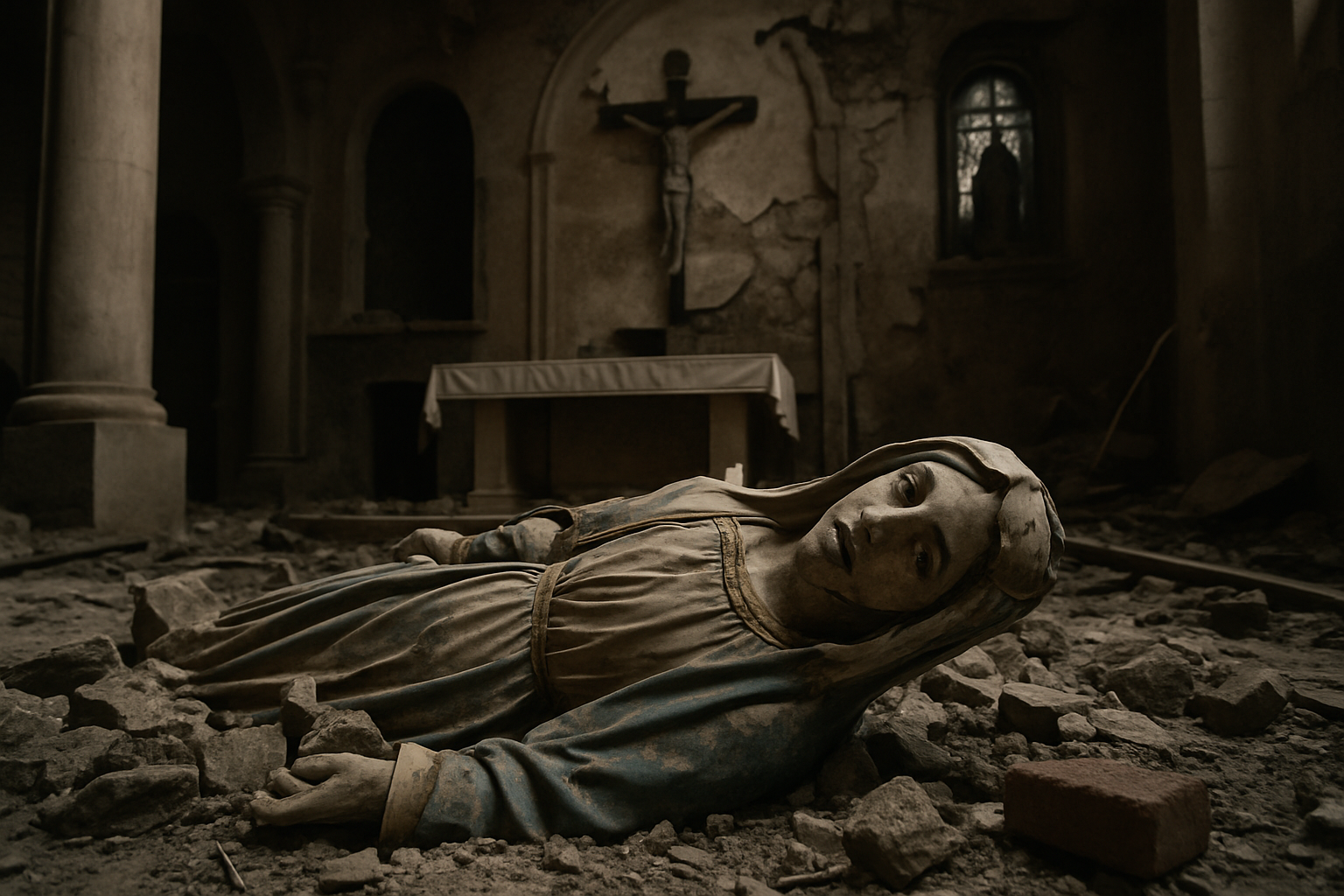
The Israeli Defence Forces (IDF) has confirmed the authenticity of a photograph showing one of its soldiers using a hammer to destroy a statue of Jesus Christ in southern Lebanon, launching an investigation into what military officials called an incident "wholly inconsistent with the values expected of its troops."
The explosive image, initially shared by Palestinian journalist Younis Tirawi on social media platform X, depicted an Israeli soldier toppling the religious statue in what appears to be the predominantly Christian village of Debel in southern Lebanon. The photograph quickly went viral, sparking widespread international condemnation and raising serious questions about the treatment of religious sites during Israel's ongoing military operations.
Military Response and Investigation
Israeli military spokesman Adraee confirmed the photograph's authenticity while announcing a formal investigation into the incident. The IDF stated that the soldier's actions "are wholly inconsistent with the values expected of its troops" and emphasized that the matter would be handled through the military's chain of command.
According to sources familiar with the incident, the photograph was taken during Israeli operations in southern Lebanon, though the exact date remains unclear. The image shows the figure of Jesus Christ on a cross positioned upside down, indicating deliberate desecration rather than incidental damage during combat operations.
"This incident is being viewed with great severity by the military leadership and will be thoroughly investigated."
— IDF Spokesperson
International and Religious Condemnation
The destruction of the Jesus statue has provoked immediate and widespread condemnation from religious leaders and international officials. Al Jazeera reported that the incident sparked "widespread outrage" across Christian communities globally, with many viewing it as a deliberate attack on religious freedom and sacred symbols.
The timing of the incident is particularly sensitive, occurring amid broader tensions surrounding religious site protections in the region. This follows recent restrictions at Christian holy sites, including the unprecedented prevention of Cardinal Pierbattista Pizzaballa from entering the Church of the Holy Sepulchre during Palm Sunday mass - described as the "first time in centuries" such restrictions were imposed on Christianity's holiest site.
Regional Christian Community Impact
The Lebanese Christian community, which has already endured significant hardship during the ongoing conflict, expressed deep concern about the targeting of religious symbols. Lebanon's Christian population, historically significant in the country's demographic and political landscape, has faced increasing pressure as military operations have displaced over 1.2 million people - representing 25% of Lebanon's entire population.
The incident has also raised concerns among the global Lebanese diaspora, with communities from Vancouver to Europe expressing anguish over what they see as systematic attacks on their religious heritage and cultural identity.
Context of Escalating Religious Tensions
The statue destruction occurs within a broader pattern of religious site controversies during the current Middle East crisis. Intelligence assessments suggest that religious provocations often serve as catalysts for broader escalations, extending far beyond immediate military objectives.
The incident comes as Israeli military operations in Lebanon have intensified significantly since the collapse of the November 2024 US-French brokered ceasefire in March 2026. Hezbollah had faced what analysts described as an "impossible choice" between maintaining the ceasefire and responding to Iranian pressure for retaliation following the death of Iran's Supreme Leader Ali Khamenei on March 1.
Humanitarian Crisis and Religious Freedom
The destruction of the Jesus statue adds another dimension to the humanitarian catastrophe unfolding in Lebanon. Beyond the 1.2 million displaced persons, the conflict has resulted in systematic targeting of medical personnel, with 26 paramedics killed and 51 wounded since March. The deadliest single incident occurred at the Burj Qalaouiyah healthcare center, where 12 medical workers were killed in what international observers described as potential Geneva Conventions violations.
Religious freedom experts cite the incident as part of a concerning pattern of violations affecting multiple faith communities. The destruction of religious symbols during conflict periods creates dangerous precedents that could affect religious freedom protections globally.
Legal and International Implications
Under international humanitarian law, religious sites and symbols are afforded special protection even during armed conflict. The deliberate destruction of religious artifacts may constitute violations of the Geneva Conventions, which explicitly protect cultural and religious heritage during warfare.
Legal experts noted that the systematic nature of religious restrictions during the current conflict - affecting Christian, Muslim, and Jewish holy sites at various times - represents a comprehensive challenge to established frameworks protecting religious freedom during armed conflicts.
Broader Regional Context
The incident occurs amid what UN Secretary-General António Guterres has called the "greatest test of multilateral cooperation in the modern era." The current Middle East crisis has resulted in over 18,000 flight cancellations worldwide, oil prices exceeding $100 per barrel for the first time since 2014, and the closure of the Strait of Hormuz, affecting 40% of global oil transit.
The religious dimension adds particular sensitivity to diplomatic efforts to resolve the conflict. French President Emmanuel Macron has offered to host direct Israel-Lebanon talks in Paris - the first such negotiations since the ceasefire collapse - while international humanitarian organizations have issued emergency appeals totaling $30.3 million for healthcare systems described as "under severe strain."
Military Accountability and Values
The IDF's swift acknowledgment of the incident and commitment to investigation represents an attempt to address growing international concern about military conduct during operations in Lebanon. However, critics argue that individual accountability measures may not address what they describe as systemic issues in military operations affecting civilian and religious sites.
The incident has prompted renewed calls for strengthened protections of religious sites and symbols during military operations, with some international observers suggesting the need for enhanced monitoring mechanisms and clearer rules of engagement regarding cultural and religious heritage.
Diplomatic Implications
The statue destruction threatens to complicate ongoing diplomatic efforts to resolve the broader conflict. The incident has been cited by critics as evidence of the need for more comprehensive international oversight of military operations affecting civilian and religious infrastructure.
As diplomatic initiatives continue, including proposed talks in Washington and Paris, the incident serves as a reminder of how individual actions can have far-reaching consequences for regional stability and interfaith relations. The international community's response to this incident may set important precedents for protecting religious freedom and cultural heritage in future conflicts.
The investigation's findings and any subsequent disciplinary actions will be closely watched by international observers as indicators of institutional commitment to upholding humanitarian law and religious freedom protections during armed conflict.