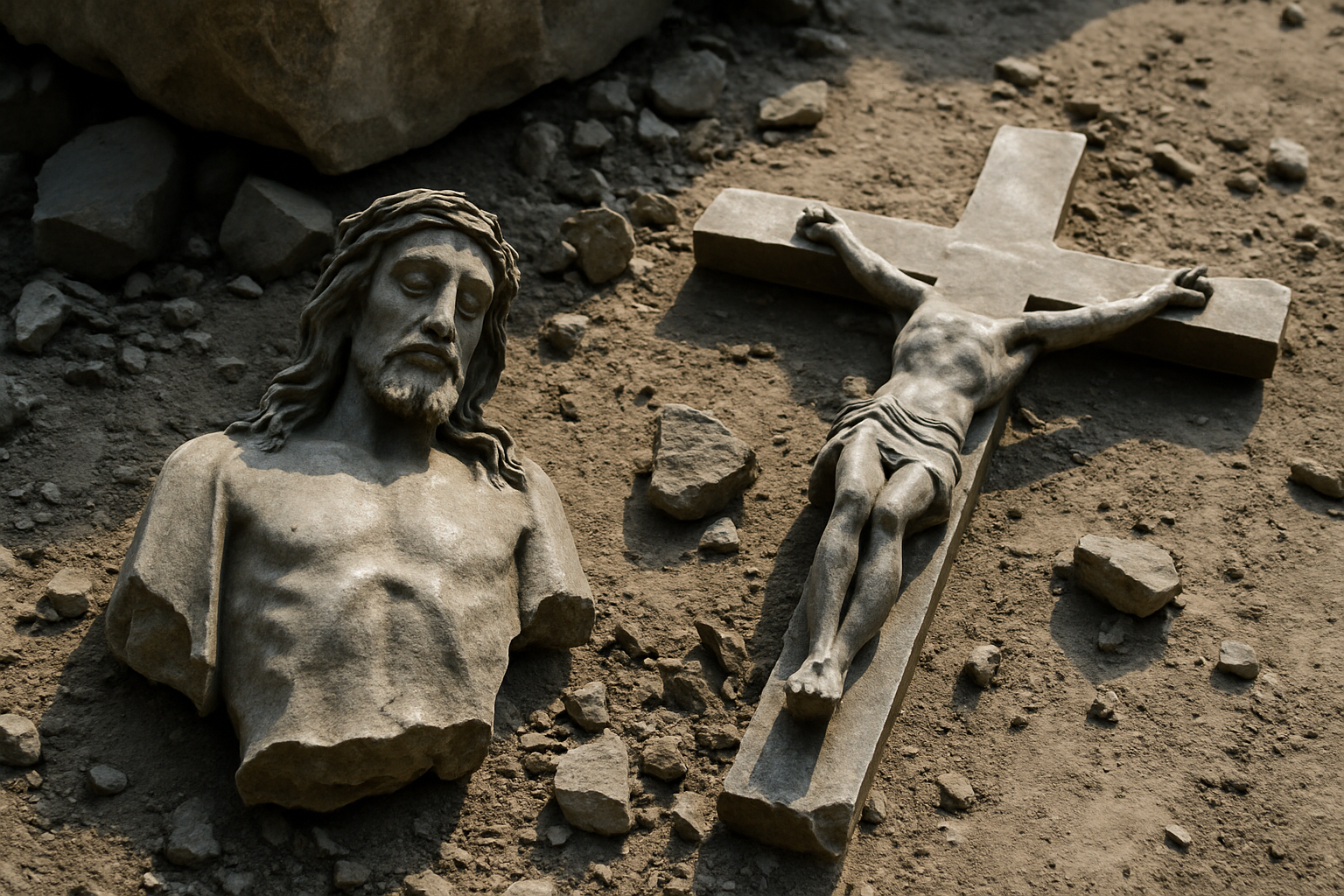
An Israeli Defense Forces soldier's destruction of a Jesus Christ statue in the Christian village of Debel in southern Lebanon has ignited a firestorm of international condemnation and prompted rare apologies from Israeli Prime Minister Benjamin Netanyahu, military leadership, and Foreign Minister Israel Katz.
The incident, captured in a viral photograph that emerged over the weekend, shows an Israeli soldier using the blunt end of an axe to destroy a fallen crucifix sculpture. The image, first posted on social media by Palestinian journalist Younis Tirawi, has been verified by Reuters as having occurred in Debel, one of the few Christian villages in southern Lebanon where residents remained during Israel's military campaign against Hezbollah that began on March 2, 2026.
International Religious Outrage
The destruction has sparked unprecedented global outrage from Christian communities and religious leaders worldwide. The incident comes at a particularly sensitive time, occurring amid broader restrictions on religious observances that have affected multiple faith communities during the ongoing Middle East conflict.
"One of the Israeli soldiers broke the cross and did this horrible thing, this desecration of our holy symbols."
— Father Fadi Falfel, priest in Debel village
Father Falfel confirmed that the cross was part of a small family shrine in a garden on the edge of the village, making the destruction particularly personal for the Christian community that has endured months of military operations in their area.
The incident has drawn condemnation from Christian leaders across denominations and continents. Vatican officials expressed deep concern, while Middle Eastern Christian communities - already facing unprecedented challenges - viewed the act as emblematic of broader threats to religious freedom in the region.
Unprecedented Israeli Condemnation
In an unusual display of official Israeli condemnation, Prime Minister Netanyahu, Foreign Minister Katz, and military leadership all publicly denounced the soldier's actions. The Israeli Defense Forces confirmed the authenticity of the photograph and launched a formal investigation, stating that the incident was "wholly inconsistent with the values expected of troops."
Netanyahu expressed being "shocked and saddened" by the soldier's behavior, marking a rare instance of such explicit Israeli leadership criticism of military conduct. Foreign Minister Katz described the act as "disgraceful," while the IDF pledged to take disciplinary action and assist in restoring the statue to its original location.
The swift and comprehensive Israeli response reflects recognition of the incident's potential to inflame already tense relations with Christian communities globally and complicate diplomatic efforts in the region.
Context of Religious Freedom Violations
The statue destruction occurs within a broader pattern of religious restrictions that have affected multiple faith communities during the current Middle East crisis. Most notably, Israeli police previously prevented Cardinal Pierbattista Pizzaballa, the Latin Patriarch of Jerusalem, from entering the Church of the Holy Sepulchre during Palm Sunday masses - marking the first time in centuries such restrictions were imposed on Christianity's holiest site.
These incidents have created unprecedented situations affecting religious observances across faiths, with approximately 4.4 billion believers - including 2.4 billion Christians and 2 billion Muslims - experiencing some form of religious restrictions during their respective holy periods.
Legal and Humanitarian Implications
International law experts have cited Geneva Convention protections for religious sites and symbols during armed conflict. The systematic pattern of restrictions affecting multiple religious communities has raised concerns among legal scholars about precedents being set for religious freedom protections during warfare.
The incident in Debel village adds to growing documentation of religious site and symbol targeting that international humanitarian law specifically prohibits. Such acts are considered violations of cultural property protections under international conventions governing conduct during military operations.
Regional Context of Crisis
The statue destruction takes place against the backdrop of the most serious Middle East crisis since the end of the Cold War. The conflict has displaced over 1.2 million Lebanese civilians - representing 25% of the population - while systematic attacks on medical personnel have killed 26 paramedics and wounded 51 others since March 2026.
The November 2024 U.S.-French brokered ceasefire between Israel and Hezbollah collapsed completely in March 2026, when Hezbollah faced an "impossible choice" between maintaining the ceasefire or responding to Iranian pressure following Supreme Leader Khamenei's death on March 1. The organization chose what it termed "Iranian solidarity over Lebanese sovereignty," pulling Lebanon into the broader Iran-Israel confrontation.
Debel village represents one of the few predominantly Christian communities in southern Lebanon where residents attempted to maintain neutrality and remain in their homes throughout the military operations. The destruction of religious symbols in such communities carries particular significance for Lebanon's already vulnerable Christian minority.
Global Impact and Diplomatic Consequences
The incident has complicated international diplomatic efforts to contain the regional crisis. Eight Arab nations, including countries with normalized relations with Israel such as the UAE and Saudi Arabia, issued joint condemnations calling Israeli actions violations of international law.
The destruction comes as international mediators, including French President Emmanuel Macron, have offered to host peace talks - the first such diplomatic initiatives since the ceasefire collapse. The religious dimensions of the conflict have made such mediation efforts increasingly complex, with interfaith relations now a factor in regional stability.
"This incident should serve as a moral wake-up call for the IDF and Israel."
— The Times of Israel editorial position
Israeli media outlets themselves have called for broader reflection on the incident's implications, with The Times of Israel noting the contradiction between Israel's promotion of itself as safe for Christians and other minorities while failing to crack down on actions that damage ties with Christian communities.
Template-Setting Implications
The international community's response to this incident is being closely watched as a template-setting moment for protecting religious freedom and cultural heritage during armed conflicts. UN Secretary-General António Guterres has described the current crisis as the "greatest test of multilateral cooperation in the modern era."
The swift Israeli condemnation and investigation represent one model for institutional accountability when religious symbols are targeted. However, the broader pattern of religious restrictions during the conflict raises questions about whether individual accountability measures address systematic issues in military operations.
Coming diplomatic efforts will need to address not only immediate security concerns but also the protection of religious sites and symbols that hold profound meaning for billions of believers worldwide. The incident in Debel village has become symbolic of broader challenges to religious freedom during warfare, with implications extending well beyond the current Middle East crisis.
The destruction of the Jesus statue in Debel village thus represents more than an isolated incident of military misconduct. It has become a focal point for international concerns about religious freedom, cultural heritage protection, and the conduct of military operations in religiously diverse societies. As diplomatic efforts continue to seek resolution to the broader regional crisis, the treatment of religious symbols and sites will remain a critical measure of progress toward sustainable peace.