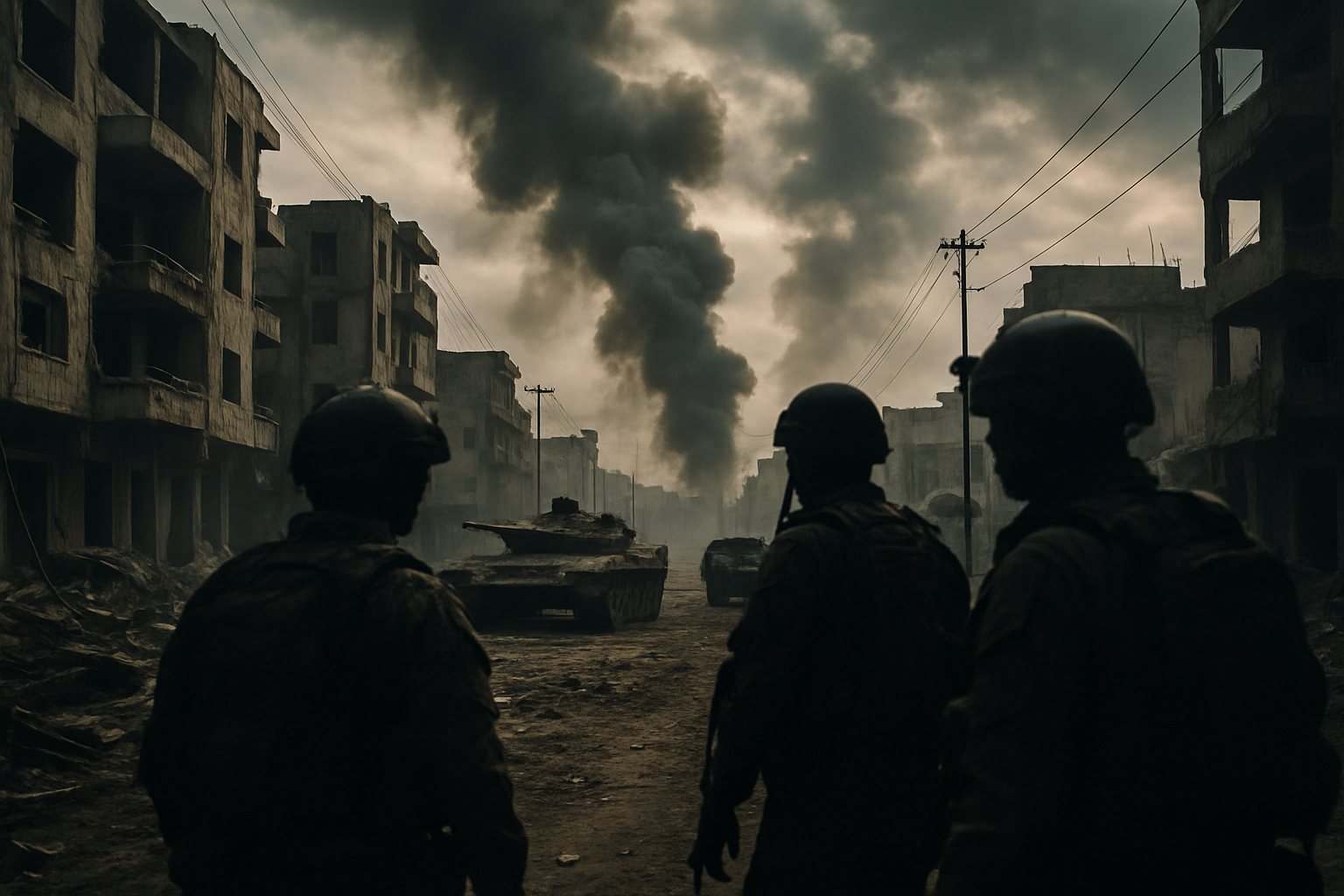
Four Israeli soldiers were killed and two others wounded in a deadly clash with Hezbollah fighters in southern Lebanon on Monday evening, marking one of the deadliest confrontations since the complete breakdown of the November 2024 ceasefire agreement.
The casualties occurred during a fierce firefight near the Lebanese town of Beit Lif, according to Israeli Defense Forces (IDF) statements. The dead soldiers included one officer and three enlisted personnel from the elite Nahal Brigade, with an additional three troops wounded, one critically.
Escalating Violence in Southern Lebanon
The clash erupted when Israeli patrol units detected armed groups operating near the border region, leading to what military sources described as a "direct confrontation at close range." The engagement represents a significant escalation in the ongoing conflict that has ravaged the region since early March.
Palestinian sources report the incident as part of an ambush operation targeting Israeli forces, highlighting the deteriorating security situation along the volatile border. The engagement underscores the breakdown of the fragile ceasefire that had held for over a year before collapsing amid broader regional tensions.
UN Peacekeepers Under Fire
In a parallel development raising international alarm, three Indonesian UN peacekeepers serving with the United Nations Interim Force in Lebanon (UNIFIL) were killed within a 24-hour period in separate incidents. Two peacekeepers died Monday in an explosion that destroyed their vehicle near Bani Hayyan in southern Lebanon, while a third was killed overnight Sunday by a projectile explosion at an observation post in Adchit al-Qusayr village.
"The situation remains precarious and volatile, affecting both our peacekeepers and civilians who are forced to evacuate from southern Lebanon areas."
— Kandice Ardiel, UNIFIL Spokesperson
France has called for an urgent UN Security Council meeting in response to the peacekeeper casualties, with Foreign Minister Jean-Noël Barrot condemning the attacks "in the strongest terms." The incidents mark the first UN casualties in the current escalation and raise serious questions about the safety of international personnel in the conflict zone.
Broader Regional Context
The latest violence occurs within the context of the most severe Middle East crisis since the Cold War, triggered by the death of Iranian Supreme Leader Ali Khamenei on March 1 and the subsequent collapse of diplomatic frameworks across the region. The November 2024 US-French brokered ceasefire between Israel and Hezbollah, which had successfully maintained relative calm for over a year, completely disintegrated when Hezbollah chose to align with Iranian forces following Khamenei's death.
According to Palestinian and Lebanese sources, Israeli military operations have resulted in over 800,000 Lebanese civilians being displaced, with more than 1,000 killed since the current escalation began. Emergency shelters across Lebanon have reached breaking point, with thousands of families forced to sleep on the streets of Beirut.
Systematic Targeting of Medical Personnel
International observers have documented what appears to be systematic targeting of medical and emergency personnel, with 26 paramedics killed and 51 wounded since March 2. The deadliest single attack occurred at the Burj Qalaouiyah healthcare center, where 12 medical workers including doctors, nurses, and paramedics were killed.
Israeli military spokesman Avichai Adraee has threatened strikes against ambulances and medical facilities, claiming without evidence that Hezbollah uses these services for military purposes. Hezbollah officials have categorically denied these allegations, while international legal experts warn such targeting could constitute Geneva Conventions violations.
Diplomatic Efforts Amid Crisis
Despite the escalating violence, diplomatic initiatives continue. French President Emmanuel Macron has offered to host direct Israel-Lebanon talks in Paris, which would be the first such negotiations since the ceasefire collapse. UN Secretary-General António Guterres, who recently visited Beirut, has called the regional situation "the greatest test of multilateral cooperation in the modern era."
The crisis has severely strained the unprecedented coalition of Saudi Arabia, UAE, Qatar, and Egypt that had been supporting diplomatic solutions. Egyptian President Abdel Fattah al-Sisi has condemned attacks on "sisterly Arab countries," warning of "comprehensive chaos" spreading across the region.
Global Implications
The conflict's impact extends far beyond the Middle East, with over 18,000 flights cancelled worldwide and oil prices surging past $100 per barrel. Iran's closure of the Strait of Hormuz through naval mining operations has affected 40% of global oil transit, prompting the International Energy Agency to authorize its largest strategic reserve release in 50 years.
The crisis has also seen the first attack on European territory since World War II, with Iranian drones striking RAF Akrotiri in Cyprus, prompting an unprecedented naval coalition response from HMS Dragon and vessels from Spain, Italy, France, the Netherlands, and Greece.
Hezbollah's Strategic Decision
Hezbollah's entry into the broader Iran-Israel confrontation represents a fundamental shift from the organization's previous strategy of maintaining the Lebanese ceasefire. The group, estimated to command over 20,000 fighters, faced what analysts describe as an "impossible choice" between maintaining ceasefire commitments and responding to Iranian pressure for regional solidarity following Khamenei's death.
The organization has since conducted over 40 operations targeting northern Israeli military sites, with some reaching as far as Haifa. Hezbollah has declared "direct confrontations" with Israeli forces in southern Lebanon, marking a significant operational escalation from their previous restraint.
Humanitarian Crisis Deepening
The humanitarian toll continues to mount, with Lebanese medical facilities overwhelmed by casualties and emergency response systems compromised by ongoing military operations. Traditional support systems including schools, religious institutions, and community centers have reached capacity, forcing families to seek shelter wherever possible.
International aid organizations are struggling to operate in the deteriorating security environment, while the Lebanese diaspora worldwide, including communities in Vancouver and other major cities, are organizing support networks as communication infrastructure becomes increasingly unreliable in affected areas.
Looking Ahead
Military analysts warn that the current trajectory risks prolonged regional warfare that could draw in additional Iranian proxy groups across the Middle East. The coming days and weeks are considered crucial in determining whether diplomatic intervention can restore stability or if the crisis will expand into broader warfare with devastating consequences for millions more civilians.
The template-setting nature of this crisis extends far beyond current events, with implications for 21st-century conflict resolution approaches, international humanitarian law enforcement, and regional stability mechanisms that will resonate for decades to come.
As the international community grapples with containing this unprecedented crisis, the sacrifice of the four Israeli soldiers and three UN peacekeepers serves as a stark reminder of the human cost of regional instability and the urgent need for diplomatic solutions to prevent further escalation.