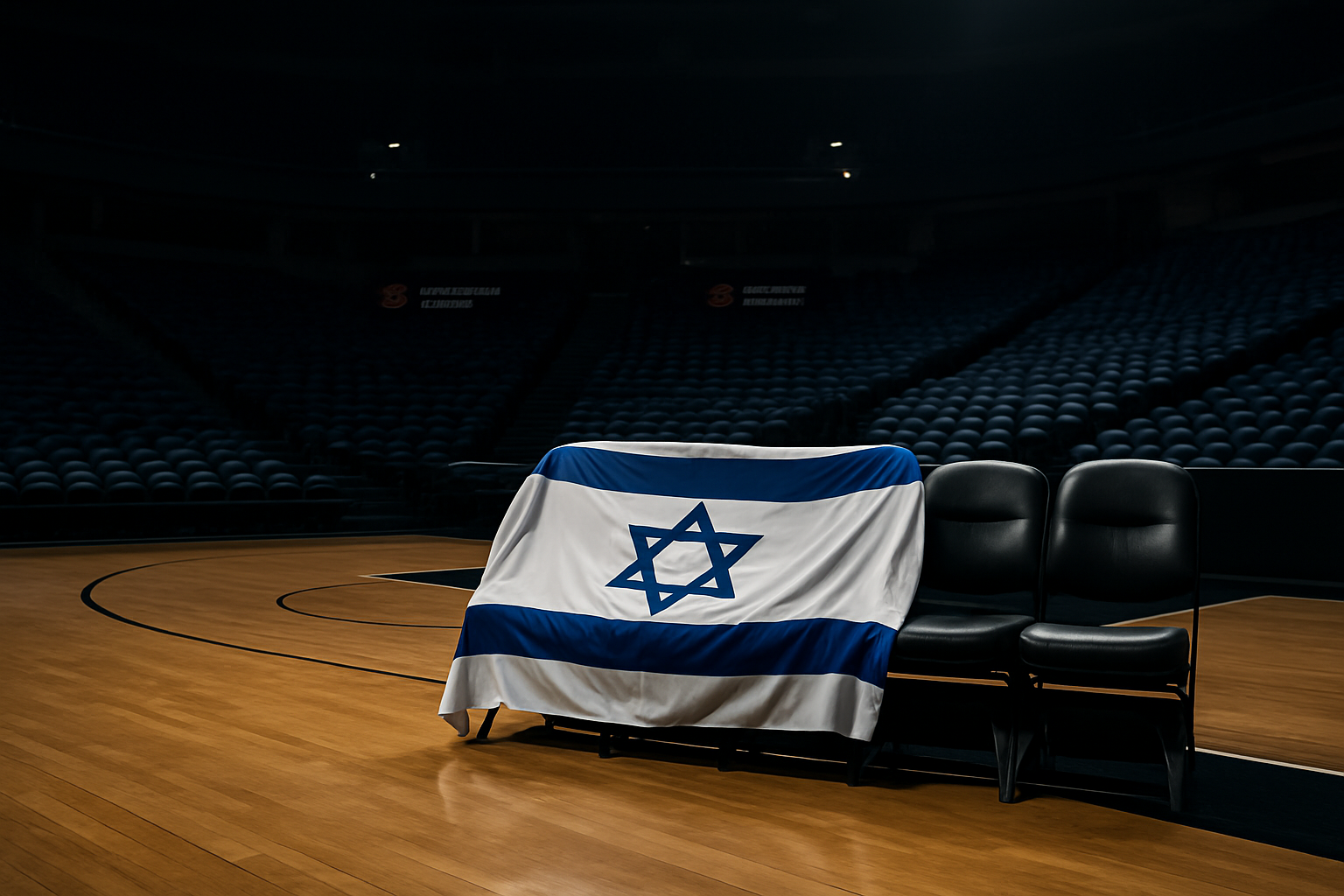
Israeli basketball powerhouses Maccabi Tel Aviv and Hapoel, along with Dubai BC, are being forced to relocate their EuroLeague home games outside Israel due to escalating security concerns from the ongoing Middle East conflict.
The unprecedented move affects three major teams competing in Europe's premier basketball competition, with the EuroLeague postponing multiple fixtures and implementing emergency protocols to ensure player and spectator safety. The relocation represents the most significant sports disruption caused by Middle Eastern conflicts since the formation of modern European competitions.
EuroLeague Takes Emergency Action
According to reports from Bosnian, Cypriot, and Greek media outlets, the EuroLeague has postponed three matches, including the crucial Round 30 encounter between Maccabi Tel Aviv and Hapoel. The league's decision comes as the broader Middle East crisis has created what international observers are calling "the most dangerous moment since the Cold War end."
The crisis stems from the complete breakdown of US-Iran nuclear negotiations despite achieving "broad agreement on guiding principles" - the most significant diplomatic progress since the 2018 JCPOA collapse. The situation escalated dramatically when Iran excluded ballistic missiles and regional proxies as "red lines" in nuclear-only talks, while the US demanded comprehensive agreements including missiles, armed groups, and human rights.
Basketball Teams Seek Safe Venues
Maccabi Tel Aviv, one of Europe's most successful basketball clubs with multiple EuroLeague championships, and their rivals Hapoel are now scrambling to find suitable alternative venues. Dubai BC, despite their name suggesting Middle Eastern origins, are also affected by the regional security situation.
The teams face logistical nightmares in relocating not just games but entire operational structures. Training facilities, fan travel arrangements, and broadcast logistics all require complete restructuring. The financial implications are staggering, with clubs potentially losing millions in gate receipts and having to cover additional venue rental and transportation costs.
Broader Regional Sports Impact
The basketball relocations are part of a wider sports disruption affecting the entire region. Football superstar Cristiano Ronaldo departed Saudi Arabia for Madrid after the Asian Football Confederation suspended Gulf region matches due to escalating Iran crisis tensions. His departure from King Khalid International Airport was directly linked to safety measures as sporting organizations implement emergency protocols.
The crisis has also impacted Formula 1 preparations, with teams developing unprecedented contingency plans including enhanced fuel loading, alternative routing strategies, and maritime transport exploration. Over 18,000 flights have been cancelled worldwide as Iran, Iraq, Israel, UAE, and Qatar closed airspace simultaneously.
European Competition Integrity at Risk
The forced relocations raise serious questions about competitive integrity in European basketball. Home court advantage is a fundamental aspect of basketball, with crowd support, familiar surroundings, and reduced travel fatigue all playing crucial roles in team performance. Moving games to neutral venues fundamentally alters the competitive balance.
EuroLeague officials are working around the clock to identify suitable alternative venues with adequate capacity and broadcasting infrastructure. Potential locations being considered include various European cities with established basketball arenas, though exact details remain confidential for security reasons.
Historical Precedent and Security Concerns
This marks the first time in EuroLeague history that teams have been forced to relocate due to regional conflict. While individual games have been postponed for various reasons, the systematic relocation of multiple teams represents unprecedented challenges for European basketball's governing bodies.
The security concerns are genuine and immediate. The current Middle East crisis has seen Iranian drone attacks reach as far as Cyprus, marking the first attack on European territory during a Middle Eastern conflict since World War II. With such geographical expansion of the conflict, sports authorities cannot take any risks with player and spectator safety.
Financial and Logistical Challenges
The financial implications extend far beyond the immediate relocation costs. Television broadcast contracts, sponsorship agreements, and season ticket arrangements all require renegotiation. Fans who have purchased season tickets face uncertainty about attending games, while corporate sponsors worry about reduced visibility and altered broadcast schedules.
"The situation is unprecedented in modern European basketball. We're having to rewrite operational procedures that have been in place for decades."
— EuroLeague Official, Speaking on Condition of Anonymity
Team budgets, already stretched by the high costs of competing at Europe's elite level, face additional strain from unexpected venue rentals, increased travel costs, and potential loss of gate receipts. Insurance policies may not cover conflict-related relocations, leaving clubs to absorb the financial impact directly.
Global Sports Infrastructure Vulnerability
The Israeli teams' plight highlights the vulnerability of international sports to geopolitical instability. As sports have become increasingly globalized, with competitions spanning multiple continents and involving teams from politically sensitive regions, the risk of disruption has grown exponentially.
The current crisis demonstrates how quickly regional conflicts can become global sporting challenges. Teams that have spent decades building local fan bases and establishing regional identities suddenly find themselves homeless, dependent on the goodwill of neutral venues and the flexibility of competition organizers.
Player Welfare Concerns
Beyond logistics and finances, the relocations raise significant player welfare concerns. Athletes face increased travel demands, unfamiliar environments, and the psychological stress of playing without home support. For some players, particularly those with families in affected regions, the personal toll extends far beyond basketball.
Team psychologists and support staff are working overtime to maintain player morale and performance levels. The uncertainty about how long relocations might last adds another layer of stress, with players unable to plan beyond the immediate fixtures.
Long-term Competition Structure Questions
If the Middle East conflict persists, European sports organizations may need to fundamentally reconsider competition structures. The current system assumes stable political conditions and reliable international travel - assumptions that can no longer be taken for granted.
Sports administrators are quietly discussing contingency plans that could include regional qualification modifications, enhanced insurance requirements, or even emergency protocols for rapid team relocations. The current crisis could serve as a template for future disruptions, whether caused by conflicts, pandemics, or other global emergencies.
Fan Communities and Identity
Perhaps most poignantly, the relocations strike at the heart of sports identity. Basketball clubs like Maccabi Tel Aviv aren't just teams - they're cultural institutions representing their communities. Forcing them to play hundreds of miles from home disrupts connections built over generations between clubs and their supporters.
Fan groups are organizing alternative viewing parties and attempting to maintain community spirit despite the geographic displacement. Social media has become crucial for maintaining connections between displaced teams and their supporters, though it cannot fully replace the atmosphere of home games.
Looking Ahead: Uncertain Timeline
The timeline for potential returns remains completely uncertain. Unlike weather-related postponements that have predictable resolution periods, conflict-based relocations depend entirely on diplomatic and military developments. The breakdown of nuclear negotiations despite achieving "broad agreement on guiding principles" suggests that resolution could be months or even years away.
EuroLeague officials are preparing for the possibility that relocations could extend through the remainder of the current season and potentially into the next. Such extended displacement would require comprehensive restructuring of competition formats and could permanently alter the landscape of European basketball.
The forced relocation of Israeli sports teams represents more than a logistical challenge - it symbolizes how quickly regional conflicts can transform into global disruptions affecting millions of fans, players, and sports industry professionals. As the Middle East crisis continues to evolve, the sports world watches nervously, knowing that today's basketball relocations could be tomorrow's precedent for even broader competitive disruptions.