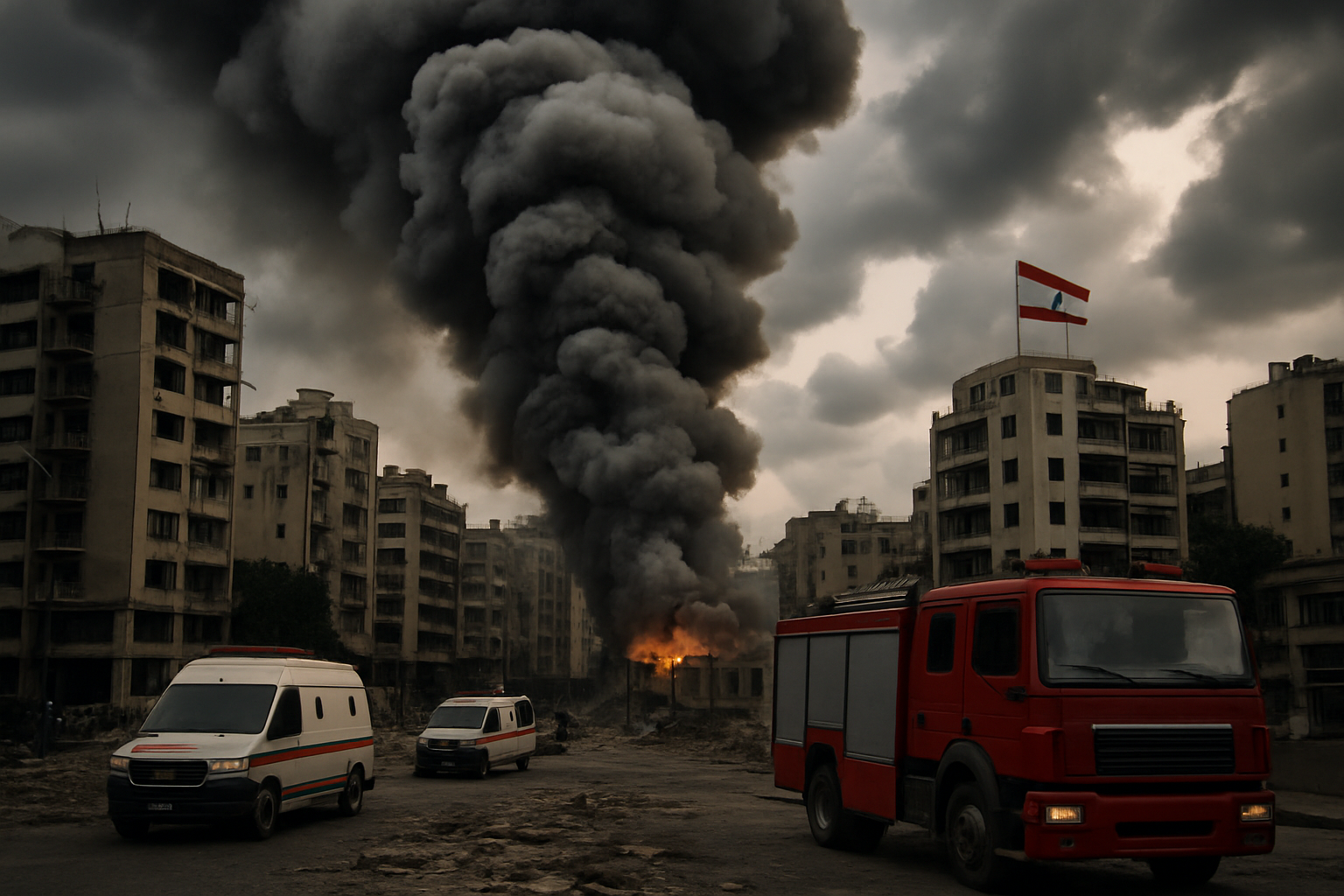
Israeli strikes on Beirut's southern suburbs and a nearby town killed at least seven people Wednesday, according to Lebanon's Health Ministry, as Israel's military said it targeted senior Hezbollah members in what represents the latest escalation in the ongoing Israel-Lebanon conflict that began in March 2026.
The Lebanese Health Ministry confirmed that an Israeli air raid on south Beirut's Jnah area killed at least five people and wounded 21 others, with a Lebanese security source reporting that four parked cars were struck in the attack. A separate strike that hit a vehicle in Khaldeh, just south of the capital, killed two people and wounded three, the ministry said in a separate statement.
Israeli military officials confirmed they had struck what they described as a "senior Hezbollah commander" and another member of the group in two separate strikes "in the Beirut area," though they did not name the targets or provide specific details about the exact locations of the attacks.
Regional Conflict Context
The strikes come as part of the broader Middle East conflict that began following the death of Iranian Supreme Leader Ali Khamenei on March 1, 2026, which led to Hezbollah's decision to abandon the November 2024 US-French brokered ceasefire and join the regional confrontation in solidarity with Iran.
According to historical records, Lebanon was drawn into the Middle East war when Hezbollah launched attacks on Israel on March 2 to avenge Khamenei's killing in the US-Israeli Operation Epic Fury. Since then, Israel has responded with extensive strikes across Lebanon and ground operations, marking the complete collapse of the November 2024 ceasefire agreement that had held for over a year.
Norwegian sources report that Israeli forces have also claimed responsibility for killing Youssef Ismail Hashem, described as the leader of Hezbollah's southern front, indicating a systematic targeting of the organization's military leadership.
Humanitarian Crisis Deepens
The current escalation has created an unprecedented humanitarian catastrophe in Lebanon. According to the most recent data from Lebanese health authorities, over 800,000 people have been displaced from their homes—representing nearly 20% of Lebanon's population. The death toll has risen to over 1,200 Lebanese civilians since the conflict began.
Emergency shelters across the country are overwhelmed, with thousands of families forced to sleep on Beirut's streets and in cars as traditional support systems including schools, religious institutions, and community centers have reached capacity.
Particularly concerning is the systematic targeting of medical personnel and facilities. Since March 2, at least 26 paramedics have been killed and 51 wounded in what appears to be deliberate attacks on emergency responders. The deadliest single attack occurred at the Burj Qalaouiyah healthcare center, where 12 medical workers, including doctors, nurses, and paramedics, were killed in what international observers describe as potential violations of the Geneva Conventions.
Israeli Military Strategy
Israeli Defense Forces have expanded their operations significantly beyond the original five positions they held under the November 2024 ceasefire arrangement. The military has moved into multiple "new locations" targeting what they describe as Hezbollah strongholds throughout southern Lebanon.
In a dramatic escalation of infrastructure warfare, Israeli forces destroyed the strategic Qasmiyeh bridge over the Litani River and have issued demolition orders for civilian homes near the border. IDF Chief Eyal Zamir has declared that operations are "just beginning" with "several weeks" of continued ground operations planned.
The Israeli military has issued the most extensive evacuation warnings in the nation's history, affecting over 300,000 Lebanese civilians according to IDF estimates, though Lebanese Red Cross sources suggest the actual number may be significantly higher.
Hezbollah's Military Response
Despite the intensive Israeli campaign, Hezbollah continues to maintain significant military capabilities. The organization, estimated to command approximately 20,000 fighters, has conducted over 40 operations targeting northern Israeli military sites, with some attacks reaching as far as Haifa.
Hezbollah has declared "direct confrontations" with Israeli forces in southern Lebanon, marking a significant operational escalation from the group's previous restraint strategy. The organization made the strategic decision to join the broader Iran-Israel conflict after facing what sources describe as an "impossible choice" between maintaining the ceasefire versus responding to Iranian pressure for retaliation following Khamenei's death.
International Diplomatic Efforts
French President Emmanuel Macron has offered to host direct Israel-Lebanon talks in Paris, which would represent the first negotiations between the parties since the ceasefire collapsed. UN Secretary-General António Guterres, who visited Beirut to assess the humanitarian situation, has called the regional crisis "the greatest test of multilateral cooperation in the modern era."
Turkey has issued strong warnings, with Foreign Minister Hakan Fidan expressing concerns that Israel is committing "a new genocide" under the pretext of targeting Hezbollah. Sweden has provided 65 million kronor in humanitarian aid in response to UN appeals for the 800,000 Lebanese displaced by the conflict.
However, these diplomatic initiatives face significant challenges given the broader regional war context, which includes the Iran-Israel conflict, global aviation disruptions affecting over 18,000 cancelled flights worldwide, and oil prices that have surged past $100 per barrel due to the closure of the Strait of Hormuz.
UN Peacekeeping Under Threat
The United Nations Interim Force in Lebanon (UNIFIL) has also come under attack, with a base near Mais al-Jabal struck and one peacekeeper wounded. UNIFIL spokesperson Kandice Ardiel described the situation as "precarious and volatile," affecting both peacekeepers and civilians who are attempting to evacuate from southern Lebanon areas.
This represents the first major breach of peacekeeping arrangements since the November 2024 ceasefire was implemented, raising serious questions about the viability of international peacekeeping missions in active conflict zones.
Regional and Global Implications
The Lebanon crisis occurs within the context of the most serious Middle East conflict since the Cold War's end. The regional war has caused massive global disruptions, including the complete shutdown of Dubai International Airport (the world's busiest), widespread flight cancellations, and significant impacts on global energy markets.
The conflict represents what experts describe as a "template-setting" crisis for 21st-century international relations, testing mechanisms for regional war prevention, global energy security, nuclear governance credibility, and international law enforcement simultaneously.
Defense Minister Yoav Katz has warned that Lebanon could face territorial losses and infrastructure damage unless Hezbollah is disarmed, linking the return of displaced Lebanese civilians to Israeli security guarantees—a position that raises concerns about potential de facto territorial changes similar to other occupied territories.
Looking Ahead
As the conflict enters its fourth week within the broader Middle East crisis, the coming days and weeks are crucial for determining whether diplomatic intervention can successfully contain the fighting or if the region is heading toward a prolonged war with devastating humanitarian consequences.
The systematic targeting of medical personnel, the massive displacement of civilians, and the breakdown of international peacekeeping arrangements all point to a crisis that extends far beyond traditional military confrontation, challenging fundamental principles of international humanitarian law and civilian protection frameworks.
With over one million Lebanese affected by the conflict and no immediate diplomatic solution in sight, the international community faces what UN officials describe as one of the most serious tests of multilateral cooperation in the modern era, with implications that will extend decades beyond the current events.