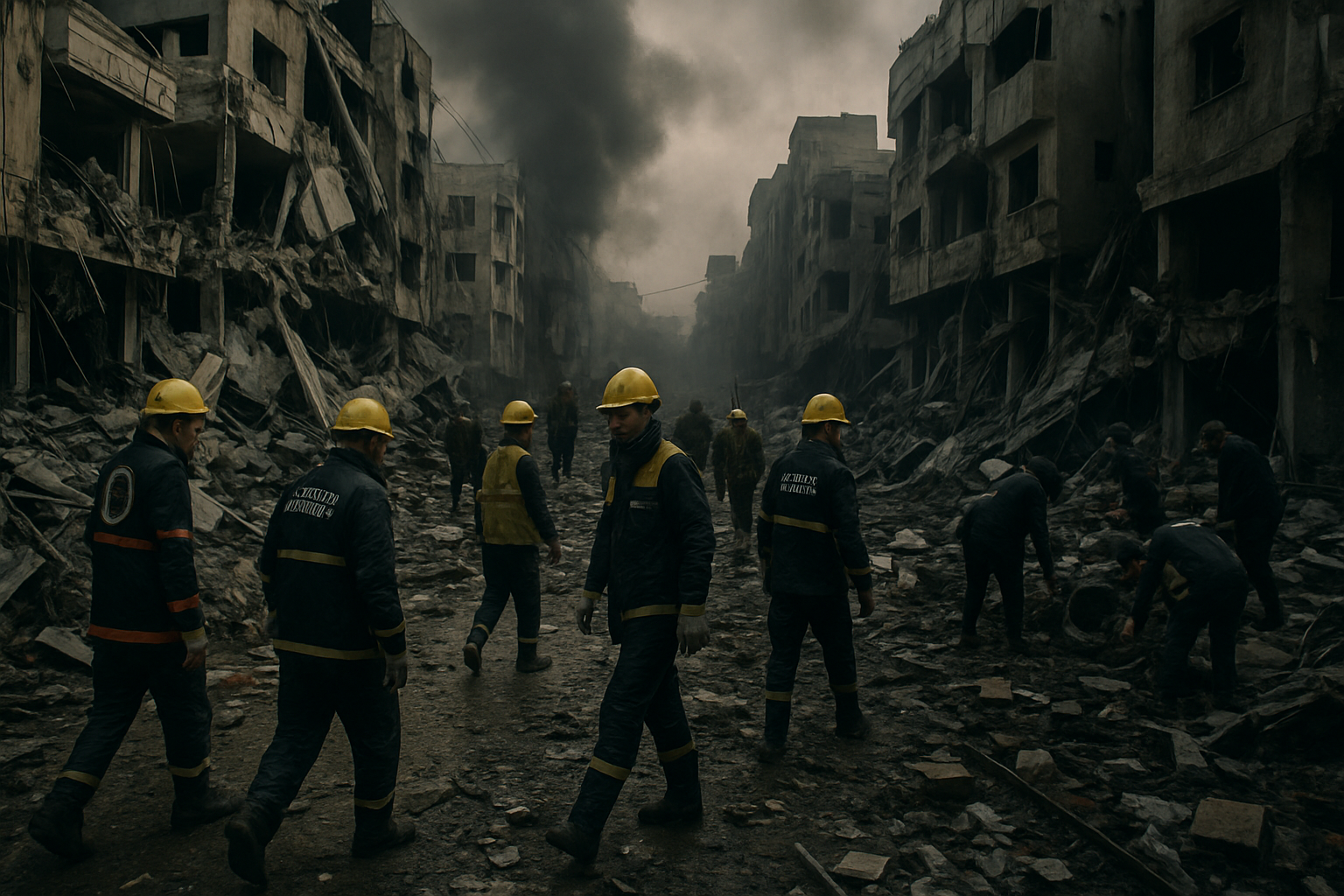
Israeli tank shelling and airstrikes killed at least 17-20 Palestinians, including multiple children and women, in Gaza on Wednesday, February 4, 2026, marking another severe violation of the US-backed ceasefire agreement that has been repeatedly breached since its implementation.
Health officials reported varying casualty figures, with sources confirming between 17 and 20 deaths across multiple strikes in Gaza City and Khan Younis. Among the victims were a five-month-old infant, a baby just 10 days old, and at least four children under the age of 13. Seven women and a paramedic were also killed in the coordinated attacks.
Details of the Strikes
The deadliest incident occurred in Khan Younis in southern Gaza, where Israeli forces targeted a tent camp sheltering displaced Palestinians. Among those killed was a medic who had rushed to help victims of the initial strike and was then killed by a second attack on the same location, according to health officials.
Additional strikes hit Gaza City in the north, where health officials confirmed the death of a five-month-old boy. The attacks represent the latest in a pattern of violence that has consistently undermined the ceasefire agreement, with more than 530 Palestinians killed by Israeli forces since the truce came into effect on October 10, 2025.
"This is the latest violence to undermine the ceasefire in Gaza. Among the dead was a medic who rushed to help victims and was then killed by a second attack."
— Gaza Health Ministry Official
Israeli Military Justification
The Israeli military claimed the strikes were launched in response to gunmen opening fire against Israeli troops operating near the armistice line with Hamas. Israeli officials stated that one Israeli soldier was severely injured by the gunfire, which they characterized as a violation of the ceasefire terms.
Israel has pledged to continue strikes despite international criticism, maintaining that it was responding to what it called militant attacks on its forces. The Israeli Defense Forces (IDF) claimed the operations were conducted in accordance with their rules of engagement for ceasefire violations.
Escalating Death Toll
Wednesday's attacks bring the number of Palestinians killed since the Gaza-Egypt border crossing reopened to at least 28, according to multiple sources. The strikes occurred just three days after Israel reopened Gaza's main border crossing with Egypt at Rafah, which had been seen as a major step in the US-backed truce implementation.
Palestinian officials report that over 1,000 Palestinians have been killed since the ceasefire began, with the Gaza Health Ministry updating the overall death toll to 71,800 since the conflict's escalation. The continuing violence has raised serious questions about the viability and enforcement of the ceasefire agreement.
International Response and Border Complications
The strikes coincided with ongoing complications at the recently reopened Rafah crossing between Gaza and Egypt. Hamas has condemned what it calls "systematic harassment" of Palestinian returnees by Israeli security forces, describing the procedures as "organized terrorism" and collective punishment.
On the first operational day at Rafah, only 27 Palestinians were able to cross in both directions, far below the agreed daily quotas of 200 people. Of 50 Palestinians scheduled to return to Gaza, Israeli security forces denied passage to 38 individuals, according to Hamas officials.
Egypt has mobilized a massive healthcare response with 150 hospitals on alert and 300 ambulances deployed for medical evacuations. However, the Gaza Health Ministry estimates that 20,000 Palestinians still await medical treatment abroad, highlighting the inadequacy of current crossing procedures.
Diplomatic Condemnation
Eight Arab and Muslim nations, including Saudi Arabia, Jordan, Egypt, UAE, Qatar, Indonesia, Pakistan, and Turkey, have issued joint condemnations of Israel's alleged ceasefire violations. The Organization of Islamic Cooperation (OIC) separately condemned what it called "continuing massacres," describing recent deaths as a "dangerous escalation."
The joint statement from foreign ministers warned that the violations threaten the implementation of the second phase of what has been referred to as "Trump's Gaza peace plan" and UN Security Council Resolution 2803. The international community has called for UN Security Council intervention to compel Israeli compliance with ceasefire terms.
"We want nothing further to do with the continuing violations that threaten the peace process. This is a dangerous escalation that must stop immediately."
— Joint Statement from Eight Arab Nations
Humanitarian Crisis Deepens
The strikes have exacerbated an already severe humanitarian crisis in Gaza. Gaza's Civil Defense has announced a complete operational shutdown due to fuel shortages, severely hampering emergency response capabilities when they are needed most.
The ongoing violence has also affected medical operations, with Israel banning Doctors Without Borders from conducting operations in Gaza. This restriction, combined with the limited medical evacuations through Rafah, has created a critical gap in healthcare services for Gaza's 2.3 million residents.
The attacks occurred during the harsh winter months, adding to the suffering of displaced Palestinians living in temporary shelters and tent camps. Many families have been displaced multiple times since the conflict began, with each new round of violence forcing further displacement.
Ceasefire Framework Under Strain
The ceasefire agreement, brokered by the United States and implemented in October 2025, has been punctuated by what international observers describe as systematic violations. The agreement was designed to provide humanitarian relief and create conditions for a more comprehensive peace settlement.
However, the pattern of continued strikes, restrictions on movement through border crossings, and limitations on humanitarian aid has raised questions about both sides' commitment to the ceasefire terms. Palestinian officials argue that Israel's actions constitute a fundamental breach of the agreement, while Israeli officials maintain they are responding to security threats.
Regional Stability Concerns
The continuing violence in Gaza occurs against a backdrop of broader Middle Eastern tensions, including ongoing diplomatic efforts between the US and Iran, and various regional conflicts. International observers worry that the breakdown of the Gaza ceasefire could have spillover effects on other diplomatic initiatives in the region.
The inability to maintain peace in Gaza also reflects broader challenges in implementing sustainable conflict resolution in areas with deep-seated grievances and ongoing security concerns. The current situation highlights the complexity of achieving lasting peace when fundamental issues regarding territory, security, and governance remain unresolved.
Looking Forward
As the international community continues to call for de-escalation, the future of the ceasefire remains uncertain. The pattern of violations, coupled with restrictions on humanitarian access and movement, suggests that significant changes in approach may be needed to preserve what remains of the peace agreement.
The tragic loss of life on Wednesday, particularly among children and medical personnel, underscores the urgent need for effective ceasefire monitoring mechanisms and stronger international intervention to protect civilian populations. Without such measures, the cycle of violence that has characterized the Gaza conflict appears likely to continue despite formal ceasefire agreements.