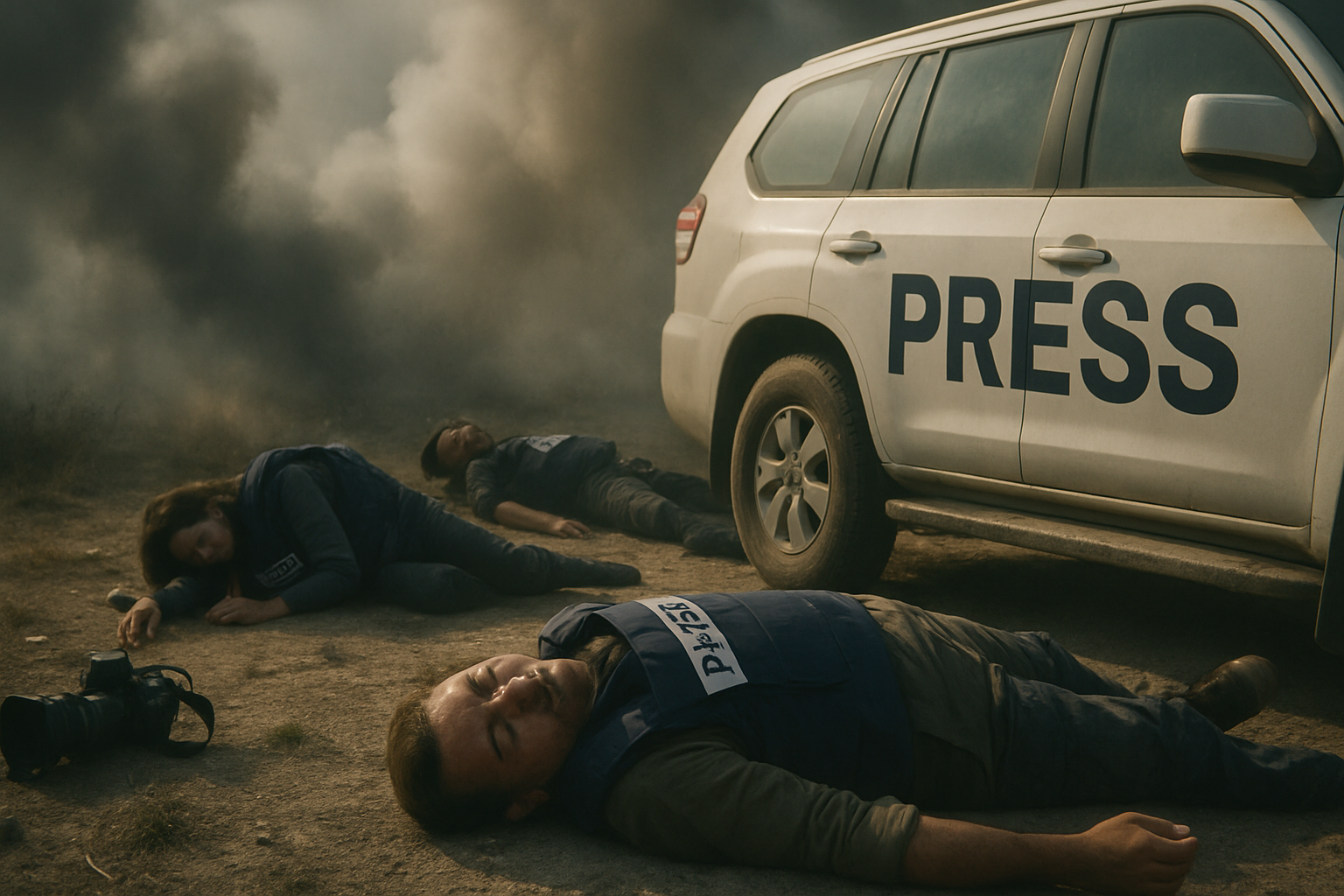
Israeli airstrikes in southern Lebanon have killed three Lebanese journalists, including correspondents from leading television networks, sparking international condemnation and renewed calls for the protection of media workers in conflict zones.
According to multiple sources, the strikes targeted a clearly marked press vehicle in the Jezzine area of southern Lebanon, killing Al Manar TV correspondent Ali Shoaib and Al Mayadeen TV correspondent Fatima Ftouni. The third victim was identified as Ftouni's brother, who was also traveling in the vehicle at the time of the attack.
Targeting of Press Vehicle Raises International Concerns
Al Mayadeen TV reported that the Israeli airstrike "directly struck a vehicle clearly marked as a press car in which she and fellow journalists were travelling." The network emphasized that the vehicle was properly identified as belonging to media personnel, raising serious questions about the deliberate targeting of journalists.
"The Israeli airstrike directly struck a vehicle clearly marked as a press car in which she and fellow journalists were travelling."
— Al Mayadeen TV Statement
The attack has been described as a "blatant crime" by multiple sources, with the incident occurring during what appears to be routine journalistic coverage in the region. Both Al Manar and Al Mayadeen confirmed their correspondents were "martyred in an attack on a journalist's car in Jezzine."
International Condemnation and Press Freedom Concerns
The killings have prompted widespread international condemnation from media rights organizations and diplomatic sources. Egyptian media reported "widespread condemnation from media and rights organizations" with demands for "international protection for media workers."
This latest incident adds to growing concerns about the safety of journalists covering conflicts in the Middle East region. The targeting of clearly marked press vehicles raises serious questions under international humanitarian law, which provides specific protections for journalists working in conflict zones.
Regional Context and Escalating Tensions
The strikes come amid heightened tensions in the region, with Lebanon experiencing increased military activity. The killings of the three journalists represent a significant escalation in the targeting of media personnel, occurring against the backdrop of broader regional conflicts that have already claimed numerous civilian lives.
Italian and Norwegian sources have confirmed the deaths, with reports indicating that at least three Lebanese journalists were killed in what Norwegian media described as an Israeli attack. The international coverage highlights the global concern over the safety of media workers in conflict zones.
Historical Context of Journalist Safety
According to my analysis of global press freedom trends, the Committee to Protect Journalists documented 129 journalists and media workers killed globally in 2025, marking one of the deadliest years for press freedom in recent history. Most deaths occurred in conflict zones, with systematic targeting of media workers raising war crimes concerns.
The Lebanese journalists' deaths occur within a broader pattern of press freedom restrictions globally. Recent incidents have included the detention of journalists in Algeria, systematic crackdowns on media in Afghanistan where 207 violations were documented in the past year, and increasing digital threats against media workers worldwide.
Legal Implications and International Law
The targeting of clearly marked journalists and press vehicles potentially violates international humanitarian law, specifically the Geneva Conventions, which provide protection for journalists working in areas of armed conflict. Legal experts have consistently emphasized that journalists covering conflicts are considered civilians and must be protected from attack.
The incident has prompted calls for immediate investigations into potential war crimes, with international law requiring that all parties to conflicts take necessary precautions to protect civilian journalists and media workers.
Industry Response and Safety Measures
The deaths of Ali Shoaib, Fatima Ftouni, and her brother represent a tragic loss for Lebanese journalism and the broader media community. Both Al Manar and Al Mayadeen are well-established television networks in the region, and their correspondents were experienced journalists covering events in southern Lebanon.
Media organizations worldwide have expressed solidarity with the victims' families and colleagues, while renewing calls for enhanced protection measures for journalists working in conflict zones. Professional security training and international monitoring have become increasingly important as journalists face growing risks in their work.
Broader Implications for Press Freedom
The killings highlight the dangerous environment facing journalists across the Middle East, where media workers continue to risk their lives to provide essential information to the public. The incident underscores the critical importance of upholding press freedom and ensuring that journalists can perform their vital democratic function without fear of targeted attacks.
"Widespread condemnation from media and rights organizations, with demands for international protection for media workers."
— Egyptian Media Reports
As the international community responds to this tragic incident, the focus remains on ensuring accountability for those responsible while implementing stronger protection mechanisms for journalists covering conflicts worldwide. The deaths of these three Lebanese media workers serve as a stark reminder of the risks faced by those committed to informing the public during times of crisis.