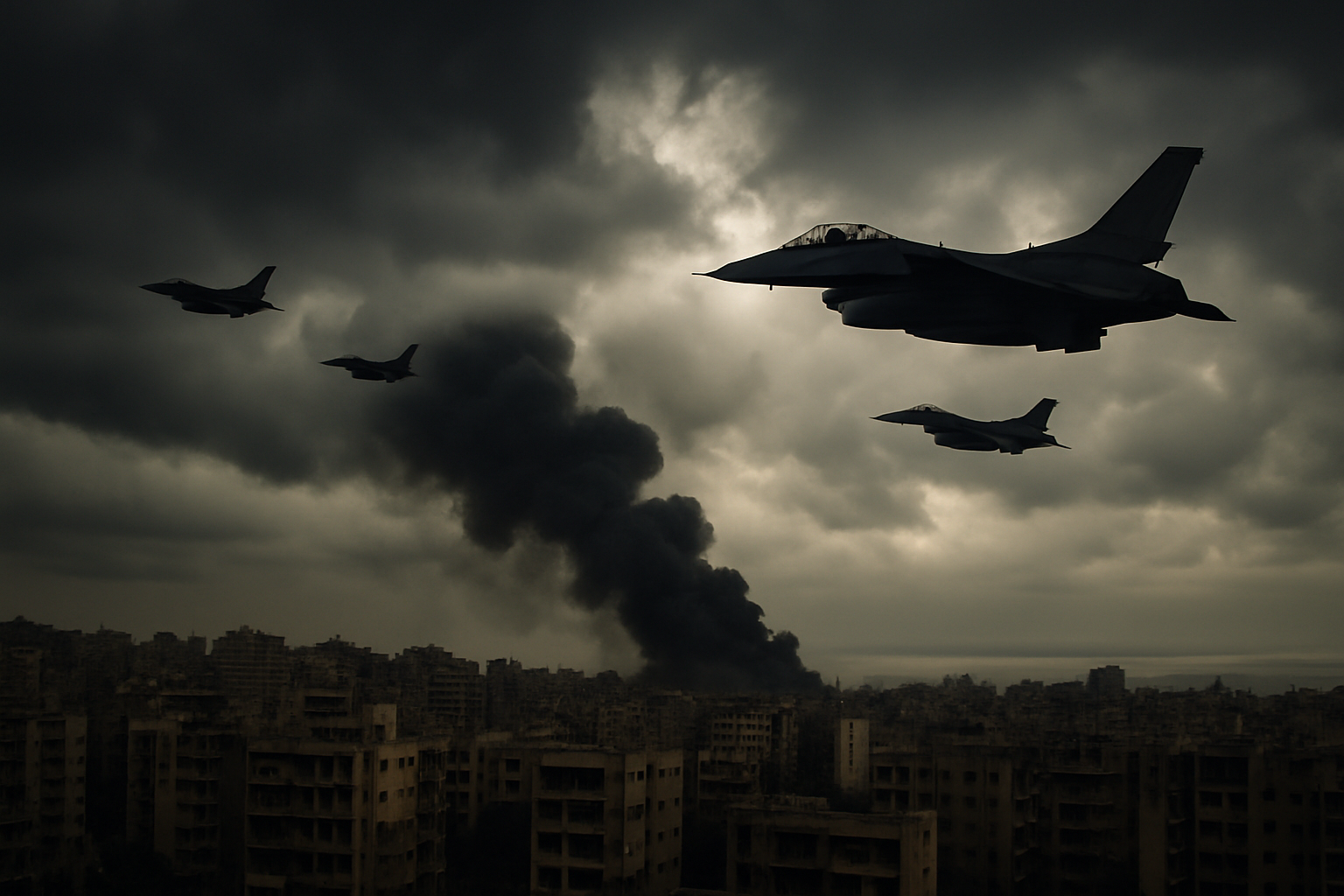
Israel conducted its heaviest bombardment of Lebanon since the conflict began, killing 254 people and wounding over 1,100 in what Lebanese officials called the deadliest single day of warfare, despite a fragile US-Iran ceasefire brokered by Pakistan just days earlier.
The massive Israeli assault targeted more than 100 Hezbollah sites across Beirut, the Bekaa Valley, and southern Lebanon on Wednesday, marking the largest coordinated strike operation since the March 2026 conflict escalation. The bombardment comes as Israeli Prime Minister Benjamin Netanyahu explicitly stated that Lebanon is not covered by the "Islamabad Accord" ceasefire agreement, creating what experts describe as a critical loophole threatening the broader peace framework.
Unprecedented Death Toll Sparks International Condemnation
Lebanese Health Ministry officials confirmed at least 254 people were killed and 1,165 wounded in the Wednesday strikes, with some reports suggesting the death toll could reach higher. The bombardment prompted Lebanon to declare Thursday a national day of mourning as the country grapples with what officials described as an unprecedented humanitarian catastrophe.
"This represents one of the darkest days in Lebanon's modern history. The scale of civilian casualties is unconscionable."
— Lebanese Health Ministry Official
European nations have issued sharp condemnations of the Israeli attacks. The United Kingdom said it was "deeply troubled" by the strikes, while France called them "unacceptable." Italy specifically condemned what it termed "bombings on civilian population," highlighting growing international concern over the targeting of non-combatants.
Ceasefire Loophole Threatens Regional Stability
The Israeli strikes have exposed a fundamental flaw in the Pakistan-mediated ceasefire between the United States and Iran. While the "Islamabad Accord" successfully ended the most dangerous international crisis since the Cold War, Netanyahu's declaration that Lebanese operations remain outside the agreement's scope has created dangerous ambiguity.
US Vice President JD Vance acknowledged Iran's "legitimate misunderstanding" about Lebanon's inclusion in the ceasefire but confirmed that the United States never agreed to include Israeli-Hezbollah operations in the accord. Iran has responded by threatening to withdraw from Friday's scheduled talks in Islamabad unless a comprehensive ceasefire is enforced across all fronts.
Collapse of November 2024 Agreement
The current crisis stems from the complete collapse of the November 2024 US-French brokered Israel-Hezbollah ceasefire, which had held for over a year. The agreement broke down in March 2026 when Hezbollah faced what officials described as an "impossible choice" between maintaining the ceasefire and responding to Iranian pressure for retaliation following the death of Supreme Leader Ali Khamenei on March 1.
Hezbollah ultimately chose what it termed "Iranian solidarity over Lebanese sovereignty," declaring that "resistance is the only option" and pulling Lebanon into the broader Iran-Israel confrontation. The organization, estimated to have 20,000 fighters, has since conducted over 40 operations targeting northern Israeli sites, reaching as far as Haifa.
Humanitarian Crisis Reaches Breaking Point
The Israeli bombardment has created an unprecedented humanitarian emergency in Lebanon. Over 1.2 million Lebanese—representing 25% of the population—have been displaced from their homes, overwhelming emergency shelters and forcing thousands to sleep on the streets of Beirut.
Particularly concerning is the systematic targeting of medical personnel. Since March 2, at least 26 paramedics have been killed and 51 wounded, with the deadliest single incident occurring at the Burj Qalaouiyah primary healthcare center in the Bint Jbeil district, where 12 medical workers including doctors, nurses, and paramedics were killed.
"The systematic targeting of medical personnel constitutes a clear violation of international humanitarian law and potentially amounts to war crimes."
— International Legal Expert
Israeli military spokesman Avichai Adraee has threatened to strike ambulances and medical facilities, claiming Hezbollah uses them for military purposes—allegations that Hezbollah has categorically denied. These threats represent a dangerous escalation in targeting protected humanitarian assets under the Geneva Conventions.
Global Implications of Regional Conflict
The Lebanon crisis is unfolding within the context of the broader Middle East war that began following Khamenei's death. The regional conflict has created unprecedented global disruptions, including the cancellation of over 18,000 flights worldwide, oil prices surging past $100 per barrel, and the effective closure of the Strait of Hormuz, which handles 40% of global oil transit.
The International Energy Agency has released a record 400 million barrels from strategic reserves—the largest intervention in the agency's 50-year history—to help stabilize global energy markets. Natural gas prices have increased by 24% in Europe and 78% in the United States, demonstrating the conflict's far-reaching economic impact.
International Diplomatic Response
French President Emmanuel Macron has offered to host direct Israel-Lebanon talks in Paris—the first such negotiations since the ceasefire collapse. UN Secretary-General António Guterres, during a visit to Beirut, called the situation "the greatest test of multilateral cooperation in the modern era."
Turkey has warned that Israel is committing "a new genocide" under the pretext of targeting Hezbollah, while Sweden has provided 65 million kronor in humanitarian aid to support Lebanese civilians. The international community faces mounting pressure to find diplomatic solutions to prevent further escalation.
Medical Targeting Raises War Crimes Concerns
The systematic targeting of medical personnel and facilities has drawn sharp criticism from international human rights organizations. The Burj Qalaouiyah healthcare center attack, which killed 12 medical workers, represents what experts describe as a potential violation of the Geneva Conventions' protections for medical personnel.
The healthcare system in Lebanon has been compromised by attacks on medical assets, severely limiting emergency response capabilities and threatening the lives of civilians requiring medical attention. International legal experts are calling for immediate investigation into potential war crimes.
Impact on UN Peacekeeping
The conflict has also affected international peacekeeping operations. A UNIFIL base near Mais al-Jabal was struck, wounding one peacekeeper—the first major breach of peacekeeping arrangements since the November 2024 ceasefire. UNIFIL spokeswoman Kandice Ardiel described the situation as "precarious and volatile," affecting both peacekeepers and civilians evacuating from southern Lebanon.
Regional Coalition Under Strain
The unprecedented coalition of Saudi Arabia, UAE, Qatar, and Egypt that had supported diplomatic processes is now under severe strain as Iranian retaliation has targeted member territories. Egyptian President Abdel Fattah el-Sisi has condemned attacks on "sisterly countries" and warned of "comprehensive chaos" spreading across the region.
This fracturing of regional diplomatic consensus represents a significant blow to Middle Eastern stability and demonstrates the challenges of maintaining multilateral support when conflicts expand beyond initial bilateral frameworks.
Template-Setting Crisis for International Relations
The Lebanon crisis represents what UN officials describe as a "template-setting" moment for 21st-century conflict resolution. The rapid transition from diplomatic breakthrough to military escalation demonstrates the fragility of crisis management in the multipolar era.
The success or failure of international efforts to contain this escalation will establish precedents for future approaches to regional war prevention, global energy security, nuclear governance credibility, and international law enforcement that could influence global politics for decades to come.
Looking Forward: Critical Juncture
As Israel continues its operations in Lebanon despite international pressure, the coming days will determine whether the Pakistan-mediated ceasefire can survive this critical test or whether the Middle East will return to the most dangerous international crisis since the Cold War.
With over 250 Lebanese killed in a single day and more than a million displaced, the humanitarian cost of this diplomatic failure continues to mount. The international community faces an urgent choice between allowing military escalation to continue or finding innovative diplomatic solutions that address the fundamental security concerns of all parties involved.
The fragility of the current moment demonstrates that without comprehensive agreements addressing underlying political tensions, even the most successful diplomatic breakthroughs remain vulnerable to collapse, with devastating consequences for civilian populations caught in the crossfire.