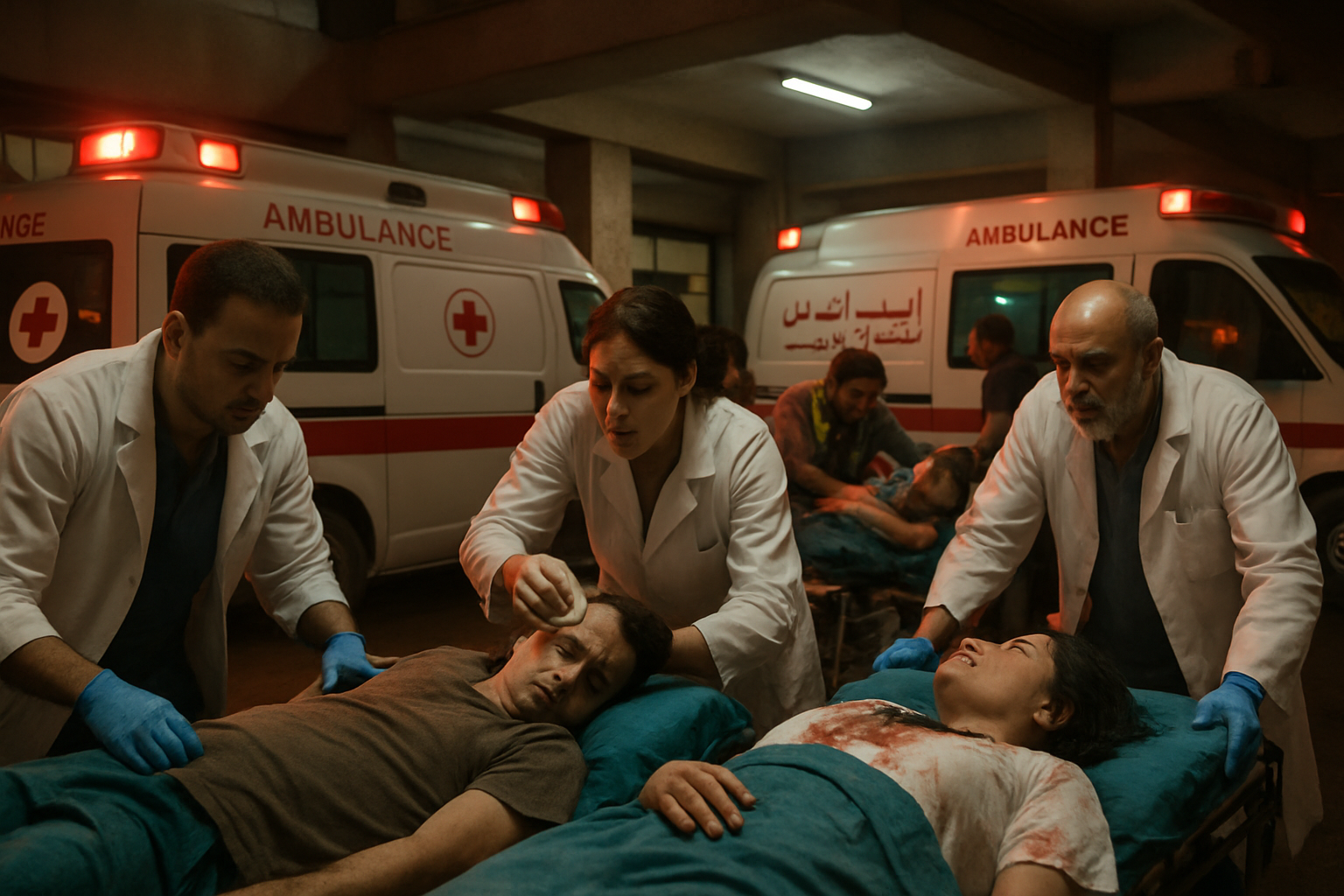
Israeli airstrikes across Lebanon have killed multiple people, including casualties near a major hospital in Beirut, as cross-border tensions reach their most dangerous levels in months amid the broader regional crisis.
According to Lebanese health authorities, the latest wave of strikes has resulted in significant civilian casualties, with at least four people confirmed killed in an attack near the Rafik Hariri University Hospital. A source at the hospital told international media that several missiles struck a dormitory housing Sudanese workers in the vicinity of the medical facility.
The escalation represents the most serious breach of stability since the November 2024 ceasefire agreement between Israel and Hezbollah, which had held for over a year before completely collapsing in March 2026 following the death of Iran's Supreme Leader Ali Khamenei.
Expanding Military Operations
Israeli military sources confirmed that operations have expanded significantly beyond previous engagement zones. The Israel Defense Forces (IDF) issued widespread evacuation orders for Lebanese civilians and conducted strikes across multiple regions, including the strategic Bekaa Valley and southern Lebanese towns.
Lebanese authorities report that Israeli strikes targeted the town of Kafr Hati near Sidon, where a Lebanese soldier, Corporal Hussein Ali Nahle, was killed in the attack. The Lebanese military condemned what it called an escalation in Israeli military activity despite previous ceasefire arrangements.
"The Israeli army has expanded its offensive in Lebanon since a cross-border attack by Hezbollah on March 2, despite a ceasefire that took effect in November 2024."
— Lebanese Military Statement
The current death toll from Israeli strikes since the escalation began has reached at least 1,422 people killed and 4,294 injured, according to Lebanese authorities. This represents the deadliest period of violence between the two countries since the 2006 war.
Healthcare System Under Strain
The targeting of areas near medical facilities has raised serious concerns about the safety of healthcare workers and patients. The strike near Rafik Hariri University Hospital, one of Lebanon's premier medical institutions, underscores the vulnerability of civilian infrastructure during the current conflict.
Medical facilities across Lebanon are reporting being overwhelmed with casualties, while emergency responders struggle to reach affected areas amid ongoing military operations. The systematic nature of strikes near healthcare facilities has drawn condemnation from international humanitarian organizations.
Regional Context and Escalation
The current escalation is directly linked to the broader Middle East crisis that erupted following the March 1, 2026 death of Iran's Supreme Leader Ali Khamenei in a joint US-Israeli operation. Hezbollah, Iran's primary proxy in Lebanon, faced an "impossible choice" between maintaining the ceasefire with Israel or responding to Iranian pressure for retaliation.
The organization ultimately chose what it termed "resistance as the only option," abandoning its commitments under the November 2024 ceasefire and joining the broader Iran-Israel confrontation. This decision has pulled Lebanon into a regional war that has already caused unprecedented global disruptions, including the cancellation of over 18,000 flights worldwide and oil prices surpassing $100 per barrel.
Displacement Crisis
Lebanese officials estimate that over 300,000 civilians have been evacuated from villages across southern Lebanon, with the Lebanese Red Cross suggesting the actual number could be significantly higher. This represents one of the largest displacement crises in the region since the Arab Spring of 2011.
Emergency shelters across Lebanon are at capacity, with thousands of families forced to seek refuge in schools, places of worship, and even on the streets of Beirut. The scale of displacement has overwhelmed traditional support systems and highlighted the fragility of Lebanon's already struggling economy.
International Response
The international community has expressed growing concern over the escalation. Multiple nations have issued travel warnings for Lebanon, while some countries have begun evacuating their citizens. Airlines have suspended operations to Beirut's Rafik Hariri International Airport, further isolating the country.
French President Emmanuel Macron has offered to host direct Israel-Lebanon talks in Paris, marking the first such diplomatic initiative since the ceasefire collapsed. However, prospects for immediate de-escalation appear limited given the broader regional dynamics at play.
Military Capabilities and Response
Hezbollah, estimated to maintain approximately 20,000 fighters, has responded to Israeli operations with rocket barrages targeting northern Israeli cities, including some that have reached as far as Haifa. The organization has declared "direct confrontations" with Israeli forces, marking a significant escalation from its previous restraint strategy.
Israeli operations have focused on what military sources describe as Hezbollah weapons depots, command centers, and smuggling routes from Syria. The targeting reflects Israeli concerns about the group's rebuilding of capabilities during the ceasefire period and continued weapons transfers from Iran.
Humanitarian Concerns
International humanitarian law experts have raised concerns about the systematic targeting of civilian areas and the impact on medical facilities. The Geneva Conventions provide specific protections for healthcare facilities and personnel, and any deliberate targeting of such infrastructure could constitute serious violations of international law.
The crisis has also affected religious observances, with both Christian Easter celebrations and the Muslim holy month of Ramadan disrupted by the ongoing violence. This represents an unprecedented situation affecting all three Abrahamic faiths simultaneously in the region.
Economic and Global Impact
Beyond the immediate humanitarian crisis, the Lebanon escalation is contributing to broader global economic disruptions. The closure of Middle Eastern airspace and the threat to shipping routes through the Strait of Hormuz have created supply chain vulnerabilities affecting industries worldwide.
Energy markets remain volatile, with natural gas prices rising 24% in Europe and 78% in the United States. The crisis has forced emergency planning by oil-importing nations and highlighted the vulnerability of global energy networks to regional conflicts.
Looking Ahead
The coming days and weeks will be crucial in determining whether the current escalation can be contained through diplomatic intervention or whether it will expand into a broader regional war affecting millions more civilians. UN Secretary-General António Guterres has called the situation "the greatest test of multilateral cooperation in crisis management of the modern era."
The collapse of the November 2024 ceasefire and Lebanon's entry into the broader Iran-Israel confrontation represents a fundamental shift in regional dynamics. The success or failure of international efforts to contain the crisis will have implications extending far beyond the immediate conflict, potentially setting precedents for 21st-century conflict resolution approaches.
As Israeli strikes continue and casualties mount, the international community faces mounting pressure to develop effective mechanisms for protecting civilians and preventing the further escalation of what has already become the most dangerous Middle Eastern crisis since the end of the Cold War.