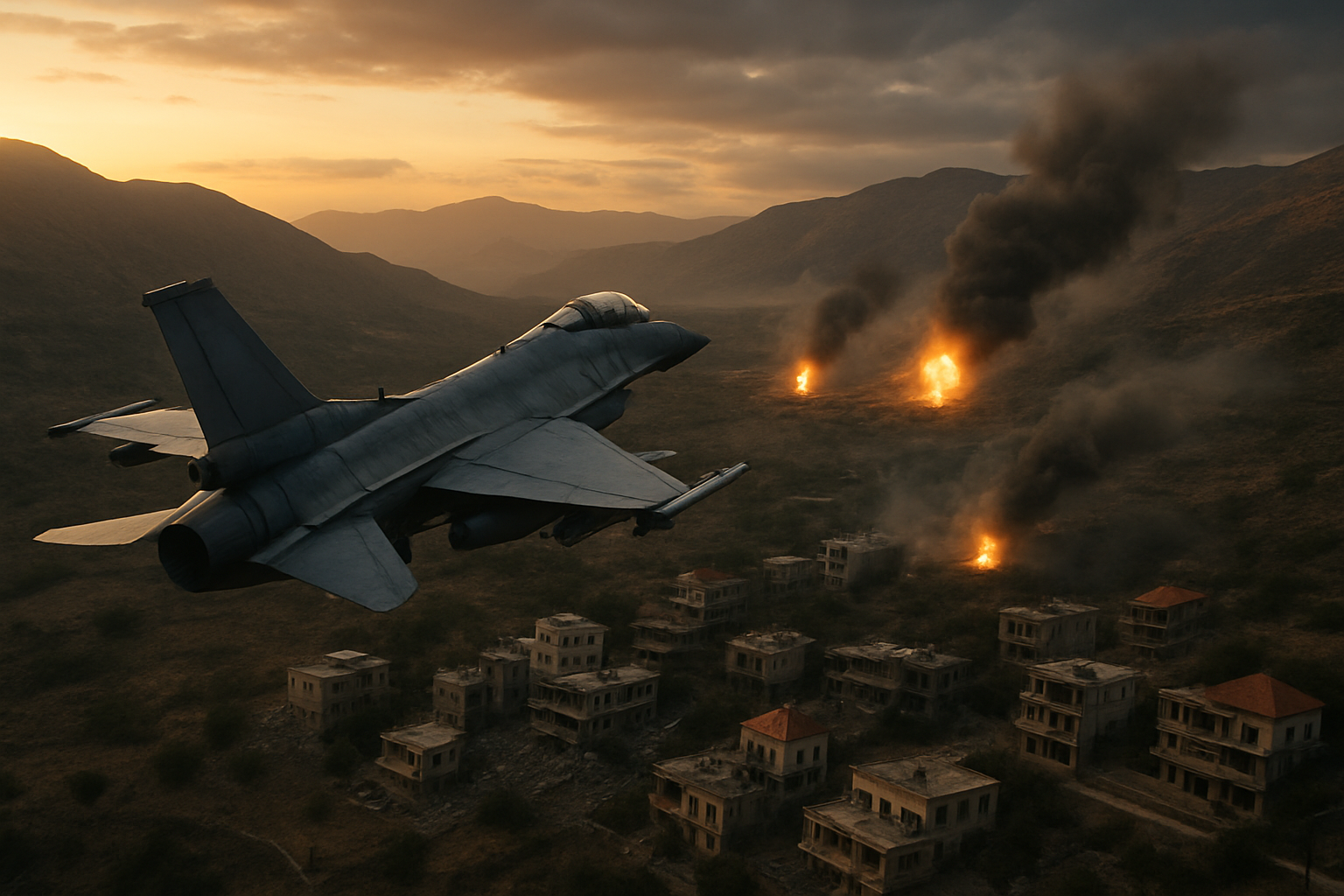
Israeli military operations in Lebanon have escalated dramatically with at least 41 people killed and 40 wounded in the latest wave of airstrikes, according to the Lebanese Health Ministry, as the regional conflict continues to expand following the devastating US-Israeli war with Iran.
The overnight strikes targeted multiple locations across Lebanon, with the deadliest attacks concentrated in the eastern town of Nabi Chit in the Bekaa Valley. Local media reports indicate that 26 people were killed in this small mountain community, which has strong ties to Hezbollah's leadership structure.
Escalating Military Campaign
The Israeli Defense Forces (IDF) have issued widespread evacuation orders before launching heavy strikes on southern Lebanon and the southern suburbs of Beirut. This represents the most intensive military campaign against Lebanese territory since the November 2024 ceasefire agreement, which had temporarily halted cross-border violence between Israeli forces and Hezbollah.
According to IDF estimates, more than 300,000 Lebanese civilians have evacuated their villages in southern Lebanon, with the actual number potentially being thousands higher according to Georges Kettaneh, Secretary General of the Lebanese Red Cross. The humanitarian impact has been severe, with emergency shelters overflowing and medical facilities overwhelmed.
Broader Regional Context
The current escalation occurs within the framework of the broader Middle East crisis that began with the US-Israeli "Operation Epic Fury" against Iran in late February 2026. Following the confirmed death of Iranian Supreme Leader Ali Khamenei on March 1, 2026, and Iran's massive retaliation campaign known as "Operation True Promise 4," regional tensions have reached their highest levels since the Cold War.
Hezbollah, as an Iran-backed militant group with an estimated 20,000 fighters, faces an impossible strategic position between maintaining the November 2024 ceasefire with Israel and responding to Iranian pressure for retaliation following Khamenei's death. The organization has declared that "resistance is the only option" in response to continued Israeli operations.
"The war has expanded into Lebanon, where fighting between Hezbollah, an Iran-backed militant group, and Israel is continuing. Over the past week, Israel has issued evacuation warnings before launching heavy strikes."
— International War Correspondent Report
Humanitarian Crisis Deepening
The humanitarian situation in Lebanon has deteriorated rapidly, with hundreds of thousands of civilians displaced from their homes. German sources indicate that approximately 100,000 people are internally displaced within Lebanon, fleeing Israeli attacks, with many emergency shelters at capacity.
The strikes have targeted not only military installations but also civilian infrastructure, raising concerns about potential violations of international humanitarian law. The international community has called for immediate protection of civilians and adherence to the Geneva Conventions.
Norwegian sources confirm that Israeli airstrikes in the North Lebanon region have resulted in significant casualties among the civilian population, with medical facilities struggling to cope with the influx of wounded.
Strategic Military Targeting
Israeli operations have focused on several key areas:
- Bekaa Valley weapons depots and command centers
- Southern Lebanon Hezbollah positions near the Israeli border
- Beirut southern suburbs, traditional Hezbollah strongholds
- Strategic weapons smuggling routes from Syria
The town of Nabi Chit, where the highest casualty count occurred, serves as a critical location for Hezbollah's leadership network. Israeli forces launched approximately 40 airstrikes on the center and outskirts of the town, targeting both leadership compounds and weapons storage facilities.
Ceasefire Breakdown
The current violence represents the complete breakdown of the November 2024 US-French brokered ceasefire agreement, which required both Israeli forces and Hezbollah to withdraw from southern Lebanon, creating a buffer zone patrolled by the Lebanese army and UN peacekeepers.
German and Italian defense sources confirm this marks the first major breach of the ceasefire since its implementation. The agreement had held for over a year despite periodic minor violations, but the regional crisis following the Iran war has fundamentally altered the strategic landscape.
Israeli military spokesman Colonel Rafi Milo warned that operations would intensify, stating: "Hezbollah chose the Iranian regime over the State of Lebanon... they will pay a heavy price for this decision."
International Response and Implications
The international community has expressed grave concern about the rapid deterioration of the situation in Lebanon. Multiple nations have issued travel warnings for the region, and embassy evacuations are underway in several Middle Eastern countries.
The Lebanese government, led by President Michel Aoun, has condemned the strikes as violations of national sovereignty. However, Lebanon's weak central government has limited capacity to respond to the crisis while managing the broader economic and political challenges facing the country.
European Union officials have called for immediate de-escalation and the protection of civilian populations. The expansion of the conflict into Lebanon threatens to complicate ongoing diplomatic initiatives, including efforts by regional mediators to contain the broader Iran crisis.
Global Aviation and Economic Impact
The Lebanon crisis is occurring alongside the broader Middle East aviation emergency, with over 18,000 flights cancelled worldwide due to closed airspace in multiple countries. Oil prices have surged past $80 per barrel as Iran has effectively closed the Strait of Hormuz, affecting 40% of global oil transit.
Regional airlines have suspended operations to Beirut and other Middle Eastern destinations, further isolating Lebanon during this critical period. The economic implications extend beyond the immediate conflict zone, affecting global supply chains and energy markets.
Looking Forward
Military analysts warn that the current escalation could trigger a broader regional conflict involving multiple Iranian proxy groups across the Middle East. The death of Iran's Supreme Leader has created a succession crisis that has emboldened hardline elements within the Revolutionary Guards, potentially leading to more aggressive proxy operations.
The coming days will be crucial in determining whether the Lebanon-Israel fighting can be contained through renewed diplomatic efforts or represents the beginning of a broader regional war. International mediators, already stretched managing the Iran nuclear crisis and succession issues, now face the additional challenge of preventing further escalation in Lebanon.
With Hezbollah's substantial military capabilities and Israel's determination to prevent Iranian weapons transfers through Lebanese territory, the potential for further escalation remains extremely high. The international community faces the urgent task of preventing the complete collapse of regional stability mechanisms that have maintained relative peace for over a year.
As the crisis unfolds, the humanitarian cost continues to mount, with Lebanese civilians bearing the brunt of a conflict that reflects the broader struggle for influence and power across the Middle East. The ultimate resolution will likely require addressing not only the immediate military situation but also the underlying geopolitical tensions that have made Lebanon a critical battleground in the regional confrontation.