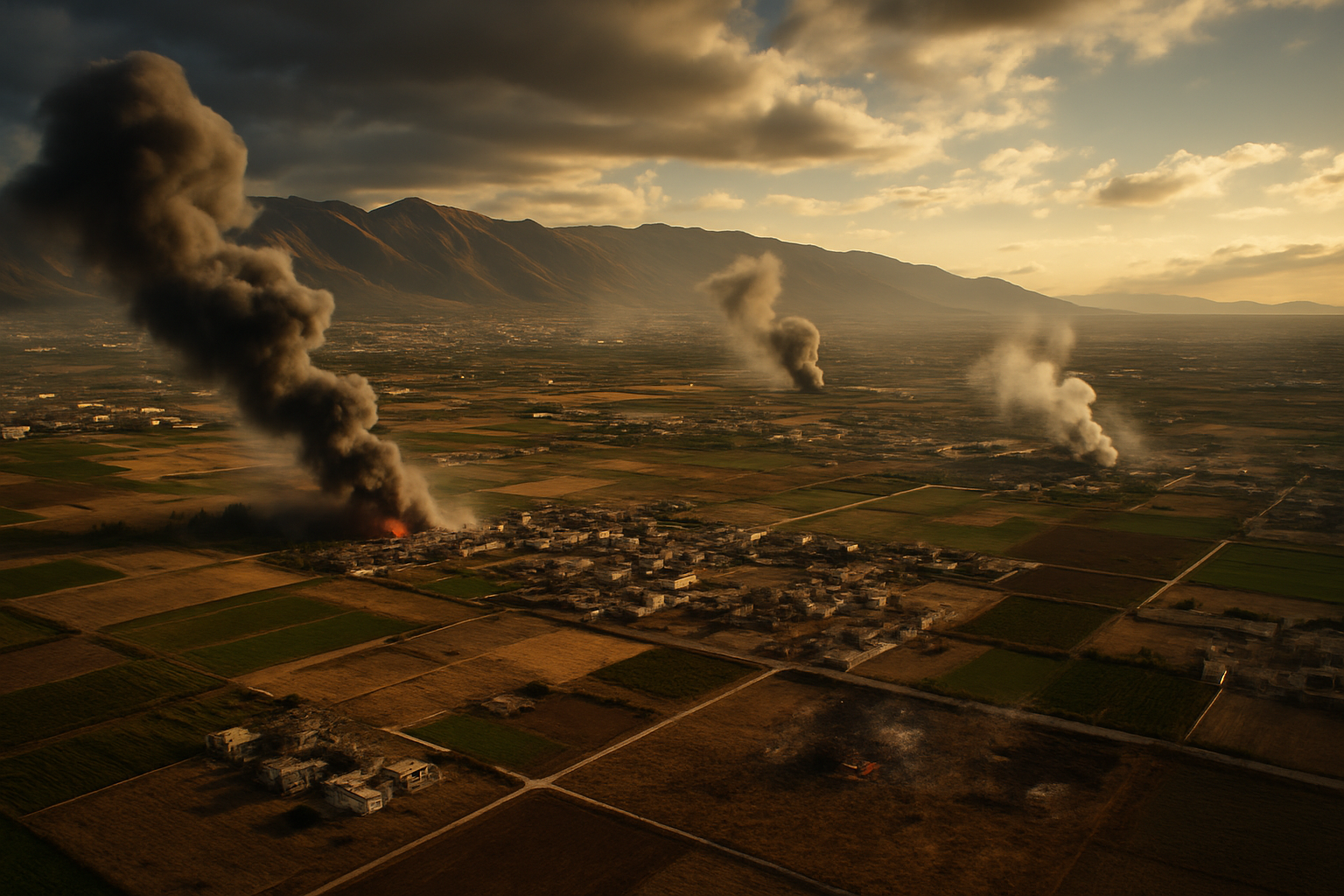
Israeli airstrikes in eastern Lebanon killed at least ten people on Friday, including a senior Hezbollah official, in what sources describe as the deadliest attacks since the November 2024 ceasefire took effect between Israel and the militant organization.
The strikes targeted the Bekaa Valley region of eastern Lebanon, with Israeli forces claiming they were hitting sites belonging to Hezbollah. The militant group confirmed in a statement that a senior commander was among the dead, marking a significant escalation in cross-border hostilities that have continued despite the French and US-brokered ceasefire agreement.
According to Lebanese state media reports and international sources, the casualties represent the highest single-day death toll in Lebanon since the cessation of major hostilities in November 2024. The attacks come amid broader regional tensions and ongoing violations of ceasefire agreements across multiple fronts in the Middle East.
Multiple Strike Locations Across Lebanon
The Israeli military operations extended beyond the Bekaa Valley, with additional strikes reported at the Ain al-Helweh Palestinian refugee camp near the port city of Sidon. Two people were killed in this separate attack, which Israeli forces stated was directed at what they described as a Hamas command center.
German media sources reported that twelve people were killed across all Israeli operations in Lebanon on Friday, while other international outlets confirmed the death toll of ten. The discrepancy in casualty figures highlights the ongoing challenges in obtaining accurate information from active conflict zones.
The Ain al-Helweh camp, Lebanon's largest Palestinian refugee facility housing approximately 80,000 residents, has been a focal point of regional tensions. The Israeli military's targeting of what it called a "Hamas command center" within the densely populated camp raises significant concerns about civilian casualties and international humanitarian law compliance.
Breaking the November 2024 Ceasefire
Friday's attacks represent the most serious breach of the November 2024 ceasefire agreement, which was designed to end months of escalating violence between Israeli forces and Hezbollah. The US and French-brokered deal required both Israeli forces and Hezbollah fighters to withdraw from southern Lebanon, creating a buffer zone monitored by Lebanese army forces and UN peacekeepers.
Despite the formal ceasefire arrangement, daily strikes have continued across Lebanon, with both sides accusing each other of violations. However, Friday's operations marked a significant escalation in both scope and casualties, raising questions about the long-term viability of the peace agreement.
International observers have documented numerous ceasefire violations since November 2024, but the death of a senior Hezbollah official represents a qualitative escalation that could trigger broader retaliation and potentially collapse the fragile peace arrangement.
"These attacks are among the deadliest recorded in the country since the end of the war last year."
— Cypriot media report
Regional Context and Broader Implications
The escalation in Lebanon occurs against the backdrop of multiple ongoing crises across the Middle East. Recent months have seen systematic violations of ceasefire agreements in Gaza, where over 1,600 documented violations have resulted in more than 573 Palestinian deaths since October 2025, according to international monitoring organizations.
The timing of the Lebanese strikes coincides with heightened diplomatic activity in the region, including the Trump administration's "Board of Peace" initiative scheduled for February 19, 2026, which aims to secure billions in reconstruction funding for Gaza. The escalation threatens to undermine these broader peace efforts and complicate regional stabilization initiatives.
Intelligence sources suggest the Israeli operations may be linked to concerns about weapons smuggling from Iran via Syria, with the Bekaa Valley serving as a key transit route for arms shipments to Hezbollah. The strikes targeted what Israeli officials described as "weapons depots and underground facilities" near the Syrian border, indicating coordinated intelligence-driven operations rather than reactive measures.
International Response and Condemnation
The attacks have drawn condemnation from multiple international actors, with eight Arab and Muslim nations maintaining their joint criticism of Israeli military actions across the region. This coalition, including Saudi Arabia, Jordan, Egypt, UAE, Qatar, Indonesia, Pakistan, and Turkey, has consistently called for compliance with international law and ceasefire agreements.
European diplomatic sources have expressed concern about the escalation, with over 400 EU diplomats having previously called for increased pressure on Israeli authorities to respect ceasefire arrangements. The European Left Coalition petition against EU-Israel partnerships has exceeded 400,000 signatures, reflecting growing European civil society pressure for policy changes.
The strikes also complicate ongoing diplomatic efforts, including Iran-US nuclear talks and various regional mediation initiatives. The escalation demonstrates how localized conflicts can quickly undermine broader diplomatic progress and regional stability efforts.
Hezbollah's Response and Future Implications
Hezbollah's confirmation of a senior commander's death in the strikes represents a significant blow to the organization's leadership structure. The group has historically responded to such high-level casualties with escalatory measures, raising concerns about potential retaliation that could spiral into broader conflict.
The militant organization maintains an estimated 20,000 fighters and substantial weapons stockpiles, according to intelligence assessments. Despite the November 2024 ceasefire requiring the group's withdrawal from southern Lebanon, international monitors have documented ongoing Hezbollah activities in violation of the agreement.
Regional experts warn that the death of senior Hezbollah officials could trigger a cycle of retaliation that undermines not only the Lebanon-Israel ceasefire but broader regional peace initiatives. The organization's deep integration with Iranian strategic objectives means that escalation in Lebanon often reflects wider regional power dynamics.
Humanitarian Impact and Civilian Concerns
The strikes have raised significant concerns about civilian protection, particularly given the targeting of the densely populated Ain al-Helweh refugee camp. International humanitarian law requires parties to conflict to distinguish between military targets and civilian areas, with special protections for refugee populations.
Lebanese medical facilities report treating multiple casualties from Friday's attacks, straining healthcare resources already stretched by ongoing regional instability. The humanitarian impact extends beyond immediate casualties to include displacement of families and disruption of essential services in affected areas.
UN peacekeeping forces in southern Lebanon have documented the escalation and are coordinating with Lebanese army units to assess the situation. However, the limited mandate and resources of international monitors make enforcement of ceasefire terms challenging, particularly when violations involve sophisticated military operations.
Strategic Implications for Regional Security
Friday's airstrikes demonstrate the continued fragility of ceasefire agreements in the absence of comprehensive political solutions to underlying conflicts. The operations reveal how tactical military objectives can quickly override diplomatic commitments, threatening broader regional stability efforts.
The escalation also highlights the complex web of regional relationships that make isolated conflicts difficult to contain. Israeli operations in Lebanon inevitably affect Palestinian territories, Syrian dynamics, and broader Iranian-Israeli competition, creating potential for rapid escalation across multiple fronts.
International mediation efforts face the challenge of addressing not just immediate ceasefire violations but the underlying security concerns that drive military operations. Without resolving fundamental issues of territorial sovereignty, weapons flows, and regional power balances, temporary ceasefire arrangements remain vulnerable to breakdown.
As regional and international actors assess the implications of Friday's escalation, the focus will likely shift to preventing further deterioration while addressing the root causes that continue to fuel conflict across the Middle East. The coming days will be critical in determining whether diplomatic channels can restore stability or whether the region faces another cycle of escalating violence.