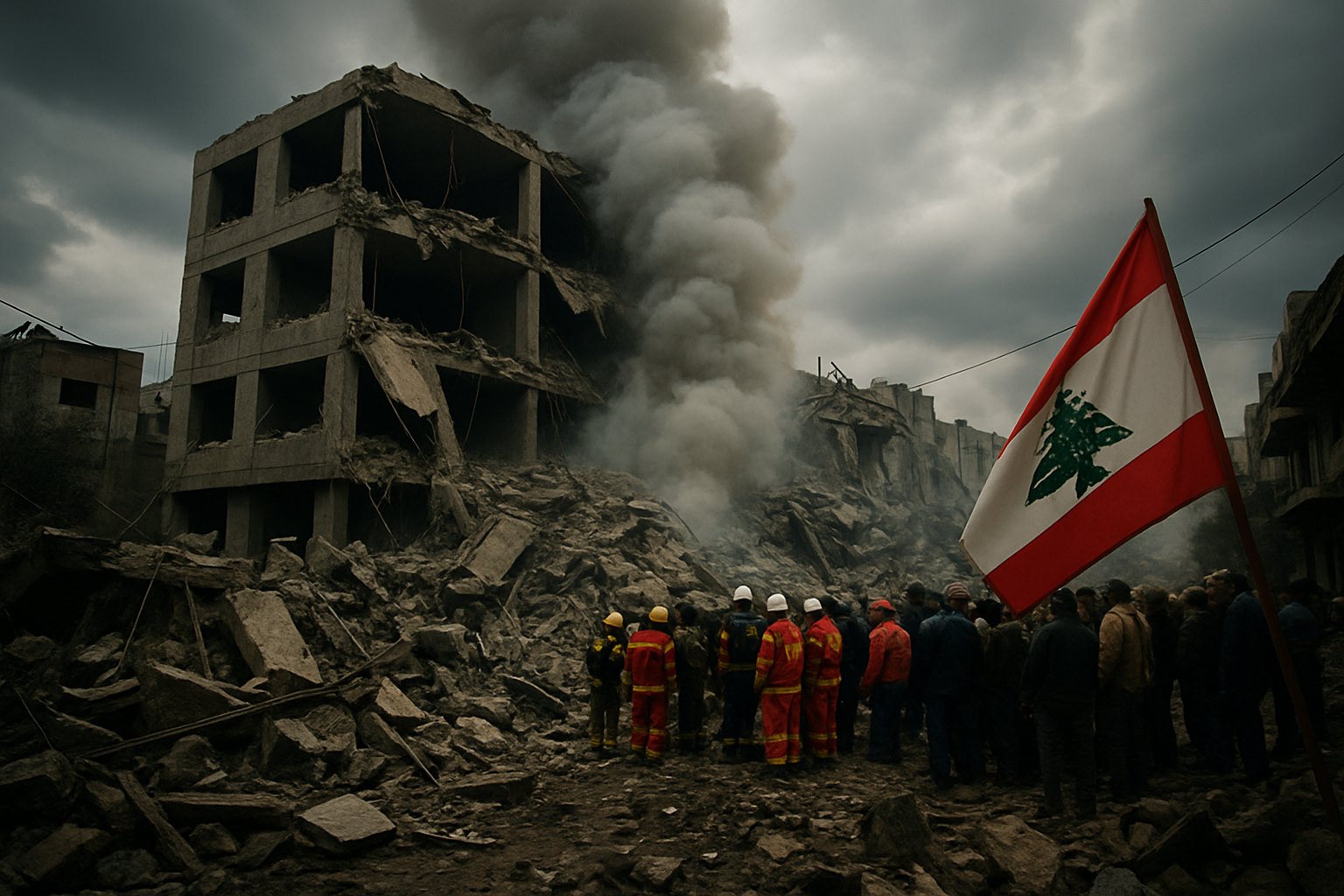
Israeli airstrikes in eastern Lebanon killed at least 10 people including several senior Hezbollah commanders on Friday, marking the deadliest escalation since the November 2024 ceasefire agreement between Israel and the militant group.
The strikes targeted multiple locations in Lebanon's Bekaa Valley, with Israeli military officials confirming operations against Hezbollah command centers in the Baalbek area. Among the confirmed casualties was Hussein Yaagi, identified by Hezbollah as a military commander killed in the overnight raids.
Lebanese health ministry sources reported varying casualty figures, with some accounts placing the death toll as high as 12. The strikes occurred primarily in the village of Rayak and surrounding areas of the eastern Bekaa Valley, with witnesses reporting extensive damage to buildings and infrastructure.
Targeting Senior Hezbollah Leadership
In a separate statement Saturday, the Israeli Defense Forces said they had "eliminated several terrorists of Hezbollah's missile array in three different command centres" recently identified as operating to accelerate the organization's readiness and force buildup. The IDF described the operations as targeting sites actively preparing for potential attacks against Israeli territory.
Hezbollah confirmed the death of Hussein Mohammed Yaagi, whom the group described as a "jihadi commander" killed in the Bekaa operations. Palestinian sources reported the strikes were among the most significant targeting Hezbollah's command structure since the fragile US-brokered ceasefire took effect in November 2024.
The strikes represent a notable escalation in the intensity of Israeli operations in Lebanon, moving beyond routine violations to target senior militant leadership directly involved in weapons procurement and operational planning.
Ceasefire Violations Mount
Friday's airstrikes occurred amid a pattern of recurring violations of the ceasefire agreement that has seen daily incidents since its implementation. The Lebanese Health Ministry put the total death toll at 10 but did not distinguish between militants and civilians, raising concerns about civilian casualties in the densely populated regions.
According to multiple Lebanese security sources, at least 50 people were wounded in the Friday strikes, making them among the deadliest reported in eastern Lebanon in recent weeks. The operations risk further testing the fragile US-brokered ceasefire that has been strained by recurring accusations of violations from both sides.
"These strikes represent the most serious breach of the November 2024 ceasefire agreement and could trigger a broader escalation cycle."
— Regional Security Official
Strategic Targeting of Weapons Networks
Israeli intelligence sources suggested the strikes focused on disrupting weapons smuggling networks operating from Iran through Syria into Lebanon. The Bekaa Valley has long served as a critical corridor for Iranian arms transfers to Hezbollah, with underground facilities and weapons depots scattered throughout the eastern mountain chain.
The timing of the operations appears coordinated with broader regional tensions, including ongoing US-Iran nuclear negotiations and concerns about Hezbollah's force rebuilding efforts despite ceasefire requirements calling for the group's withdrawal from southern Lebanon.
Military analysts noted that targeting senior commanders represents a qualitative escalation beyond routine strikes on weapons facilities, potentially designed to degrade Hezbollah's operational capabilities while sending a message about Israeli red lines.
Regional Implications
The strikes come at a particularly sensitive moment in Middle East diplomacy, with multiple peace initiatives underway including Trump administration efforts to broker broader regional agreements. The escalation threatens to undermine these diplomatic processes by demonstrating the fragility of existing ceasefire arrangements.
Regional powers including Saudi Arabia, UAE, Qatar, and Egypt have maintained support for diplomatic solutions to prevent broader military confrontation. However, the targeting of senior Hezbollah officials raises concerns about potential retaliation cycles that could spiral beyond the current limited engagement framework.
Lebanese officials condemned the strikes as violations of sovereignty and international law, while Hezbollah's response remains a critical factor in determining whether the escalation leads to broader conflict or remains contained within current parameters.
Humanitarian Concerns
The strikes raised international humanitarian law questions given their impact on civilian areas and infrastructure in the Bekaa Valley. While Israeli officials characterized the operations as "precision strikes" targeting military commanders, the casualty figures and widespread damage suggest broader impact.
UN peacekeeping forces in southern Lebanon are documenting the escalation as part of ongoing monitoring efforts, though their mandate does not extend to the eastern regions where Friday's strikes occurred. International observers noted the attacks represent the most significant ceasefire violation since the November 2024 agreement.
Medical facilities in the region treated multiple casualties, with Lebanese health authorities reporting that three children were among the wounded, highlighting the humanitarian dimensions of the military escalation.
Looking Forward
The killing of senior Hezbollah commanders is likely to trigger internal discussions within the organization about appropriate responses, potentially leading to retaliatory actions that could undermine not only the Lebanon-Israel ceasefire but broader regional stability efforts.
Intelligence assessments suggest Hezbollah maintains an estimated 20,000 fighters and substantial weapons stockpiles despite ceasefire requirements. The group's response to the targeting of its commanders will be closely watched as an indicator of whether current tensions escalate into broader conflict.
The strikes demonstrate ongoing Israeli concerns about Iranian weapons smuggling through Syria-Lebanon corridor and Hezbollah's force rebuilding efforts, suggesting continued military operations may be necessary to enforce Israeli security requirements despite diplomatic agreements.