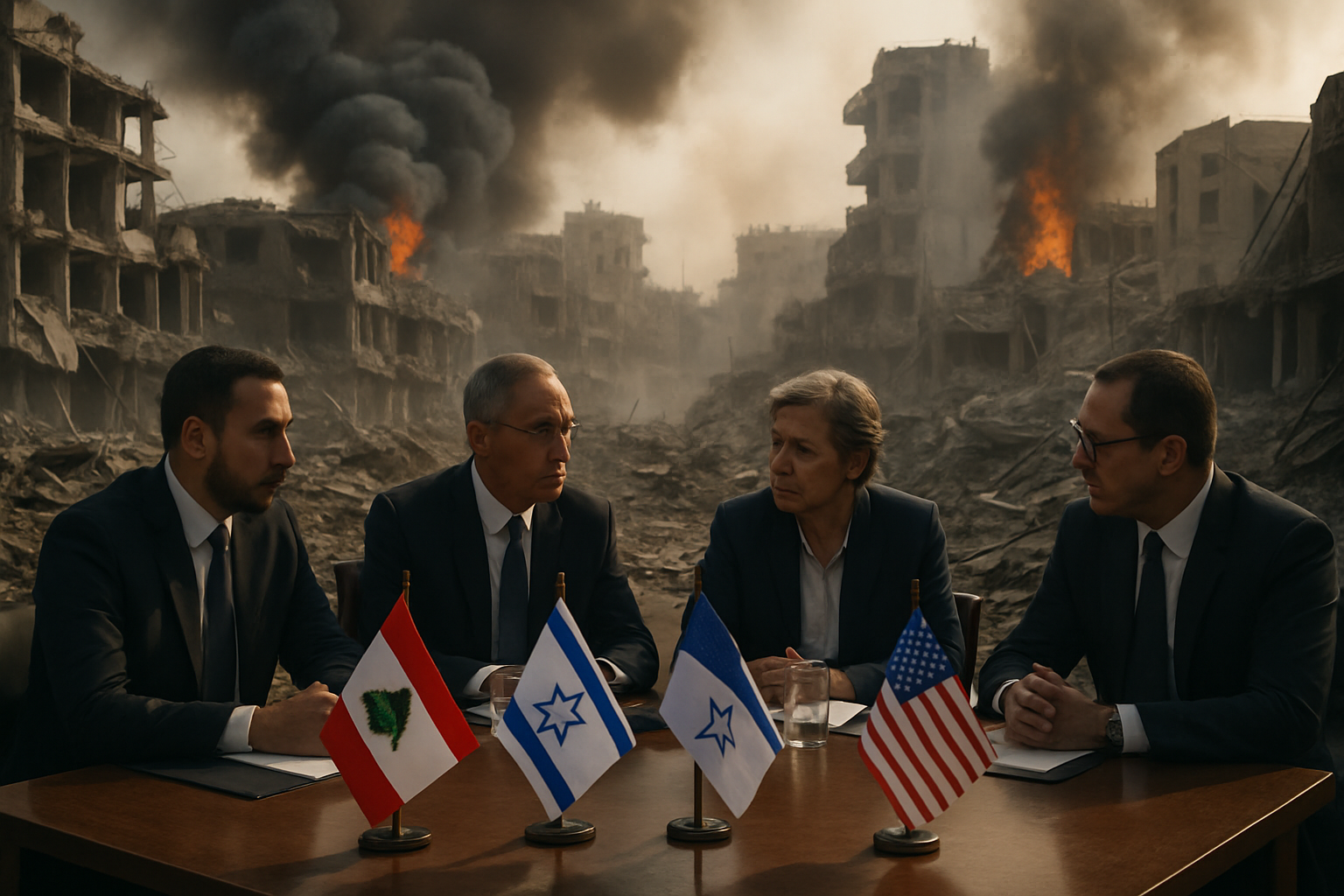
Israel conducted its deadliest strikes on Lebanon since the conflict began, killing over 300 people in a single day, while Prime Minister Benjamin Netanyahu simultaneously announced his government's readiness to begin direct peace negotiations with Lebanon "as soon as possible," creating a stark contradiction that threatens the fragile Pakistan-mediated US-Iran ceasefire.
The massive bombardment targeted over 100 Hezbollah sites across Beirut, the Bekaa Valley, and southern Lebanon in what military officials described as the largest coordinated strike operation since hostilities resumed in March 2026. The death toll varies across reports, with the Lebanese Health Ministry confirming between 254-300 killed and over 1,100 wounded, including 12 medical personnel in southern Lebanon.
Critical Ceasefire Loophole Emerges
The strikes occurred despite the historic "Islamabad Accord" — a ceasefire agreement between the United States and Iran brokered by Pakistan just days earlier. However, Netanyahu explicitly stated that Lebanon is not covered by the ceasefire arrangement, creating what diplomatic sources describe as a dangerous loophole that could unravel the broader peace framework.
US Vice President JD Vance acknowledged Iran had a "legitimate misunderstanding" about Lebanon's inclusion in the ceasefire but maintained that the US never agreed to include Israeli operations in Lebanon. In response, Iran's parliament speaker Mohammad Bager Qalibaf warned that continued violations would render negotiations "unreasonable" and threatened Iran's withdrawal from scheduled talks unless comprehensive enforcement is implemented across all fronts.
"We want a ceasefire declared before starting any negotiations with Israel,"
— Lebanese government official, speaking to AFP
Humanitarian Catastrophe Deepens
The latest escalation has pushed Lebanon's humanitarian crisis to unprecedented levels. Over 1.2 million Lebanese — approximately 25% of the population — have been displaced since March, overwhelming emergency shelters and forcing thousands to sleep on Beirut's streets and in cars.
The systematic targeting of medical personnel continues to raise grave concerns about international humanitarian law violations. Since March 2, 26 paramedics have been killed and 51 wounded in what appears to be deliberate attacks on emergency responders. The deadliest single incident occurred at the Burj Qalaouiyah primary healthcare center in the Bint Jbeil district, where 12 medical workers — including doctors, nurses, and paramedics — were killed in what legal experts describe as potential Geneva Conventions violations.
November 2024 Ceasefire Complete Collapse
The current crisis stems from the complete collapse of the November 2024 US-French brokered ceasefire between Israel and Hezbollah, which had held for over a year. The agreement required Israeli forces and Hezbollah to withdraw from southern Lebanon, with Lebanese army and UN peacekeepers establishing a buffer zone.
However, following the death of Iran's Supreme Leader Ali Khamenei on March 1, 2026, Hezbollah faced what officials described as an "impossible choice" between maintaining the ceasefire and responding to Iranian pressure for retaliation. The organization ultimately chose "Iranian solidarity over Lebanese sovereignty," declaring that "resistance is the only option" and pulling Lebanon into the broader Iran-Israel confrontation.
Global Economic and Security Implications
The Lebanon crisis has contributed to a global disruption of unprecedented scale. Over 18,000 flights have been cancelled worldwide — the most severe aviation crisis since COVID-19 — while oil prices have surged past $100 per barrel for the first time since 2014. Iran's temporary suspension of Strait of Hormuz oil tanker traffic, affecting 40% of global oil transit, has prompted the International Energy Agency to authorize its largest strategic reserve release in its 50-year history — 400 million barrels.
The broader regional conflict has also seen the first attack on European territory since World War II, with Iranian drones striking RAF Akrotiri in Cyprus, prompting an unprecedented naval coalition response from multiple European nations.
International Diplomatic Response
The international community has responded with unified condemnation of Israel's targeting of civilians. The United Kingdom described the strikes as "deeply troubling," France called them "unacceptable," and Italy condemned the "bombings of the civilian population." Despite this criticism, French President Emmanuel Macron has offered to host direct Israel-Lebanon talks in Paris — the first such diplomatic initiative since the ceasefire collapsed.
The World Health Organization has launched a $30.3 million emergency appeal to support health systems in five Middle Eastern countries, warning that healthcare systems are "under severe strain." The appeal covers the period from March to August 2026 to sustain essential health services, trauma care, and disease surveillance amid the escalating regional conflicts.
"This is the greatest test of multilateral cooperation and crisis management in the modern era,"
— UN Secretary-General António Guterres
Hezbollah's Military Response
Despite the massive Israeli bombardment, Hezbollah — estimated to have 20,000 fighters — has conducted over 40 operations targeting northern Israeli military sites, with rockets reaching as far as Haifa. The organization has declared "direct confrontations" with Israeli forces in southern Lebanon, marking a significant operational escalation from its previous restraint strategy.
This represents a strategic shift for Hezbollah from attempting to maintain the ceasefire arrangements to actively joining the regional conflict in solidarity with Iran. The organization's involvement has fundamentally altered the dynamics of what began as a bilateral Iran-Israel confrontation.
Pakistan's Mediation Success Under Threat
Pakistan's successful mediation of the US-Iran ceasefire, achieved just 88 minutes before President Trump's "whole civilization" deadline, is now being tested by the Lebanon complication. Prime Minister Shehbaz Sharif and Field Marshal Asim Munir's diplomatic triumph in preventing a broader regional war could be undermined if the Lebanon situation is not resolved.
Oil markets have already begun to reflect this uncertainty, with prices reversing some of their recent gains as traders worry about the sustainability of the ceasefire framework with such a significant exclusion.
Looking Forward: Diplomatic Window Narrowing
The success or failure of containing the Lebanon crisis will serve as a template for 21st-century conflict resolution approaches. The current situation demonstrates the fragility of negotiated agreements when underlying political tensions remain unresolved and when parties to a conflict can selectively apply ceasefire terms.
The coming days will be critical in determining whether diplomatic intervention can prevent the crisis from escalating into a broader regional war affecting millions more civilians. The Lebanese people, caught between Israeli military operations and Iranian proxy obligations, continue to bear the devastating cost of this geopolitical confrontation.
As international mediators work to address the ceasefire loophole, the template being set in Lebanon will likely influence how future conflicts are managed and whether diplomatic solutions can prevail over military escalation in an increasingly multipolar world order.