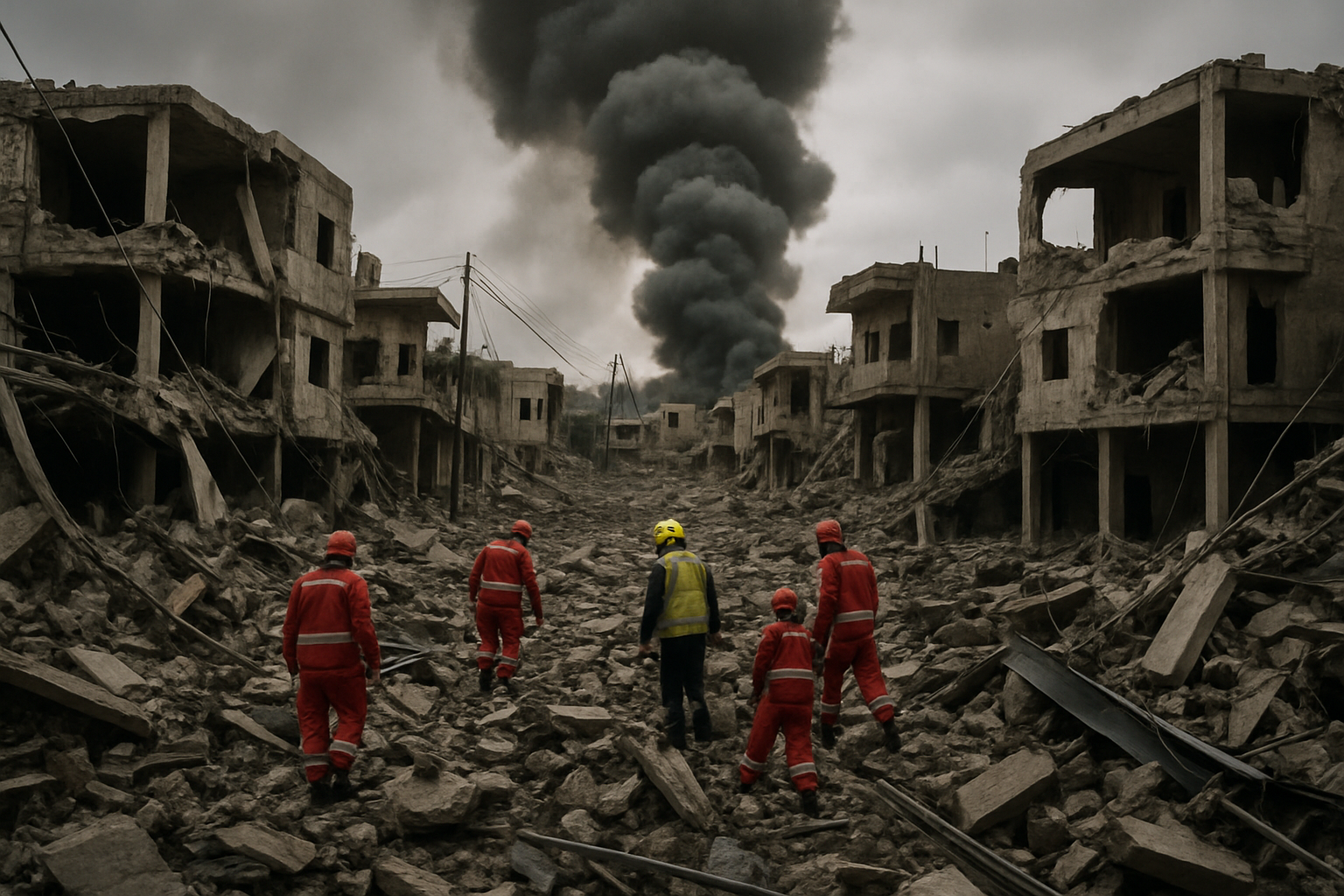
At least six people were killed in Israeli strikes on southern Lebanon on Saturday, according to various Lebanese sources, marking the latest deadly violation of a recently extended three-week ceasefire between Israel and Lebanon.
The deaths were reported by multiple sources, with the Lebanese state news agency initially reporting four fatalities from Israeli strikes, while Italian sources indicated the toll had risen to six. The strikes targeted locations including Yohmor al-Shaqif in southern Lebanon, where Israeli forces attacked a motorcycle and other targets according to reports from Qatar-based Al Jazeera and Saudi media outlets.
The Israeli military confirmed it had struck what it described as "loaded rocket launchers belonging to Hezbollah" in three locations in southern Lebanon overnight. The military also reported targeting "several Hezbollah fighters" in separate strikes, though it remained unclear whether these operations were directly linked to the civilian casualties reported by Lebanese authorities.
Persistent Ceasefire Violations
Saturday's deadly strikes occurred despite a three-week ceasefire extension announced by President Trump on April 23-24, 2026, following discussions with Israeli Prime Minister Benjamin Netanyahu and Lebanese President Joseph Aoun. The extension came after what Trump described as "excellent conversations" between the leaders, representing the most significant Israel-Lebanon diplomatic engagement in over three decades.
However, violations began within hours of the original ceasefire announcement. Lebanese military sources documented Israeli "acts of aggression" including artillery shelling of southern villages, while Israeli forces issued warnings to Lebanese civilians not to approach the Litani River area in southern Lebanon.
The current crisis stems from a critical loophole in international peace efforts. Netanyahu has explicitly excluded Lebanon from the broader Pakistan-mediated "Islamabad Accord" between the United States and Iran, creating what observers describe as a dangerous gap in the regional ceasefire framework. This exclusion has been acknowledged by U.S. Vice President JD Vance as a source of "legitimate misunderstanding" with Iran, which threatens to withdraw from broader regional talks unless comprehensive enforcement covers all fronts.
Humanitarian Crisis Deepens
The ongoing conflict has created an unprecedented humanitarian catastrophe in Lebanon. An estimated 1.2 million Lebanese civilians—representing 25% of the country's population—have been displaced since the escalation began in March 2026. Emergency shelters throughout the country are overwhelmed, with thousands of families forced to sleep on the streets of Beirut.
The systematic targeting of medical personnel has emerged as a particularly alarming aspect of the conflict. Since March 2026, 26 paramedics have been killed and 51 wounded in what medical organizations describe as deliberate attacks on healthcare workers. The deadliest single incident occurred at the Burj Qalaouiyah healthcare center, where 12 medical workers—including doctors, nurses, and paramedics—were killed in what may constitute violations of the Geneva Conventions.
The World Health Organization has issued a $30.3 million emergency appeal for five countries in the region, describing healthcare systems as being "under severe strain." In Gaza, a parallel humanitarian crisis continues with over 1,600 documented ceasefire violations since October 2025, resulting in more than 680 Palestinian deaths during what was supposed to be a period of peace.
Context of Regional Conflict
The current Lebanon crisis represents the complete breakdown of a November 2024 U.S.-French brokered ceasefire between Israel and Hezbollah that had held for over a year. That agreement collapsed in March 2026 when Hezbollah faced what sources describe as an "impossible choice" between maintaining the ceasefire and responding to Iranian pressure following the death of Iranian Supreme Leader Ali Khamenei on March 1.
Hezbollah ultimately chose what it termed "Iranian solidarity over Lebanese sovereignty," declaring that "resistance is the only option" and pulling Lebanon into the broader Iran-Israel confrontation. The organization, estimated to have 20,000 fighters, has conducted more than 40 operations targeting northern Israeli sites, including areas reaching as far as Haifa, and has declared "direct confrontations" with Israeli forces in southern Lebanon.
Israeli forces currently control an estimated 10% of Lebanese territory between the border and the Litani River. They have destroyed critical infrastructure including the Qasmiyeh Bridge and have issued demolition orders for civilian homes. IDF Chief Eyal Zamir has described current operations as "just beginning," with "several weeks" of continued operations planned.
International Response and Diplomatic Efforts
The international community has responded with unified condemnation of the ongoing violations. The United Kingdom has expressed being "deeply troubled" by the situation, while France has called the attacks "unacceptable" and Italy has condemned the targeting of civilian populations. Eight Arab nations, including the UAE and Saudi Arabia—countries that have normalized relations with Israel—have issued joint condemnations.
French President Emmanuel Macron has offered to host direct Israel-Lebanon talks in Paris, representing the first such diplomatic initiative since the ceasefire collapse. UN Secretary-General António Guterres has called the regional situation "the greatest test of multilateral cooperation in the modern era."
The crisis has had massive global implications, with over 18,000 flights cancelled worldwide in what observers describe as COVID-scale disruption. Oil prices have exceeded $100 per barrel for the first time since 2014, and threats to the Strait of Hormuz could affect 40% of global oil transit. The International Energy Agency has authorized its largest strategic reserve release in 50 years, totaling 400 million barrels.
Targeting of Peacekeepers and Media
The conflict has also seen unprecedented attacks on international peacekeeping forces and media personnel. UN peacekeeping forces (UNIFIL) bases have been attacked, with one peacekeeper wounded at the Mais al-Jabal base in what represents the first major breach of peacekeeping arrangements since the November 2024 ceasefire implementation. Most tragically, French Staff Sergeant Florian Montorio was killed in a Hezbollah attack, with President Macron directly blaming the organization and demanding arrests by Lebanese authorities.
The systematic targeting of journalists has also drawn international concern. Lebanese journalist Amal Khalil was killed in an Israeli attack on Al Tayri village on April 22, representing the fourth journalist death in the region within two months. The Committee to Protect Journalists has documented this as part of a broader pattern of media targeting that may constitute war crimes under international law.
Failed Diplomatic Initiatives
Despite multiple diplomatic initiatives, sustainable peace remains elusive. Hezbollah Secretary-General Naim Qassem has categorically rejected the current talks, calling them "pointless" and "futile," and demanding that the Lebanese government take a "historic heroic stance" by withdrawing from negotiations. The organization has documented over 10,000 Israeli violations resulting in more than 500 civilian deaths, further complicating diplomatic efforts.
The fundamental challenge lies in the exclusion of Lebanon from the broader U.S.-Iran ceasefire framework. This "Lebanon loophole," as it has been termed, creates a dangerous precedent where localized conflicts can undermine broader peace agreements. Iran has made clear that it may withdraw from regional talks unless comprehensive enforcement includes all fronts, threatening the stability of the Pakistan-mediated diplomatic breakthrough.
Template-Setting Crisis
Analysts describe the current situation as a template-setting moment for 21st-century conflict resolution approaches. The success or failure of diplomatic intervention in this crisis will determine precedents for regional war prevention, energy security, nuclear governance credibility, and international law enforcement with implications extending decades beyond current events.
The crisis represents the most serious Middle East conflict since the end of the Cold War, with global governance credibility at stake. The rapid transition from diplomatic agreements to military escalation demonstrates the fragility of negotiated peace when underlying political tensions remain unresolved.
As Saturday's casualties in southern Lebanon demonstrate, the cycle of violence continues despite international efforts to establish lasting peace. The coming days and weeks will be critical in determining whether diplomatic innovation can prevent broader regional warfare or whether the current trajectory toward military escalation will affect millions more civilians across the Middle East.
The international community faces a fundamental test of its commitment to diplomatic solutions over military confrontation, with the stakes extending far beyond the immediate conflict to encompass the credibility of multilateral cooperation in an increasingly complex global environment.