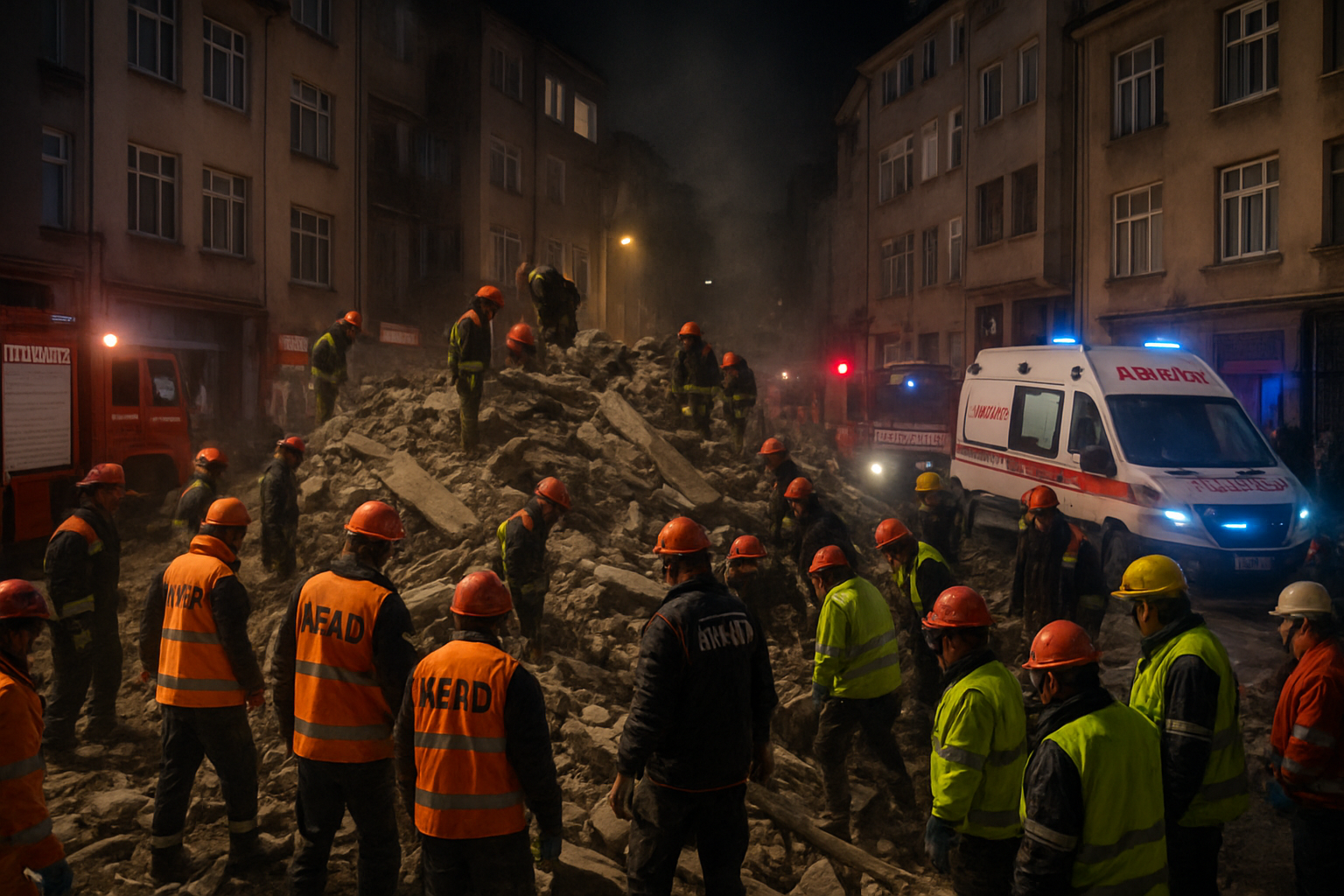
A devastating natural gas explosion in central Istanbul has brought down two residential buildings in the city's Fatih district, leaving several people trapped under the rubble as emergency rescue teams launch intensive search and rescue operations.
Istanbul Governor Davut Gül confirmed on Sunday that the building collapse was caused by a gas explosion, marking one of the most serious structural disasters in the Turkish capital in recent months. The incident occurred in the densely populated Fatih district, an area known for its historical significance and older residential infrastructure.
Emergency Response Operations
According to multiple reports from Turkish media, emergency rescue teams immediately mobilized to the scene following the explosion. The collapse has trapped several residents beneath the debris of the two adjacent buildings, prompting an urgent search and rescue mission involving multiple agencies.
Emergency services, including fire brigades, medical personnel, and Turkey's Disaster and Emergency Management Authority (AFAD), have deployed specialized urban search and rescue teams equipped with heavy machinery and life-detection equipment to locate survivors trapped in the rubble.
Context of Urban Infrastructure Vulnerabilities
This incident highlights ongoing concerns about Turkey's urban infrastructure safety, particularly in densely populated neighborhoods with aging building stock. Istanbul, home to over 15 million people, has faced repeated challenges with building safety standards and gas infrastructure maintenance in older districts.
The Fatih district, where the collapse occurred, is characterized by a mix of historical buildings and older residential structures, many of which were constructed before modern safety regulations were implemented. This creates particular vulnerabilities regarding gas system integrity and structural resilience.
"Emergency services are working around the clock to reach anyone who may be trapped beneath the debris. This is a race against time."
— Local Emergency Response Coordinator
Pattern of Building Safety Concerns
The Istanbul incident is part of a broader pattern of building safety challenges facing rapidly urbanized areas across Turkey and other developing regions. Similar gas explosions have occurred in other major cities, including a February 2026 incident in Karachi, Pakistan, where a gas explosion at a residential building killed at least 16 people and injured 14 others.
These incidents underscore the critical importance of regular gas system maintenance, building safety inspections, and emergency preparedness in urban areas with aging infrastructure and high population density.
Ongoing Rescue Efforts
As of Sunday evening, rescue operations continue at the collapse site, with emergency teams working to clear debris and locate any remaining survivors. The full extent of casualties remains unclear as rescue workers methodically search through the wreckage of the collapsed structures.
Local authorities have cordoned off the area and evacuated nearby buildings as a precautionary measure, while emergency services maintain their round-the-clock rescue operations. The incident has prompted renewed discussions about building safety standards and gas infrastructure oversight in Istanbul's older neighborhoods.
Infrastructure Safety Implications
The collapse serves as a stark reminder of the vulnerabilities present in urban areas where rapid development has sometimes outpaced safety infrastructure upgrades. Istanbul's mix of historical preservation requirements and modern safety needs creates unique challenges for city planners and safety officials.
This incident adds to growing concerns about infrastructure resilience in major urban centers worldwide, where aging gas systems, increasing population density, and limited maintenance resources create potentially dangerous combinations that require urgent attention from local authorities and urban planners.