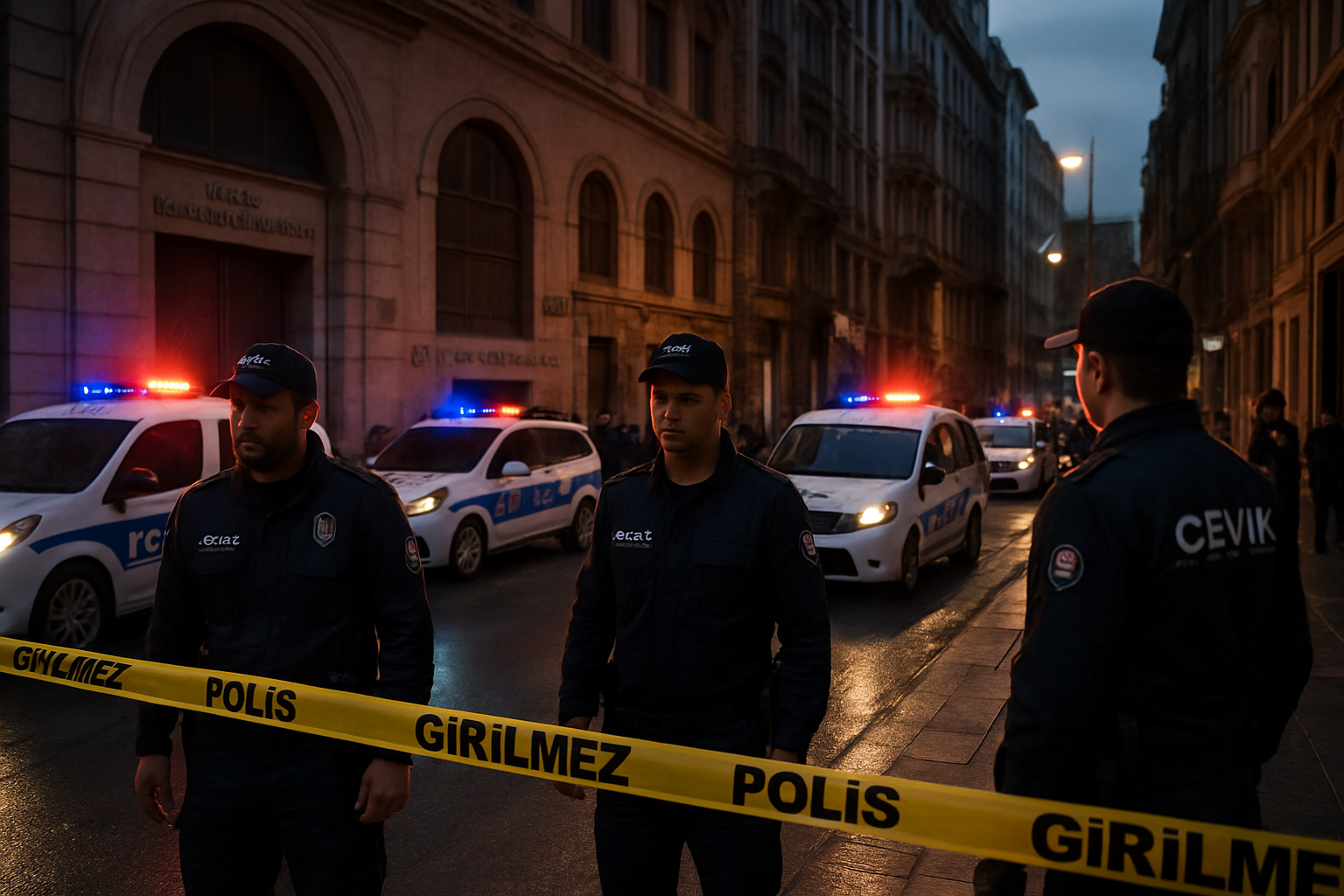
Three armed attackers opened fire on Turkish police outside the building housing Israel's consulate in Istanbul's Beşiktaş district on April 7, 2026, resulting in one attacker killed and two wounded before being neutralized by security forces. Two Turkish police officers sustained minor injuries in the approximately 10-minute gunfight that brought swift condemnation from Turkish President Recep Tayyip Erdoğan.
The attack occurred around noon local time when the three gunmen, later identified as brothers who had traveled from Izmit in a rented vehicle, approached the consulate area armed with long-barreled weapons and wearing camouflage clothing. Video footage from the scene showed one attacker carrying what appeared to be an assault rifle and wearing a brown backpack while taking cover behind a bus during the exchange of fire with police.
Swift Security Response Prevents Escalation
Istanbul Governor Davut Gül confirmed that Turkish security forces neutralized all three attackers, with one killed and two others wounded and captured. The rapid response by police prevented what could have been a far more devastating outcome in the busy commercial district.
"The attackers were neutralized through the decisive action of our security forces," Governor Gül stated during a press briefing. "Two of our police officers were wounded but their condition is stable."
Turkish Interior Minister Mustafa Cifti linked one of the attackers to a terrorist group that "exploits religion," though he did not specify which organization. Investigations revealed that two of the attackers were brothers, with one having a previous criminal record related to drug offenses.
Consulate Operations Suspended
The Israeli consulate was empty at the time of the attack, with diplomatic staff having been withdrawn due to heightened tensions between Turkey and Israel over the ongoing conflict in Gaza and broader Middle East crisis. The building houses multiple offices, but the consulate itself had suspended regular operations as a security precaution.
Israeli Prime Minister Benjamin Netanyahu's office released a statement thanking Turkish security forces for their rapid response while condemning what they called a "terrorist attack on Israeli diplomatic facilities."
Regional Context of Rising Tensions
The attack comes amid unprecedented regional tensions following the Iran-Israel conflict that began in March 2026 and the ongoing humanitarian crisis in Gaza and Lebanon. Turkey has been increasingly critical of Israeli military operations, with President Erdoğan warning of potential "genocide" and calling for international intervention.
"This cowardly attack against a diplomatic facility is unacceptable and will be met with the full force of Turkish law."
— President Recep Tayyip Erdoğan
The incident occurred during a period when Turkey has positioned itself as a mediator in regional conflicts, recently hosting diplomatic meetings with Saudi Arabia, Egypt, and Pakistan aimed at de-escalating Middle East tensions. Turkish officials emphasized that the attack would not deter their commitment to maintaining diplomatic security and regional peace efforts.
Investigation and Security Measures
Turkish authorities launched a comprehensive investigation to determine if the attackers had external support or connections to larger terrorist networks. The fact that the attackers came prepared with weapons, camouflage gear, and appeared to have conducted surveillance suggested a level of planning and coordination that concerned security officials.
Following the attack, Turkey implemented enhanced security measures at diplomatic facilities throughout Istanbul and other major cities. The incident highlighted ongoing vulnerabilities faced by diplomatic missions in the region amid heightened geopolitical tensions.
Intelligence sources indicated that the attackers may have been motivated by the broader Middle East conflict, though investigators were working to establish definitive links to any specific terrorist organizations or state actors.
International Reactions
The attack drew condemnation from international partners, with the United States expressing support for Turkey's security response and reaffirming the importance of protecting diplomatic facilities. European Union officials called the incident a reminder of the security challenges facing the region amid ongoing conflicts.
Cyprus authorities, whose British bases were recently targeted by Iranian forces, expressed solidarity with Turkey in addressing terrorist threats against diplomatic missions. The incident underscored how regional conflicts have increasingly spilled over into attacks on diplomatic and civilian targets.
Broader Security Implications
Security experts noted that the Istanbul attack followed a pattern of increased threats against Israeli and Western diplomatic facilities across the Middle East and Europe. Recent months have seen elevated security alerts at Israeli embassies and consulates worldwide due to regional tensions.
The swift neutralization of the attackers demonstrated the effectiveness of Turkish security preparations around sensitive diplomatic facilities. However, the incident raised concerns about the evolving nature of terrorist threats targeting diplomatic missions during periods of international crisis.
Turkish authorities emphasized that the attack would not undermine their commitment to hosting diplomatic facilities and maintaining Istanbul's role as a major international city bridging Europe and Asia. Enhanced security protocols developed in response to the incident are expected to be implemented at diplomatic facilities throughout Turkey.
The investigation continues as Turkish security services work to uncover the full scope of the plot and any potential connections to broader terrorist networks exploiting regional tensions for violent purposes.