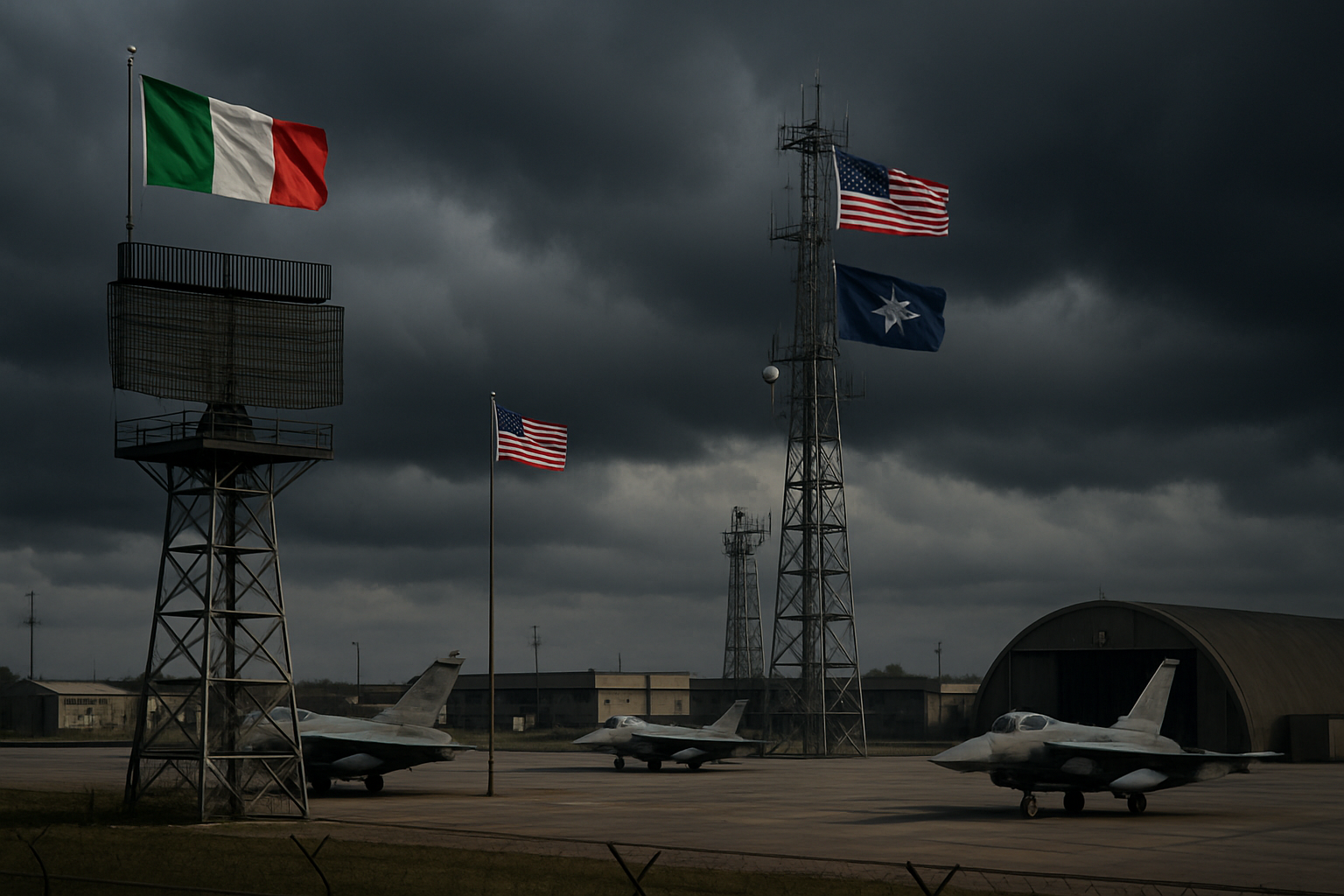
Italian military installations have become primary targets in an unprecedented escalation of Iranian drone attacks, with multiple strikes recorded at bases in Kuwait and Cyprus raising alarm over the security of European military assets deployed across the Middle East and Mediterranean.
The most recent attack occurred Saturday evening when Iranian drones struck Kuwait International Airport, causing damage to radar systems according to Kuwait Civil Aviation spokesman Abdullah Al-Rajhi. The assault represents part of Iran's broader "Operation True Promise 4" retaliation campaign, which has systematically targeted Western military infrastructure across the Gulf region since March 1.
Pattern of Systematic Targeting
Italian forces stationed at Ali Al Salem airbase in Kuwait have endured repeated attacks over the past two weeks, marking a dramatic escalation in Iran's military response to Operation Epic Fury. The base, which hosts both American and Italian personnel, was first targeted at the beginning of the current conflict and has since faced multiple drone incursions.
Chief of Defence General Staff Luciano Portolano confirmed in an official statement that a drone attack on Ali Al Salem "hit a shelter housing a remotely piloted aircraft of the Italian Task Force Air (TFA), which was destroyed." Crucially, all Italian personnel remained safe and uninjured during the assault.
"At the time of the attack, all personnel were safe and uninjured. The personnel remaining at the base are being deployed to carry out essential mission activities."
— General Luciano Portolano, Chief of Defence General Staff
The Italian Air Force Task Force has operated continuously in the region for 12 years, initially launched when ISIS dominated parts of Iraq and continuing after the defeat of the black flags in Mosul. These forces represent Italy's closest military assets to Iran, making them particularly vulnerable targets in the current escalation.
Regional Escalation Beyond Traditional Boundaries
The targeting of Italian bases extends beyond the immediate Middle Eastern theater. Iranian and Hezbollah drones have also struck RAF Akrotiri in Cyprus, where Italian aircraft have been observed operating in coordination with British forces. This represents the first attack on European sovereign territory since World War II, fundamentally altering the scope of the regional conflict.
The attacks on Italian positions are part of Iran's Revolutionary Guard Corps declaration that "no red lines remain," with all Western military assets now considered "legitimate targets" under their expanded rules of engagement. This systematic approach has affected multiple nations hosting Italian forces, including:
- Kuwait - Multiple drone strikes at Ali Al Salem airbase
- Cyprus - Coordinated attacks on RAF Akrotiri facilities
- UAE - Targeting of shared military installations
- Qatar - Attempts to strike Al Udeid airbase
Italy's Military Response and Defensive Measures
Italian Defence Minister Guido Crosetto addressed the escalating situation, stating he was following developments "with the Prime Minister and the government with maximum attention." Despite the loss of military assets, Crosetto emphasized that the destruction of the Italian drone "does not have repercussions on the security of our military personnel."
The Italian government has implemented several protective measures in response to the threats:
- Reduction of personnel at vulnerable installations
- Enhanced defensive postures at remaining facilities
- Coordination with NATO allies for air defense systems
- Participation in the international naval coalition protecting Cyprus
Italy has joined a unprecedented European military response, with Prime Minister Giorgia Meloni announcing Italian participation alongside the UK, France, and Germany in providing air defense capabilities to Gulf countries. This includes potential deployment of SAMP-T missile systems and naval frigates to the region.
Strategic Implications for Italian Defense Policy
The targeting of Italian military assets represents a significant challenge to Italy's regional defense strategy. With over 30,000 Italian citizens residing in the Gulf region and 2,000 troops deployed across various Middle Eastern installations, Italy faces unprecedented risks to both military and civilian personnel.
The attacks have prompted a fundamental reassessment of Italian military positioning in volatile regions. Despite the risks, Italian forces continue their essential mission activities, maintaining operational readiness while implementing enhanced security protocols.
International Coalition Response
The attacks on Italian assets have triggered the most significant European military coordination since the Cold War. Following the strikes on Cyprus, an unprecedented naval coalition has been assembled, including:
- HMS Dragon (British Type 45 destroyer)
- Spanish naval frigates
- French anti-missile systems via frigate Languedoc
- Italian naval deployments
- Netherlands and Greek naval vessels
This coalition represents the most concrete expression of European strategic autonomy in decades, demonstrating the continent's capacity for independent action when threatened. The response illustrates how attacks on individual European military assets have galvanized broader continental defense cooperation.
Historical Context and Unprecedented Nature
The current targeting of Italian bases occurs within the broader context of the most dangerous international crisis since the Cold War. The systematic nature of these attacks breaks with traditional geographical containment of Middle Eastern conflicts, bringing warfare directly to European military installations for the first time since 1945.
Italian military experts note that the technological sophistication of the drone attacks indicates Iranian capabilities have significantly evolved. The precision targeting of specific military assets while avoiding broader civilian casualties suggests a calculated strategy designed to pressure European governments without triggering Article 5 NATO responses.
"These attacks represent a fundamental shift in how regional conflicts can directly impact European security interests. Geographic boundaries no longer contain such confrontations."
— Italian Defense Ministry Analysis
Ongoing Security Assessments
The Italian Defense Ministry continues to monitor the evolving security situation with heightened concern. The attacks occur amid a broader regional crisis that has seen oil prices surge past $100 per barrel, over 18,000 flights cancelled worldwide, and the closure of the Strait of Hormuz affecting 40% of global oil transit.
For Italy, the immediate priorities remain the protection of personnel, maintenance of essential military operations, and coordination with international partners to establish effective defensive measures. The government has not ruled out additional military deployments to strengthen defensive capabilities in the region.
As this crisis continues to evolve, the security of Italian military assets abroad represents a critical test of both national defense capabilities and European solidarity. The systematic targeting of Italian bases marks a dangerous escalation that could reshape how European nations approach military deployments in volatile regions for decades to come.
Looking Forward: Implications for European Security
The attacks on Italian military bases serve as a watershed moment for European defense policy, demonstrating the vulnerability of overseas military assets to asymmetric threats. The successful coordination of defensive responses among European allies provides a template for future crisis management, while highlighting the necessity of enhanced protective measures for military personnel operating in contested regions.
As the international community grapples with containing this unprecedented regional escalation, the protection of Italian and other European military assets remains paramount. The coming days will prove critical in determining whether the current defensive measures prove sufficient or whether additional European military responses become necessary to safeguard personnel and installations across the Middle East and Mediterranean.