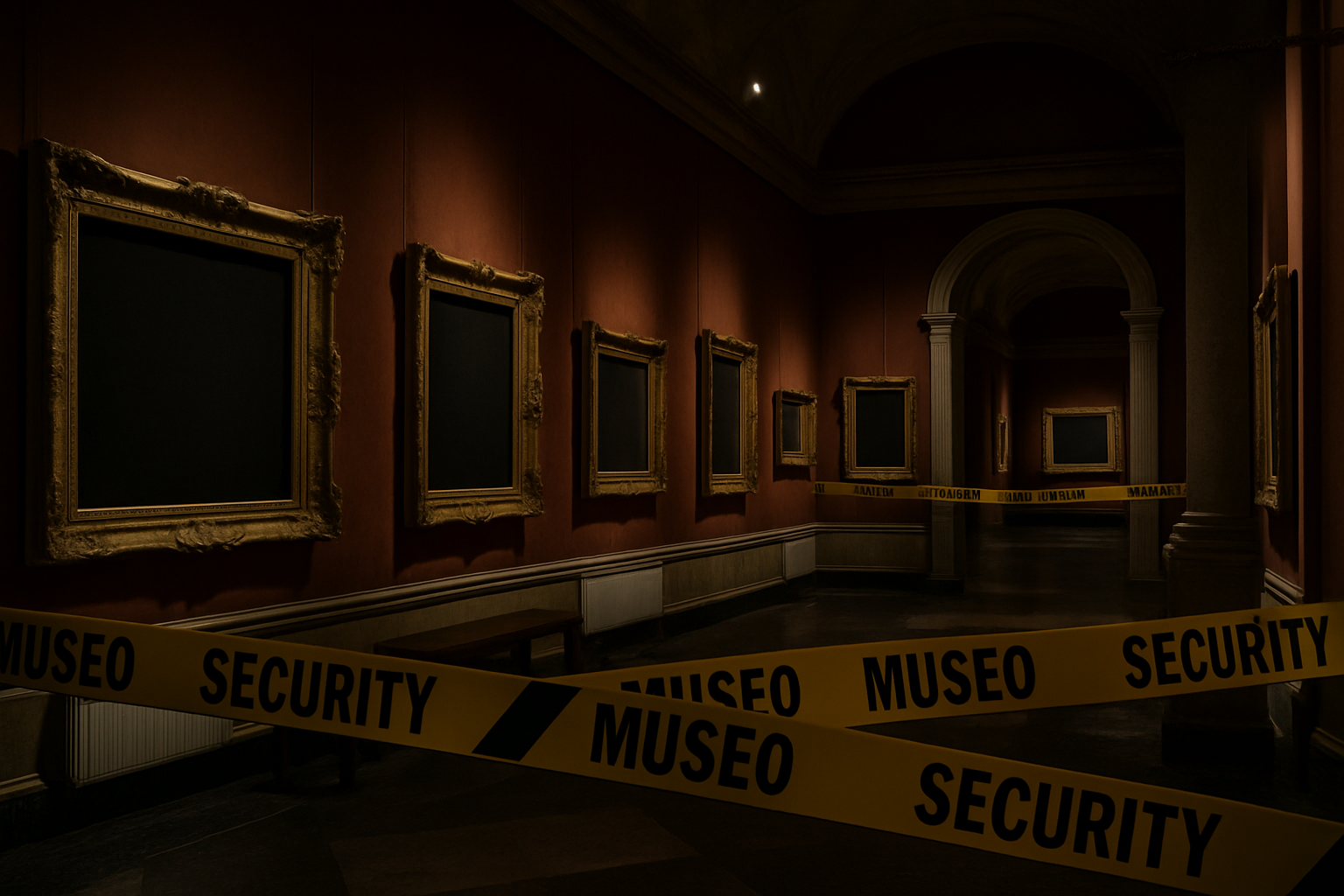
Four masked intruders executed one of Italy's most sophisticated art heists in recent history, stealing three French masterpieces worth up to €15 million from the prestigious Fondazione Magnani Rocca museum in a lightning-fast three-minute operation that went undetected for nearly a week.
The audacious theft targeted works by Pierre-Auguste Renoir, Paul Cézanne, and Henri Matisse during the night of March 22-23, 2026, at the museum's villa location in Mamiano di Traversetolo, approximately 15 kilometers from Parma in northern Italy. The crime was not discovered until March 29, when authorities publicly announced the shocking loss of three irreplaceable works from the museum's prized collection.
The Stolen Masterpieces
The thieves demonstrated remarkable selectivity and knowledge, bypassing less valuable works to target specific French Impressionist and Post-Impressionist pieces displayed in the museum's ground-floor gallery. The stolen works include:
- Renoir's "Les Poissons" (The Fish) - An oil on canvas from circa 1917, representing one of the rare Renoir works in a permanent Italian collection and valued at several million euros
- Cézanne's "Still Life with Cherries" - Created between 1885-1887, showcasing the master's distinctive approach to form and color
- Matisse's "Odalisque on the Terrace" - A watercolor work exemplifying the artist's fascination with Orientalist themes
Portuguese sources have estimated the collective value of the stolen works at up to €9 million, while other reports suggest the total could reach €15 million, highlighting the discrepancies that often emerge in art valuation following major thefts.
A Meticulously Planned Operation
The investigation, led by Italy's specialized Carabinieri Cultural Heritage Protection Unit, has revealed the hallmarks of a professional operation that required extensive reconnaissance and intimate knowledge of both the museum's security systems and collection layout. The speed and precision of the three-minute theft suggests the perpetrators had conducted thorough advance planning.
"This was clearly not an opportunistic crime," explained a source close to the investigation. "The thieves knew exactly what they were looking for and where to find it. They moved through the museum with the confidence of individuals who had studied every detail of the layout."
The choice of target location may have provided advantages to the criminals. Unlike purpose-built museum facilities with comprehensive security infrastructure, the Fondazione Magnani Rocca operates from a converted villa, which may have presented vulnerabilities that the thieves were able to exploit.
International Response and Recovery Efforts
Following the discovery of the theft, international law enforcement agencies immediately coordinated their response. The stolen works have been entered into multiple databases, including:
- Interpol's stolen art database
- The FBI Art Crime Team's records
- The Art Loss Register, a private international database
The sophisticated nature of the operation has led investigators to suspect the involvement of an international criminal network, possibly with pre-arranged buyers or plans for ransom negotiations. Such professional art thefts often involve buyers who may hold the works in private collections for years or attempt to sell them through underground art market channels.
"The level of planning and execution suggests this was carried out by individuals with significant experience in art theft. This is not the work of amateurs."
— Cultural Heritage Protection Unit Official
Context of European Art Crime
This theft occurs during what cultural observers have dubbed the "2026 Cultural Renaissance," a period of unprecedented European cultural activity that has seen increased accessibility initiatives and expanded programming at museums across the continent. However, this very openness may have created new vulnerabilities that criminal organizations are learning to exploit.
The Fondazione Magnani Rocca heist joins a concerning pattern of sophisticated art crimes targeting European cultural institutions. The scale and professional execution of this theft highlights ongoing challenges in balancing public accessibility with adequate security protection for invaluable cultural heritage.
Impact on Cultural Heritage Protection
The theft has prompted immediate security reassessments across European cultural institutions, with many reviewing their protection protocols and considering enhanced measures. The Fondazione Magnani Rocca has temporarily closed while authorities complete their investigation and implement upgraded security systems.
Art security experts emphasize that the theft represents a concerning evolution in art crime, with criminals demonstrating increasingly sophisticated approaches to bypassing modern security systems. The delay in detection – nearly a week – also raises questions about monitoring procedures at cultural institutions housed in converted historical buildings.
Challenges for Smaller Institutions
The targeting of the Fondazione Magnani Rocca, rather than a major international museum, reflects a shift in criminal strategy. Smaller institutions may lack the comprehensive security infrastructure of major museums while still housing valuable collections, making them attractive targets for professional art thieves.
Cultural heritage professionals are calling for increased support and resources for regional museums and foundations to enhance their security capabilities without compromising their community engagement missions.
Investigation Continues
As the international investigation continues, authorities remain hopeful that the professional nature of the operation may eventually provide clues to the perpetrators' identities. The specific selection of French Impressionist and Post-Impressionist works suggests the thieves were either working to fulfill specific orders or have extensive knowledge of the international art market.
The case has drawn global attention, with international media coverage spanning multiple continents, confirming the global significance of both the cultural loss and the sophisticated nature of the criminal operation.
Recovery efforts for stolen artwork can take years or even decades, with some famous art thefts remaining unsolved for generations. However, the immediate international response and coordination between law enforcement agencies worldwide provides hope that these masterpieces may eventually be returned to their rightful place in Italy's cultural heritage.
The Fondazione Magnani Rocca theft stands as a stark reminder of the ongoing threats facing Europe's cultural treasures and the need for continued vigilance in protecting humanity's artistic legacy for future generations.