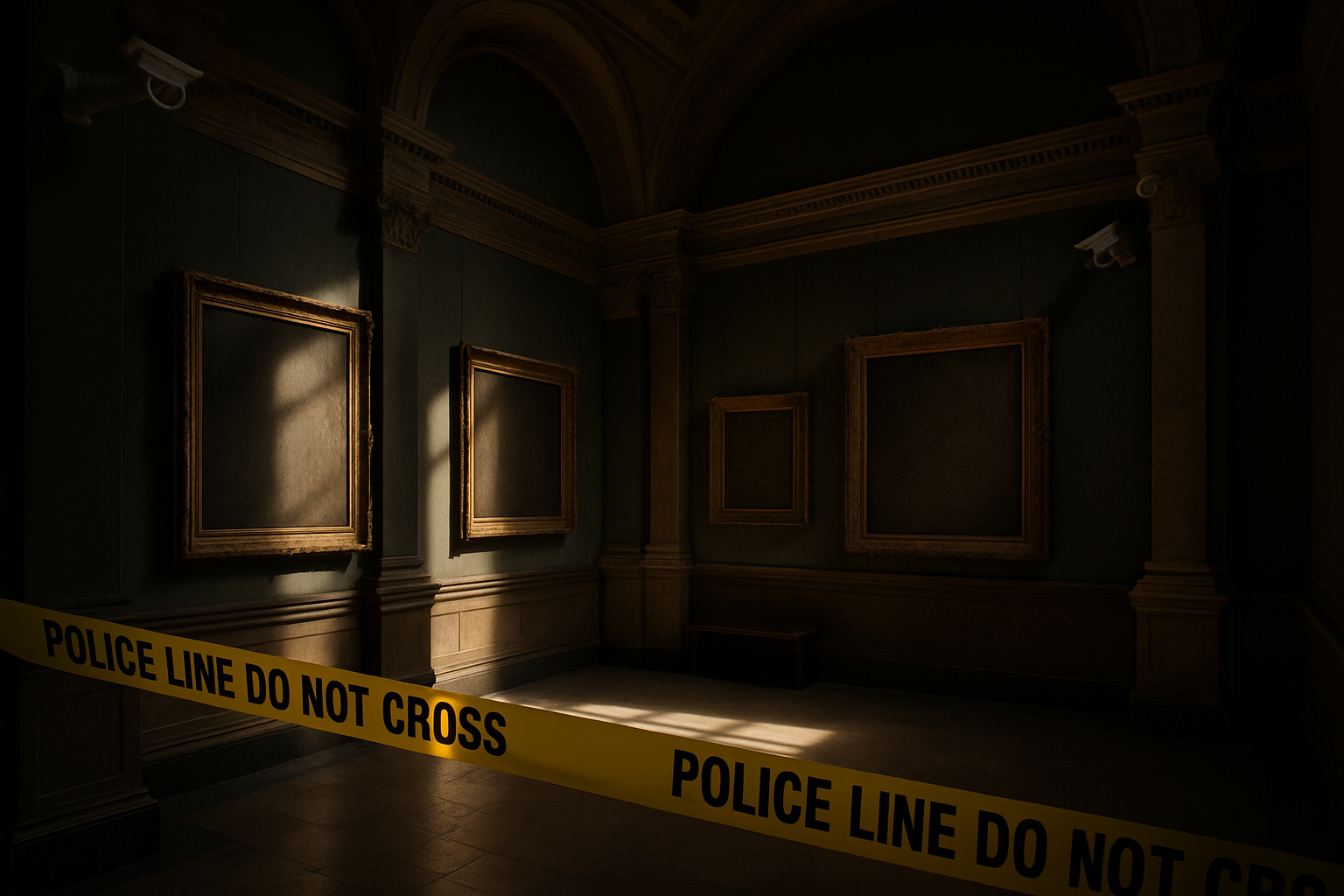
Four masked intruders executed one of Italy's most sophisticated art heists in recent history, stealing three masterpieces by renowned French artists Renoir, Cézanne, and Matisse from the prestigious Fondazione Magnani-Rocca in a precision three-minute raid that demonstrated intimate knowledge of security systems and the museum's layout.
The theft occurred during the night of March 22-23, 2026, at the villa in Mamiano di Traversetolo, approximately 15 kilometers from Parma in northern Italy. The stolen works—Renoir's "Les Poissons" (The Fish), Cézanne's "Still Life with Cherries," and Matisse's "Odalisque on the Terrace"—are collectively valued at up to 9 million euros according to Portuguese sources familiar with the international art market.
A Week-Long Mystery
Perhaps most striking about this criminal operation was its stealth execution. The theft went completely undetected for nearly one week before being announced publicly on March 29, 2026. This delay suggests either sophisticated methods used to mask the break-in or significant gaps in the museum's security monitoring protocols.
The stolen works represent some of the finest examples of French Impressionist and Post-Impressionist art in Italy's cultural collections. Renoir's "Les Poissons," painted around 1917 and executed in oil on canvas, is particularly rare as one of the few Renoir pieces in a permanent Italian collection. The work, valued at several million euros alone, showcases the artist's masterful handling of light and color that defined his later career.
Professional Criminal Operation
Italian authorities, led by the Carabinieri Cultural Heritage Protection Unit, have characterized the heist as demonstrating "sophisticated planning and inside knowledge of security systems." The precision of the operation—bypassing less valuable artworks to target specific French Impressionist and Post-Impressionist pieces—indicates extensive reconnaissance and possible assistance from individuals familiar with the collection.
The targeted nature of the theft is particularly telling. Rather than attempting to steal whatever was most accessible, the intruders deliberately sought out three specific works by masters of French art. This suggests either a commissioned theft with pre-arranged buyers or criminals with sophisticated knowledge of the international art market.
"This represents one of the most sophisticated European art heists in recent history, highlighting vulnerabilities in cultural heritage protection during a period of increased accessibility initiatives."
— Carabinieri Cultural Heritage Protection Unit
Historical Context and Broader Implications
The Magnani-Rocca heist occurs during what cultural experts have termed the "2026 Cultural Renaissance"—a period of unprecedented global cultural activity and international cooperation in arts preservation. This context makes the theft particularly significant, as it demonstrates how increased cultural accessibility can create security vulnerabilities.
The villa setting in Mamiano di Traversetolo proved more vulnerable than purpose-built museum facilities, raising questions about the security protocols for cultural institutions housed in historic buildings. The Fondazione Magnani-Rocca, while maintaining world-class artworks, operates in a residential villa environment that may lack the comprehensive security infrastructure of major metropolitan museums.
International Investigation Launched
The stolen masterpieces have been entered into international databases including Interpol, the FBI Art Crime Team, and the Art Loss Register, activating global recovery networks. This international cooperation represents standard protocol for major art thefts, though the sophisticated nature of the Magnani-Rocca operation indicates an extended investigation timeline may be required.
Art recovery experts note that the professional approach of the theft suggests involvement of an international criminal network, possibly with connections to collectors willing to purchase stolen masterpieces or criminal organizations capable of demanding ransom for the works' return.
The investigation has prompted a reassessment of security protocols across European cultural institutions, highlighting the ongoing challenge of balancing public access to cultural treasures with adequate protection requirements. The museum has temporarily closed for security assessment and investigation purposes.
Cultural Heritage Under Pressure
The theft represents broader challenges facing cultural heritage protection in the 21st century. As museums and cultural institutions work to increase accessibility and public engagement, they must simultaneously protect irreplaceable artistic treasures from increasingly sophisticated criminal enterprises.
The timing of the heist, occurring during a period of enhanced cultural exchange and cooperation across Europe, underscores the complex security environment facing cultural institutions. The success of this operation may influence criminal organizations' approaches to art theft across the continent.
Art security specialists emphasize that the Magnani-Rocca case demonstrates why cultural heritage protection requires resources equivalent to those devoted to other critical infrastructure sectors. The economic and cultural value of these masterpieces extends far beyond their monetary worth, representing centuries of artistic achievement and cultural continuity.
Recovery Efforts and Future Implications
While the sophisticated nature of the theft presents challenges for recovery efforts, international cooperation networks have been activated across Europe and beyond. Previous high-profile art thefts have sometimes resulted in successful recoveries years or even decades after the initial crimes, offering hope for the eventual return of these masterpieces.
The case serves as a watershed moment for European cultural institutions, potentially driving transformative rather than reactive approaches to art security. As cultural organizations work to maintain public access while protecting irreplaceable treasures, the Magnani-Rocca theft provides crucial lessons about the evolution of art crime in the digital age.
The investigation continues as authorities work to identify the perpetrators and recover the stolen masterpieces, while the global art community grapples with the implications of this sophisticated criminal operation for the future of cultural heritage protection.