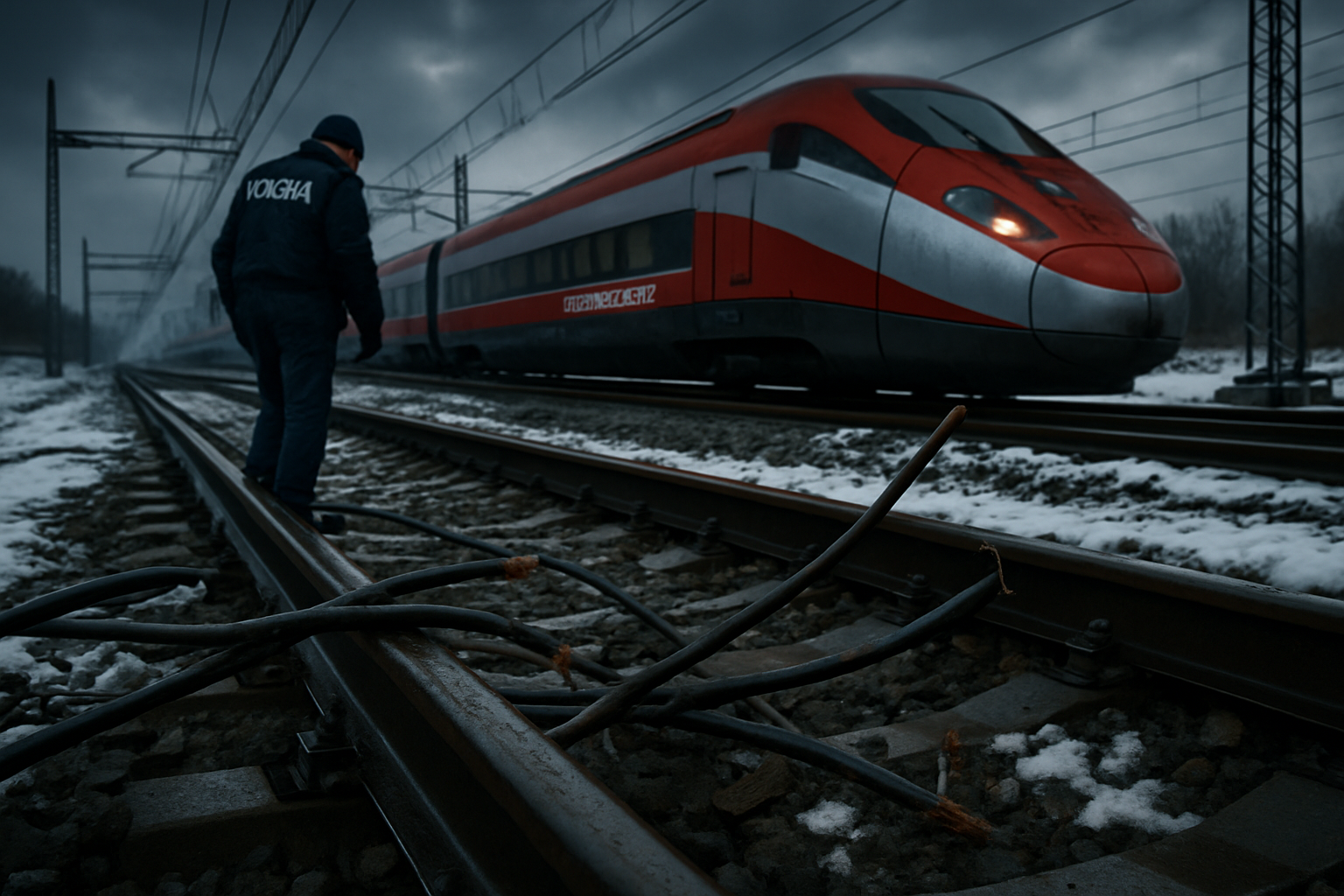
Italy's railway network faced a coordinated sabotage campaign on Saturday, February 14, 2026, causing severe disruptions to high-speed train services between major cities, with delays reaching up to 120 minutes on critical routes including Naples-Rome and connections toward Florence.
The latest incidents occurred during the Milano-Cortina Winter Olympics, adding to a series of infrastructure attacks that have plagued Italy's transportation system throughout the Games period. Italian authorities are treating the incidents as deliberate criminal acts targeting the country's strategic railway infrastructure.
Widespread Delays Across Major Routes
High-speed train services between Naples and Rome experienced the most severe disruptions, with passengers facing delays exceeding two hours. The incidents also affected northbound connections toward Florence, creating a cascade effect across Italy's primary transportation corridor that connects the south with the capital and northern regions.
Transport Minister Matteo Salvini condemned the incidents as "criminal acts," emphasizing the deliberate nature of the attacks on Italy's railway infrastructure. The timing during the Winter Olympics has raised particular concerns about the security of critical transportation systems during major international events.
Regional train services also faced significant disruptions, with trains from Italy's interior regions experiencing delays of at least one hour, according to reports from Bulgarian media citing Reuters coverage of the incidents.
Olympic Route Security Concerns
The sabotage incidents have particularly impacted the railway line connecting venues for the Milano-Cortina Winter Olympics. Lecco's provincial committee for order and security has adopted a comprehensive prevention and control strategy following damage to the Lecco-Colico route, which serves as a crucial Olympic transportation link.
Enhanced security measures now include patrol units positioned along railway tracks and intensive monitoring of critical railway junctions. The committee's response reflects the elevated security posture required to protect Olympic transportation infrastructure from further attacks.
These latest incidents follow previous sabotage targeting electrical cables near Bologna during the Olympics' opening weekend, which authorities investigated as potentially coordinated attacks designed to maximize disruption during peak passenger movements.
Pattern of Infrastructure Targeting
The February 14 incidents represent the continuation of a troubling pattern that began during the first days of the Milano-Cortina Winter Olympics. Initial attacks targeted electrical cable systems at three separate locations near Bologna, affecting high-speed and intercity train services across northern Italy.
The sophisticated nature of these attacks suggests technical knowledge and careful planning. Investigators have noted that the targeting of electrical systems indicates familiarity with railway infrastructure vulnerabilities, pointing to possible insider knowledge or extensive reconnaissance.
Previous incidents stranded thousands of passengers at Milan's central station and other major railway hubs, exposing the vulnerability of Italy's transportation backbone during periods of intense international scrutiny and increased passenger volumes.
Enhanced Security Response
Italian authorities have implemented comprehensive security enhancements across the railway network in response to the escalating threats. The measures include:
- Continuous patrol coverage along critical railway sections
- Advanced monitoring systems at key railway junctions
- Increased coordination between national security agencies
- Enhanced protection for electrical infrastructure systems
The investigation involves multiple law enforcement agencies, with international cooperation being explored given the Olympic context and potential foreign interference concerns. Authorities are examining various motives, from domestic terrorism to international efforts aimed at disrupting the Winter Olympics.
Olympic Games Impact
The timing of these attacks during the Milano-Cortina Winter Olympics has amplified their impact, as the railway system serves as the primary transportation backbone connecting Olympic venues across northern Italy. The Games represent the most geographically dispersed Winter Olympics in history, spanning over 400 kilometers across seven venues.
Earlier incidents during the Olympics included pro-Russian cyberattacks on Olympic venues and Italian embassies, which were successfully countered by Italian security services under Foreign Minister Antonio Tajani's coordination. The railway sabotage represents a physical escalation from digital attacks.
The attacks have also coincided with civil unrest, including protests in Milan where approximately 10,000 demonstrators opposed the Olympics, leading to violent clashes with police. Prime Minister Giorgia Meloni condemned the protesters as "enemies of Italy," reflecting the heightened tensions surrounding the Games.
Transportation System Vulnerabilities
The incidents have exposed significant vulnerabilities in Italy's critical transportation infrastructure. The Bologna hub, which was targeted in earlier attacks, serves as a critical junction for north-south Italian rail traffic, making it an attractive target for those seeking maximum disruption.
The railway system's role as the primary Olympic transportation backbone has made it particularly vulnerable during the Games. With massive passenger movements between venues and international visitors relying heavily on rail connections, any disruption has outsized consequences.
Security experts note that modern transportation networks face increasing threats from coordinated attacks that can cause widespread disruption with relatively limited resources, highlighting the need for enhanced protection of critical infrastructure.
Investigation and Response
Judicial authorities are conducting comprehensive investigations into all incidents, working to establish connections between the various attacks and identify those responsible. The investigation has taken on added urgency given the international implications and the ongoing Olympic Games.
The sophisticated coordination of the attacks suggests careful planning and possibly multiple participants with detailed knowledge of railway operations and vulnerabilities. Investigators are examining whether the incidents represent a coordinated campaign by a single group or separate but related actions.
Enhanced surveillance and protective measures are expected to remain in place beyond the conclusion of the Olympics, as authorities work to prevent future attacks and restore confidence in Italy's transportation security.
Broader Security Context
These railway sabotage incidents occur within a broader context of security challenges facing Italy during the Winter Olympics. The country has dealt with cyberattacks, civil unrest, and now physical infrastructure attacks, testing the comprehensive security apparatus established for the Games.
The attacks demonstrate the vulnerability of major sporting events to disruption tactics that target critical infrastructure rather than venues directly. This approach can create widespread inconvenience and security concerns while avoiding the heavily protected Olympic sites themselves.
International security experts are closely monitoring Italy's response to these incidents, as they provide valuable lessons for protecting critical infrastructure during major international events. The Milano-Cortina experience is likely to influence security planning for future Olympics and other major sporting competitions.
As investigations continue and security measures remain heightened, Italian authorities face the ongoing challenge of maintaining public confidence in transportation security while ensuring the successful conclusion of the Winter Olympics. The incidents serve as a stark reminder of the persistent threats facing modern transportation infrastructure in an era of increasing security challenges.