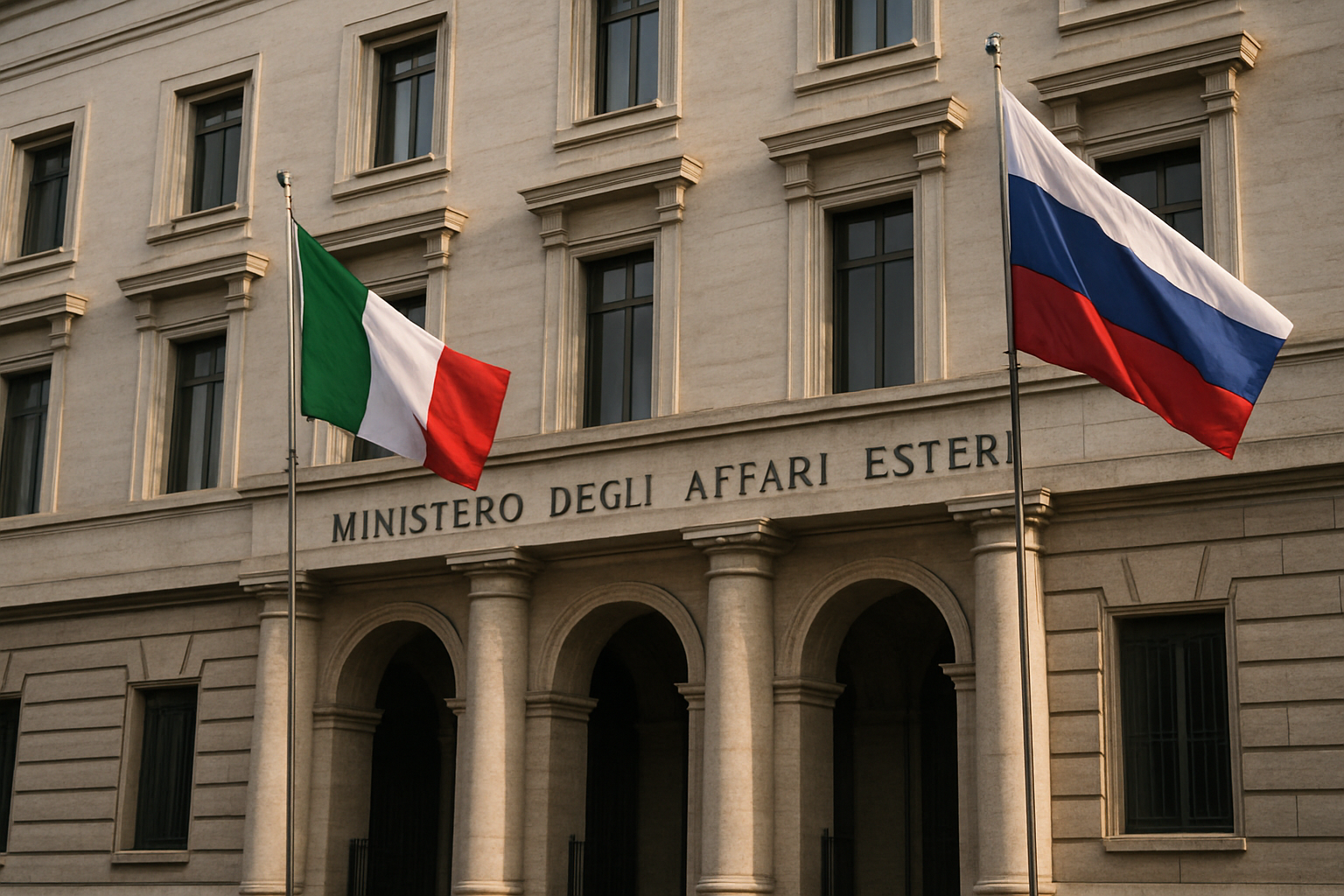
Italy has summoned the Russian ambassador following insulting remarks made by a prominent Russian television presenter about Prime Minister Giorgia Meloni, marking another deterioration in diplomatic relations between Rome and Moscow amid the ongoing Ukraine crisis.
Italian Foreign Minister Antonio Tajani announced Tuesday that Russian Ambassador Alexei Paramonov had been called to the Foreign Ministry to receive an official protest over comments made by television host Vladimir Solovyov during his program on "Solovyov Live."
Escalating Diplomatic Crisis
According to Russian media reports, Solovyov referred to Prime Minister Meloni using highly offensive language, calling her a "fascist creature" and claiming that "betrayal is her second name." The propagandist also alleged that Meloni had betrayed former President Trump, "to whom she had previously sworn allegiance."
The remarks, which were broadcast on Russian state-affiliated media, have been condemned across Italy's political spectrum and represent a significant breach of diplomatic protocol between the two nations.
Historical Context of Italy-Russia Relations
This diplomatic incident occurs against the backdrop of severely strained Italy-Russia relations since the onset of the Ukraine conflict. Italy has been a strong supporter of European Union sanctions against Russia and has provided substantial military and humanitarian aid to Ukraine.
The memory of Italy's foreign policy challenges with Russia dates back to various diplomatic tensions, but the current crisis represents one of the most serious breaches of diplomatic courtesy in recent years.
Broader European Response
Italy's response to the insulting comments reflects a broader European stance against Russian information warfare tactics. European leaders have consistently condemned Russian media's use of inflammatory rhetoric against Western officials as part of Moscow's broader strategy to undermine European unity.
The incident comes at a time when European nations are grappling with Russian disinformation campaigns and attempts to influence domestic politics through state-controlled media outlets.
"These remarks are completely unacceptable and contrary to the basic principles of diplomatic relations between states."
— Italian Foreign Ministry Statement
Impact on Diplomatic Relations
The summoning of Ambassador Paramonov represents a formal diplomatic protest and signals Italy's unwillingness to tolerate personal attacks against its leadership. Such diplomatic démarches are typically reserved for serious breaches of international protocol and can have lasting effects on bilateral relations.
Foreign Minister Tajani's decision to publicize the summoning indicates the Italian government's intention to make clear that such rhetoric will not be tolerated, even as both nations maintain formal diplomatic channels.
Television Propaganda and Diplomacy
Vladimir Solovyov is known as one of Russia's most prominent television propagandists, regularly hosting shows that promote Kremlin talking points and attack Western leaders. His program "Solovyov Live" has frequently featured inflammatory rhetoric against European and American officials.
While the Russian government maintains that state media operates independently, the Kremlin has rarely distanced itself from such inflammatory comments by high-profile television hosts, leading to diplomatic tensions with multiple countries.
European Solidarity
The incident highlights the challenges facing European leaders who have taken strong stances against Russian actions in Ukraine. Personal attacks by Russian media figures appear to be part of a broader strategy to intimidate and delegitimize Western leadership.
Italy's firm response sends a message to other European partners about the importance of defending democratic leaders from such verbal attacks, potentially encouraging similar responses from other nations facing comparable situations.
Implications for Future Relations
This diplomatic incident further complicates an already tense relationship between Italy and Russia. With ongoing sanctions, military support for Ukraine, and fundamental disagreements over international law, the relationship between Rome and Moscow continues to deteriorate.
The personal nature of the attacks against Prime Minister Meloni adds an additional layer of complexity to diplomatic relations, potentially making future dialogue more difficult even when broader geopolitical circumstances might otherwise favor improved communication.
Regional Security Considerations
Italy's response must be viewed within the broader context of European security concerns and the ongoing conflict in Ukraine. As a key NATO ally and EU member state, Italy's diplomatic stance carries implications beyond bilateral relations with Russia.
The incident demonstrates how information warfare and diplomatic provocations have become integral components of the broader European security challenge, requiring coordinated responses from Western allies.
As tensions continue to escalate between Russia and European nations, incidents like this television attack on Prime Minister Meloni serve as reminders of the deteriorating state of diplomatic norms and the challenges facing international relations in an era of increased great power competition.