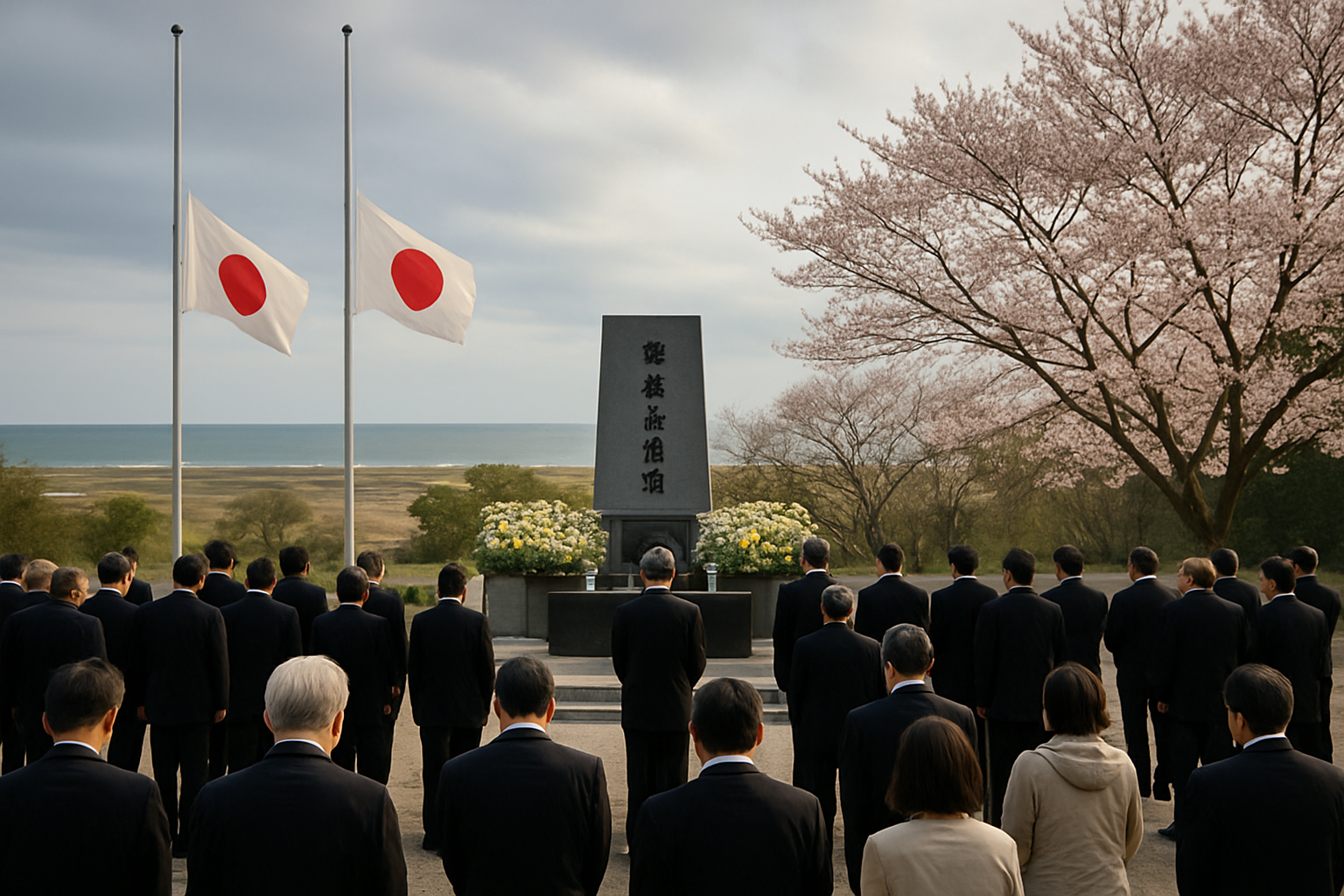
Japan on Wednesday solemnly marked the 15th anniversary of the Great East Japan Earthquake and tsunami that devastated the nation's northeastern coast, with Prime Minister Sanae Takaichi pledging to ensure the invaluable lessons from the disaster are handed down to future generations.
The magnitude 9.0 earthquake that struck off Japan's northeast coast on March 11, 2011, triggered a massive tsunami that killed more than 15,000 people and displaced hundreds of thousands. The disaster also caused the world's worst nuclear accident since Chernobyl when the Fukushima Daiichi Nuclear Power Plant suffered meltdowns in three reactors.
Fifteen years later, the affected regions continue to grapple with profound challenges. According to French media reports, despite extensive government investment in decontamination efforts and financial incentives to encourage population return to irradiated zones around Fukushima, only 17% of original residents have returned to their homes.
A Day of National Remembrance
The anniversary holds special significance as one of the defining moments in modern Japanese history. The disaster fundamentally changed Japan's approach to nuclear energy, disaster preparedness, and regional development. The earthquake registered as one of the most powerful ever recorded globally, demonstrating the devastating force of nature that can reshape entire coastlines and communities.
Prime Minister Takaichi's commitment to preserving the lessons of March 11 reflects Japan's broader effort to transform tragedy into wisdom for future disaster preparedness. The government has invested billions of yen in reconstruction efforts, advanced tsunami warning systems, and improved building codes designed to withstand massive seismic events.
Fukushima's Long Shadow
The nuclear catastrophe at Fukushima remains one of the most complex and long-lasting consequences of the 2011 disaster. The plant's meltdowns forced the evacuation of residents within a 20-kilometer radius and created exclusion zones that persist today. The government's efforts to encourage resettlement have met with limited success, with many former residents choosing to rebuild their lives elsewhere rather than return to areas they no longer view as safe.
The low return rate of just 17% to previously irradiated areas highlights the deep psychological and practical barriers that persist even after extensive decontamination work. Many families, particularly those with young children, remain reluctant to return despite official assurances about safety levels and radiation monitoring.
The Fukushima crisis also triggered a fundamental reassessment of Japan's energy policy. The country, which had previously relied heavily on nuclear power, shut down most of its nuclear reactors in the immediate aftermath of the disaster. The gradual restart of some facilities has been a contentious political and social issue, reflecting ongoing public concerns about nuclear safety.
Contemporary Context and Energy Security
The 15th anniversary comes at a time when Japan faces new energy security challenges. Recent memory entries indicate that Japan considered deploying its strategic petroleum reserves for the first time since the 2011 Fukushima disaster during the March 2026 Middle East crisis, when oil prices surged above $100 per barrel due to Iran's closure of the Strait of Hormuz.
This development underscores how the 2011 disaster continues to influence Japan's strategic planning. The country's 95% dependence on Middle Eastern oil imports, with 70% transiting through the vulnerable Strait of Hormuz, represents a strategic vulnerability that policymakers consistently evaluate against the backdrop of the 2011 crisis experience.
"The lessons of March 11, 2011, remain as relevant today as they were fifteen years ago, particularly regarding our energy security and disaster preparedness."
— Energy policy analyst
Regional Recovery and Challenges
The reconstruction of Japan's northeastern prefectures represents one of the largest disaster recovery efforts in modern history. New seawalls, elevated buildings, and relocated communities dot the coastline, serving as both protection against future tsunamis and monuments to resilience. However, these physical improvements cannot address all the challenges facing the region.
Population decline, particularly among younger residents who moved away after the disaster, has created demographic challenges that extend beyond radiation concerns. Many coastal communities struggle with aging populations and reduced economic activity, issues that compound the direct effects of the 2011 disaster.
Agricultural and fishing industries, which formed the backbone of many local economies, have faced particular difficulties. While radiation levels in most areas have returned to safe levels, consumer perception and international market access have been slower to recover. The processed water release from the Fukushima plant, completed in fiscal 2025, marked progress in the decommissioning process but also reignited debates about long-term environmental impacts.
Lessons for Global Disaster Preparedness
Japan's experience with the Great East Japan Earthquake has provided valuable insights for international disaster preparedness and response. The country's advanced earthquake early warning systems, tsunami evacuation procedures, and post-disaster communication protocols have been studied and adapted by nations worldwide.
The disaster highlighted the importance of comprehensive risk assessment that accounts for cascading failures across multiple systems. The combination of earthquake, tsunami, and nuclear crisis demonstrated how natural disasters can trigger technological failures with far-reaching consequences.
International cooperation in disaster response and recovery has also evolved significantly since 2011, with Japan playing a leading role in sharing expertise and supporting other nations facing similar challenges. The country's experience with long-term recovery planning, community resilience building, and managing the psychological impacts of displacement has informed global best practices.
Looking Forward
As Japan marks this solemn anniversary, the focus remains on honoring those lost while building a more resilient future. The ongoing challenges in fully recovering affected communities serve as reminders that disaster recovery is measured not just in rebuilt infrastructure but in restored lives and communities.
The commitment to preserving and transmitting the lessons of March 11, 2011, reflects Japan's determination to ensure that future generations benefit from the painful knowledge gained through this tragedy. From improved building standards to enhanced early warning systems, the legacy of the Great East Japan Earthquake continues to shape policies designed to protect lives and communities.
Prime Minister Takaichi's pledge to preserve these lessons for future generations acknowledges that while the immediate emergency phase has long passed, the work of building true resilience—social, economic, and environmental—continues. The relatively low return rates to some affected areas remind us that recovery involves not just physical reconstruction but the restoration of confidence, community, and hope.