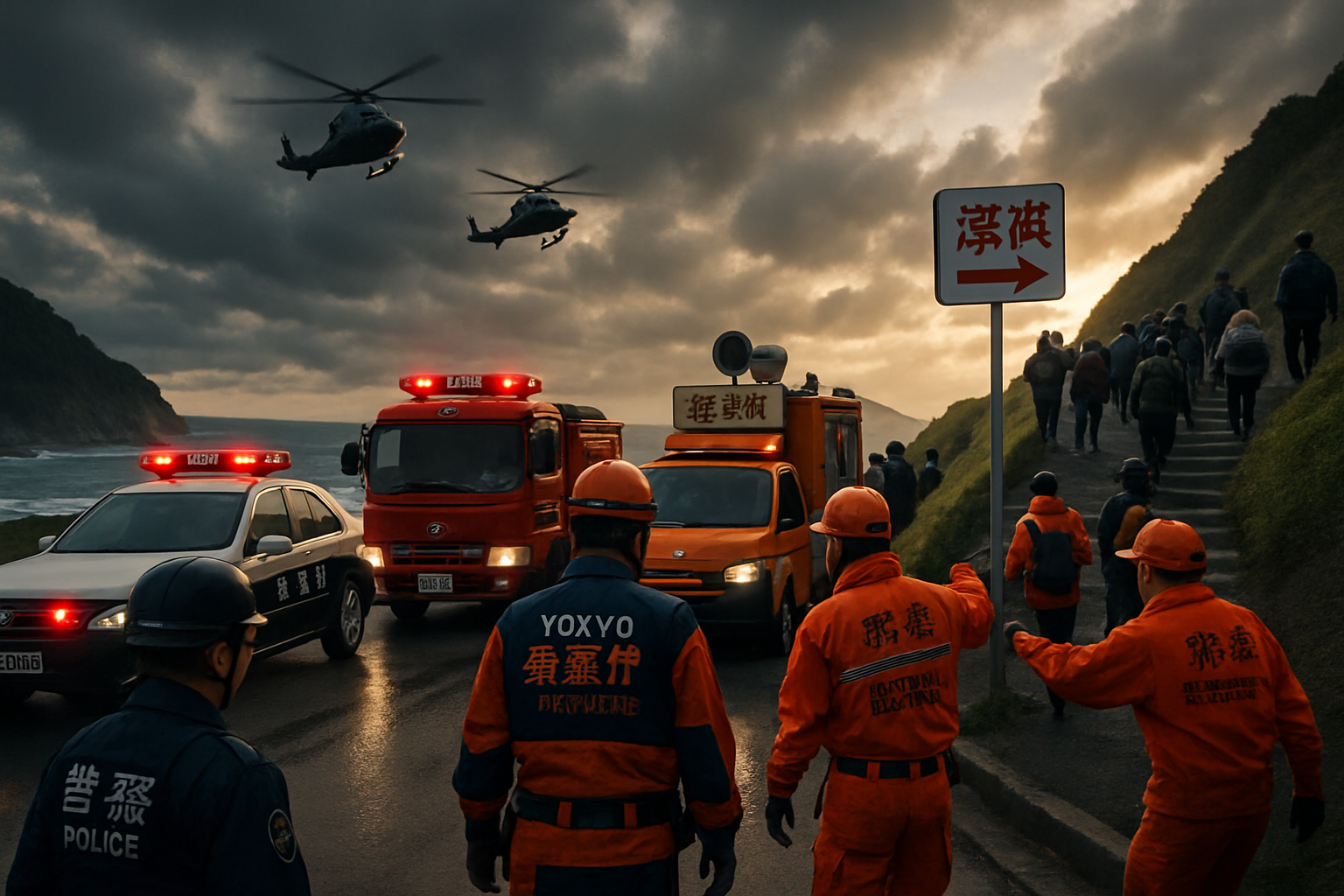
A powerful 7.7-magnitude earthquake struck off Japan's northeastern coast on Monday evening, triggering widespread tsunami warnings and prompting immediate evacuations as authorities warned of potential waves reaching up to three meters in height.
The earthquake occurred at 16:53 local time in Pacific waters off the Sanriku coast, approximately 120 kilometers from Iwate Prefecture, according to the Japan Meteorological Agency (JMA). The tremor was initially reported as magnitude 7.4-7.5 but was later revised upward to 7.7, with its epicenter located at a depth of 19-20 kilometers beneath the Pacific Ocean.
Immediate Response and Evacuations
Japan's sophisticated early warning systems immediately sprang into action, with tsunami alerts issued for Hokkaido, Iwate, and Aomori prefectures. The JMA warned residents to "evacuate immediately from coastal regions and areas near rivers to safer locations such as higher ground or evacuation buildings."
The first tsunami waves, measuring 80 centimeters in height, reached Kuji port in Iwate Prefecture at 17:34 local time, following earlier waves of 70 centimeters recorded at 17:32. While these initial waves were smaller than feared, authorities maintained their warnings as larger waves were forecast for the region.
Prime Minister Sanae Takaichi quickly established an emergency task force and urged immediate coastal evacuations, demonstrating the swift government response protocols developed following the catastrophic 2011 Tōhoku earthquake and tsunami.
Seismic Impact and Regional Effects
The earthquake registered "upper 5" on Japan's unique 0-7 seismic intensity scale, generating tremors powerful enough to shake large buildings hundreds of kilometers away in Tokyo. The widespread impact demonstrated the substantial regional reach of the seismic event across northern and eastern Japan.
International seismic monitoring stations across the Pacific quickly detected the earthquake, with various countries reporting magnitude readings between 7.4 and 7.7 as data was processed and refined. The shallow depth of 19-20 kilometers significantly increased both the intensity of ground shaking and tsunami generation potential.
Footage from affected areas showed orderly evacuations as residents heeded official warnings, moving away from coastal areas and seeking higher ground. Emergency services across the region were placed on high alert, with continuous monitoring of aftershock activity.
Historical Context and Preparedness
The earthquake struck in the same general region devastated by the magnitude 9.0 Great East Japan Earthquake of March 11, 2011, which killed over 15,000 people and triggered the Fukushima nuclear crisis. The timing—just weeks after Japan commemorated the 15th anniversary of that disaster—served as a stark reminder of the nation's ongoing vulnerability to seismic events.
"This demonstrates the ongoing geological activity in the region and the importance of maintaining constant vigilance and preparedness,"
— Seismological Expert, speaking on condition of anonymity
Japan has invested billions in reconstruction and advanced warning systems since 2011, including enhanced building codes, comprehensive tsunami barriers, and sophisticated early detection networks. The swift response to Monday's earthquake validated these investments in disaster preparedness infrastructure.
International Monitoring and Support
Pacific tsunami warning networks, enhanced following major disasters in recent decades, quickly assessed the threat to neighboring countries. Australia, which has 115,000 nationals in Japan, confirmed it was monitoring the situation closely. Other Pacific nations activated regional warning systems as part of the international cooperation frameworks developed after previous tsunami events.
The earthquake occurred in the tectonically active region where the Pacific plate meets the North American plate, an area historically known for generating significant seismic events and tsunamis. This geological setting requires sustained vigilance and international coordination for effective disaster preparedness.
Economic and Infrastructure Considerations
Preliminary assessments suggested minimal major infrastructure damage, though comprehensive evaluations were ongoing as authorities maintained active warning systems for potential aftershocks. The earthquake's timing during regular business hours ensured maximum alertness and response capability.
Japan's experience with the 2011 disaster has led to the development of some of the world's most advanced earthquake and tsunami warning systems, including real-time seismic monitoring and public alert networks that can reach millions of people within seconds of detection.
Ongoing Concerns and Future Preparedness
Authorities warned of an increased risk of earthquakes at magnitude 8.0 or stronger following Monday's event, highlighting the potential for even more powerful seismic activity in the region. This concern reflects the complex geological processes affecting the area and the possibility of triggered seismic events.
The earthquake serves as a critical test of Japan's disaster preparedness systems developed over the past 15 years. The coordinated response, effective warning dissemination, and community evacuation procedures demonstrated successful implementation of lessons learned from past disasters.
As Japan continues to monitor for aftershocks and potential additional seismic activity, the event underscores the ongoing importance of disaster preparedness in one of the world's most seismically active regions. The nation's investment in early warning systems, emergency response protocols, and community education programs proved their worth in protecting lives when geological forces threatened regional safety.