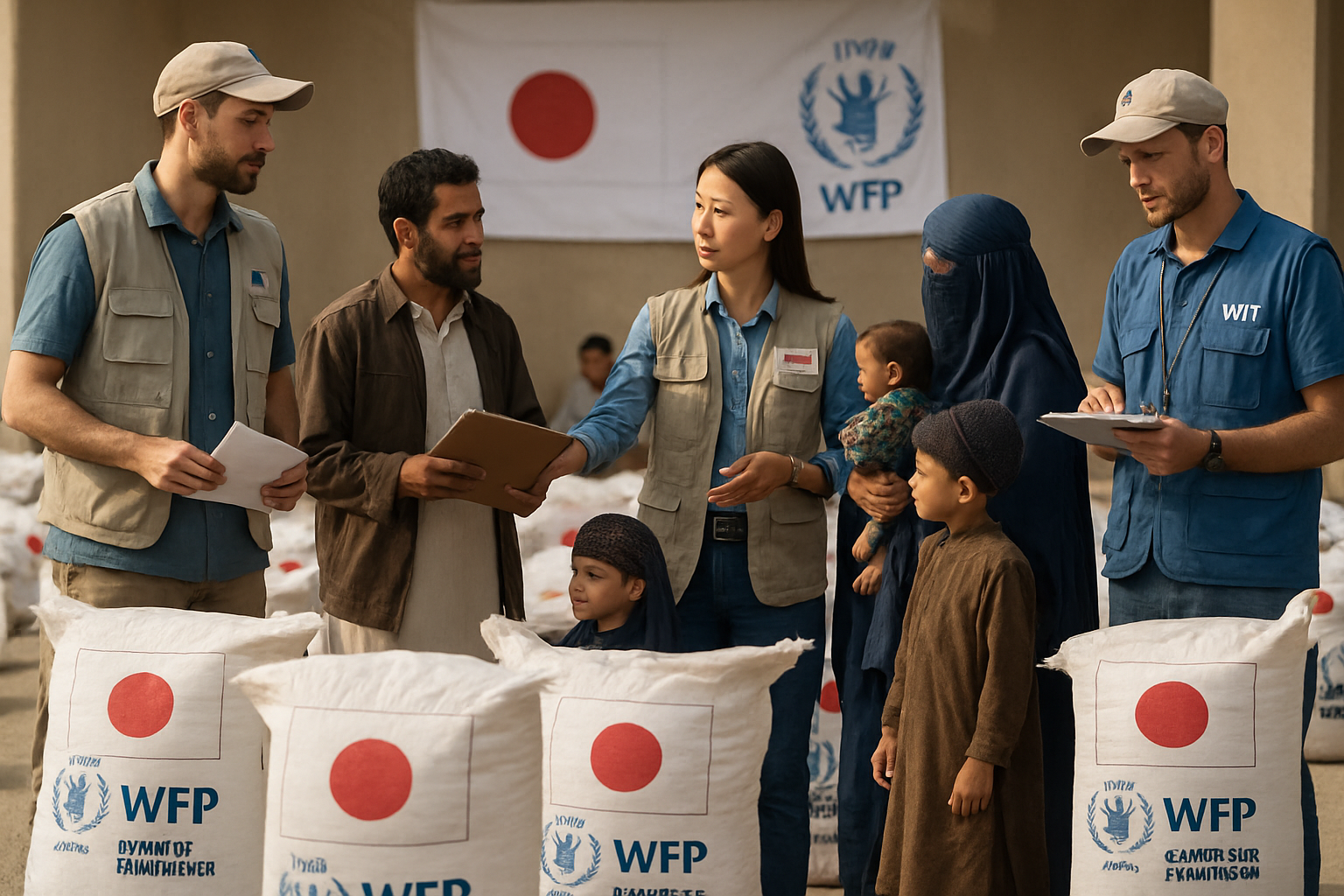
Japan has made a significant commitment to Afghanistan's humanitarian crisis, announcing over $6 million in combined aid through two major international organizations to support emergency food assistance and critical livelihood programs across the country.
The World Food Programme (WFP) in Afghanistan announced on Sunday that the Government of Japan has contributed $4 million to fund emergency food assistance and nutrition support nationwide. Simultaneously, Japan signed a separate $2.08 million contribution agreement with the World Bank to support humanitarian and livelihood programs through the Afghanistan Reconstruction Trust Fund (ARTF).
Critical Food Security Support
According to WFP officials, the $4 million Japanese contribution will enable life-saving food assistance for approximately 80,000 Afghans who face severe food insecurity. The funding comes at a critical time when Afghanistan is experiencing what humanitarian experts describe as one of the world's worst hunger crises.
The aid distribution will focus on vulnerable populations, including women and children who are disproportionately affected by the ongoing humanitarian emergency. WFP has been operating extensive programs across Afghanistan, including providing school meals to 880,000 children throughout 2025, demonstrating the scope of international humanitarian efforts in the country.
World Bank Trust Fund Partnership
The $2.08 million contribution to the World Bank represents Japan's continued engagement through multilateral channels. The funding will be channeled through the Afghanistan Reconstruction Trust Fund, a multi-donor trust fund administered by the World Bank that finances essential services and development programs in the country.
"Japan stands with the Afghan people. This contribution is intended to support people in need and promote livelihoods among vulnerable Afghans, including women and young people."
— Japanese Diplomatic Mission Statement
Japan's diplomatic mission in Kabul emphasized that the contribution represents the country's ongoing commitment to supporting Afghanistan's most vulnerable populations during this unprecedented humanitarian crisis.
Context of Afghanistan's Humanitarian Emergency
Japan's aid announcement comes amid Afghanistan's worst humanitarian crisis in 25 years. The country faces a convergence of challenges including widespread food insecurity, economic collapse, and limited access to basic services. International aid cuts have forced hundreds of health center closures, creating severe gaps in healthcare provision.
The World Health Organization has been working to address critical shortages, recently delivering medical oxygen supplies to 23 hospitals across Afghanistan. However, the scale of need far exceeds current resources, with UN assessments showing that 88% of female-headed households are unable to meet minimum living requirements, compared to 75% of the general population.
Japan's Strategic Humanitarian Approach
Japan has emerged as one of the major donors to Afghanistan's humanitarian and development efforts, maintaining consistent support through established international frameworks. This latest contribution builds on previous Japanese aid initiatives, including a $9.4 million climate resilience agreement signed between the Japan International Cooperation Agency (JICA) and the UN Office for Project Services (UNOPS) in February 2026.
The dual-channel approach—supporting both immediate food assistance through WFP and longer-term development through the World Bank—demonstrates Japan's comprehensive strategy for addressing both urgent humanitarian needs and sustainable recovery efforts.
Regional Security and Stability Concerns
Japan's humanitarian engagement occurs against a backdrop of regional security concerns. Pakistan Prime Minister Shehbaz Sharif and Kazakhstan President Kassym-Jomart Tokayev have recently discussed Afghanistan-related security threats, emphasizing that regional stability is essential for effective development assistance.
China has also warned the UN Security Council about severe terrorist threats in Afghanistan, citing the continued presence of ISIL, al-Qaeda, and other extremist groups. These security challenges underscore the complexity of delivering humanitarian aid effectively while ensuring the safety of aid workers and beneficiaries.
International Coordination Efforts
Japan's contribution reflects broader international efforts to address Afghanistan's multifaceted crisis through coordinated multilateral action. The country has maintained its humanitarian engagement despite political complexities, working through established UN and World Bank channels that have proven effective in reaching vulnerable populations.
The aid comes as Afghanistan continues to face systematic exclusion of women from employment and education, creating additional challenges for humanitarian organizations operating in the country. Despite these constraints, international partners like Japan have continued to prioritize support for basic human needs and essential services.
Looking Forward: Sustainable Support Mechanisms
Japan's latest aid package represents more than immediate relief—it signals a sustained commitment to Afghanistan's long-term stability and recovery. The combination of emergency food assistance and development programming through established trust fund mechanisms provides a framework for continued engagement.
The Afghanistan Reconstruction Trust Fund, through which part of Japan's contribution flows, has been instrumental in maintaining essential services and supporting institutional capacity building. This approach allows donors like Japan to provide support while ensuring accountability and effective program implementation.
As Afghanistan continues to face unprecedented humanitarian challenges, Japan's multi-faceted aid contribution demonstrates the critical importance of sustained international engagement through established multilateral channels. The combined $6.08 million commitment will provide immediate relief to tens of thousands of Afghans while supporting longer-term development programs essential for the country's recovery.