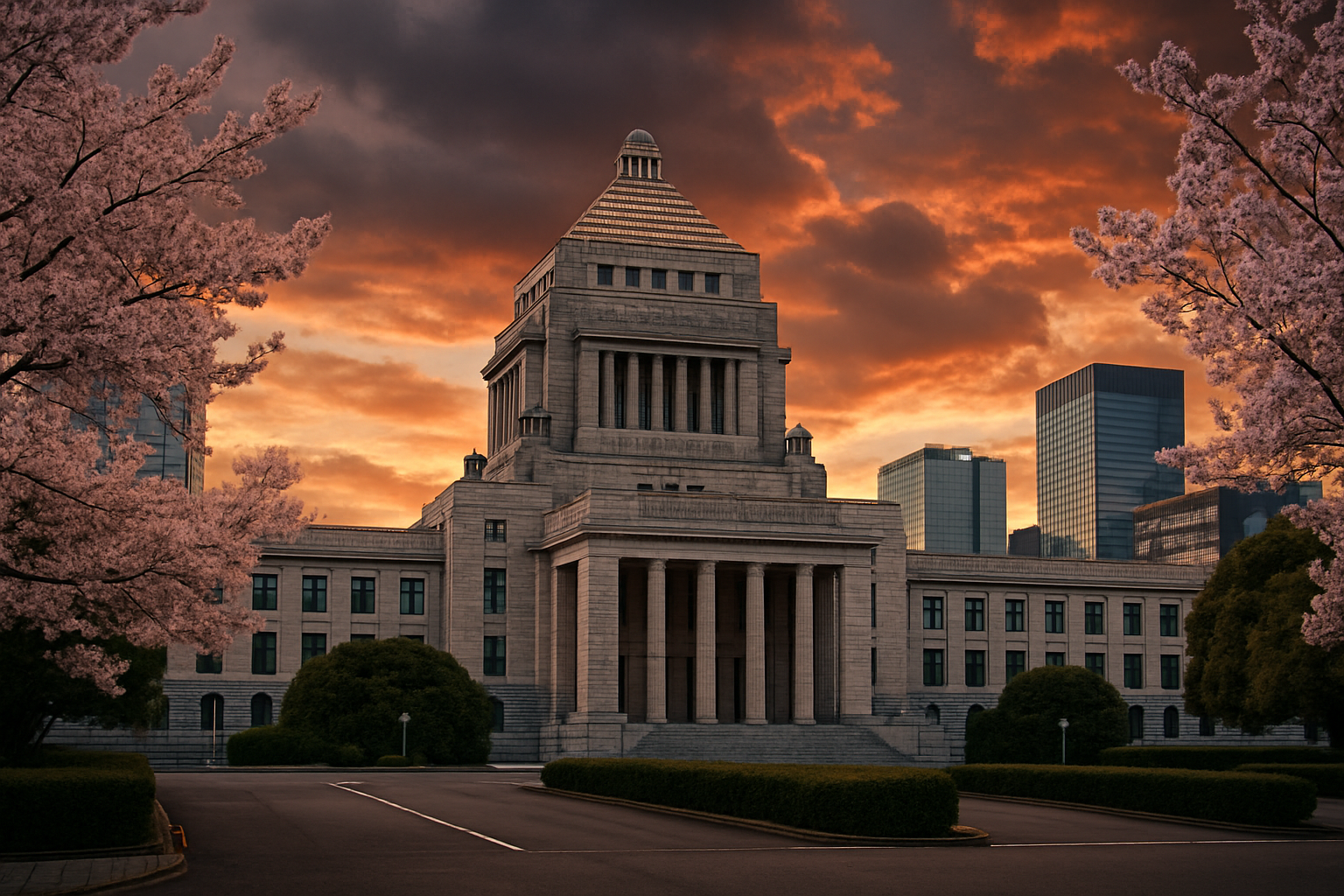
Japan confronts a convergence of complex challenges as Prime Minister Sanae Takaichi's government navigates defense policy reforms, escalating tensions with China, and diplomatic incidents that underscore the nation's evolving role in an increasingly volatile Asia-Pacific region.
Defense Export Liberalization Moves Forward
The ruling Liberal Democratic Party took a significant step toward expanding Japan's defense capabilities on Wednesday, with a key panel approving a proposal to ease restrictions on lethal weapons exports. This move represents a fundamental shift from Japan's post-war pacifist stance and comes as regional security concerns intensify.
The proposal, which calls on the government to relax rules limiting defense equipment transfers, reflects Japan's response to China's aggressive military posture in the region. According to historical context from our archives, Chinese military aircraft activity around Taiwan increased by 23% in 2025, with daily deployments designed to systematically pressure the island nation.
This defense policy evolution builds on Prime Minister Takaichi's historic electoral mandate from February 2026, when her LDP secured an unprecedented 316 of 465 parliamentary seats—providing the two-thirds supermajority necessary for constitutional reforms. The victory positioned Japan as a democratic anchor in the Asia-Pacific amid great power competition.
China Retaliates with Economic Pressure
Beijing's response to Japan's evolving security posture has been swift and comprehensive. China has imposed export controls on 20 Japanese companies and institutions, marking what appears to be a further escalation of countermeasures following Prime Minister Takaichi's previous statements regarding a potential Taiwan contingency.
This economic retaliation represents China's broader strategy of using trade dependencies to influence Japan's foreign policy decisions. The move comes despite China being Japan's largest trading partner, demonstrating Beijing's willingness to sacrifice economic benefits to maintain strategic pressure.
"China's export controls on Japanese companies represent a calculated escalation designed to test Japan's resolve on regional security issues while demonstrating the economic costs of opposing Beijing's strategic objectives."
— Regional Security Analyst
The Chinese actions follow a pattern of economic coercion that has extended beyond Japan. Our investigation reveals that China controls 60% of global critical materials production and 90% of refining capacity for lithium, cobalt, and rare earth elements—creating structural dependencies that Beijing has increasingly weaponized for political leverage.
Diplomatic Crisis with Iran
Adding to Japan's international challenges, Tokyo is demanding the swift release of a Japanese national detained in Iran. Reports indicate the detained individual is a senior director of the Tehran bureau of Japanese public broadcaster NHK, highlighting the risks faced by international media personnel in increasingly authoritarian environments.
This incident occurs against the backdrop of broader Middle Eastern tensions, with the Trump administration deploying dual aircraft carriers near Iran and explicitly calling for regime change. Japan's diplomatic approach to the crisis reflects its careful balance between alliance commitments and independent foreign policy objectives.
Corporate Governance Breakthrough
Despite geopolitical pressures, Japan is experiencing a remarkable corporate transformation. Financial markets are responding positively to initiatives aimed at unlocking approximately $840 billion in cash reserves sitting on Japanese company balance sheets—funds that have accumulated despite significant improvements in corporate governance in recent years.
This corporate cash liberation effort represents one of the largest attempts at economic restructuring in modern Japanese history. The initiative comes as inflation-adjusted wages declined 1.3% in 2025, creating pressure for more dynamic corporate investment and employee compensation strategies.
The Nikkei 225's record-breaking performance, which briefly crossed 57,000 for the first time following Takaichi's electoral victory, reflects investor confidence in Japan's ability to navigate complex challenges while implementing meaningful reforms.
Regional Context and International Relations
Japan's current challenges must be understood within the broader context of shifting regional dynamics. South Korea is experiencing its own demographic and economic pressures, with childbirth rates showing the fastest growth in 15 years yet still remaining critically low. Meanwhile, overseas card spending by South Koreans reached record highs in 2025, indicating changing consumption patterns across the region.
The convergence of these factors—demographic pressures, economic transformation needs, and security challenges—creates a complex environment requiring sophisticated policy responses. Japan's approach of simultaneously strengthening defense capabilities while maintaining economic partnerships demonstrates the delicate balance required in modern geopolitics.
Looking Forward: Strategic Implications
Japan's navigation of these multifaceted challenges will have implications extending far beyond its borders. The success or failure of its approach to balancing security concerns with economic interests, managing alliance relationships while maintaining strategic autonomy, and implementing domestic reforms while addressing regional pressures will provide a template for other democratic nations facing similar challenges.
The planned March 19 summit between Prime Minister Takaichi and President Trump will be crucial in determining how Japan's evolving defense posture aligns with broader alliance strategies. This meeting comes as Japan faces the practical realities of implementing constitutional reforms that could fundamentally alter its post-war security framework.
As Japan continues to adapt to an era of great power competition, its ability to maintain democratic governance while responding to authoritarian pressures will serve as a critical test case for democratic resilience in the 21st century. The stakes extend beyond Japan itself to the broader question of whether democratic nations can effectively coordinate responses to systemic challenges while preserving their core values and institutions.